
Fossil fuel exit becomes COP31 flashpoint – but four more European countries are taking the leap
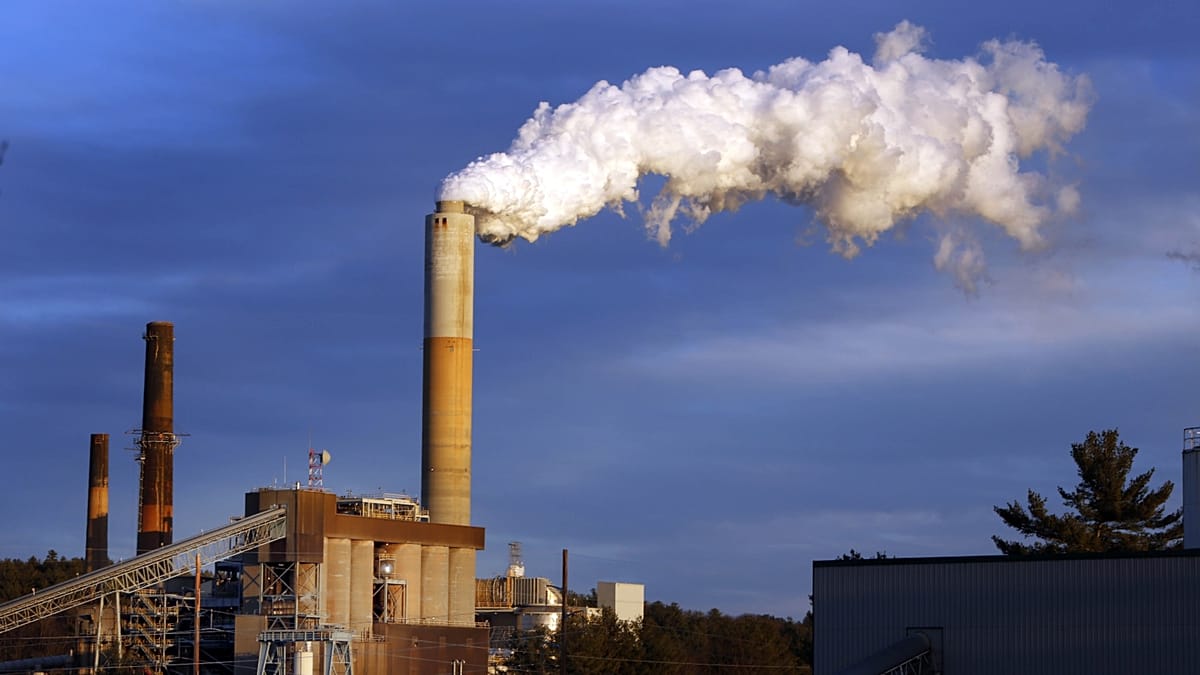
Fossil fuels – the main drivers of global warming – remain a flashpoint at COP31 as the UN climate summit enters its final days. Despite many leaders shying away from mentioning a transition away from coal,...
Fossil fuels – the main drivers of global warming – remain a flashpoint at COP31 as the UN climate summit enters its final days.
Despite many leaders shying away from mentioning a transition away from coal, oil and gas during the talks, a draft deal published on Monday (16 November) called for “accelerated action to phase out fossil fuels, including through the immediate transition away from fossil fuels in energy systems”.
After last year’s summit in Brazil ended without any mention of fossil fuels in its final agreement, countries in support of a phaseout have welcomed stronger language on the issue – but the draft is intended to ignite discussion on contentious topics.
Resistance, particularly from fossil fuel-exporting countries, is likely to feed into the final text. Agreements at the UN summit require consensus from all parties – that’s nearly 200 nations – which means progress is often slow and incremental.
'Electrification needs to be clearly linked to a transition away from fossil fuels'
Despite mounting warnings that the world will overshoot the 1.5℃ threshold, the biggest cause of planet-heating emissions – burning fossil fuels for energy – has been notably absent from some major talks at the summit.
President of the European Commission, Ursula von der Leyen, addressed leaders in Antalya on 11 November – describing the recent bout of extreme weather and deadly wildfires that wrecked Europe and the rest of the world as the “summer of truth”.
“We are at a global tipping point,” she said. “The latest UN report is clear: We’re on course to overshoot the 1.5℃ target and every fraction of a degree matters.”
Von der Leyen laid out the EU’s priorities for COP31, including accelerating electrification and “strengthening global partnerships” to build clean economies – but at no point in her speech did she mention fossil fuels.
According to the UN, fossil fuels – coal, oil and gas – are by far the largest contributor to global climate change, accounting for around 68 per cent of global greenhouse gas emissions and nearly 90 per cent of all carbon dioxide emissions.
Von der Leyen was accused of “missing the mark” by not mentioning a word on transitioning away from fossil fuels (TAFF) and for using a “celebratory tone” despite EU climate finance flatlining.
“Electrification needs to be clearly linked to a transition away from fossil fuels, otherwise it gives the fossil fuel industry cover to carry on as usual, raking in profits while ordinary people are hit by rising energy bills and impacts,” says Chiara Martinelli, Director at Climate Action Network (CAN) Europe.
Four more EU countries launch fossil fuel phaseout roadmap
But for some, COP's closing text is not the be all and end all.
While “you can always wish and fight” for TAFF to be anchored in the cover decision, “this is not for us the ultimate benchmark for success,” German Environment Ministry State Secretary Heike Henn told reporters on Monday (16 November), ahead of the draft’s publication. “The success is in doing, in a growing coalition,” she said.
On 11 November, Finland affirmed its commitment to TAFF by publishing a national roadmap, following in the footsteps of France, Germany and the Netherlands.
Almost a week later (17 November), Denmark, Portugal, Luxembourg and Spain announced their own national plans.
After spearheading a global TAFF roadmap before handing over the COP presidency, Brazil is also actively working on its own domestic national roadmap, along with various Pacific Island Nations.
“It is positive to see more countries responding to the call to plan their future beyond fossil fuels,” says Romain Ioualalen of non-profit Oil Change International.
“However, roadmaps need to be more than just a reiteration of existing policies: we need to see rich countries accelerate their exit from fossil fuels to align with global climate goals.”
What share of Finland's energy comes from fossil fuels?
More than 96 per cent of Finland’s electricity is already generated from non-fossil sources, one of the highest shares in the world.
However, the energy intensity of the economy and energy consumption per capita are both very high due to the country’s relatively large heavy industry sector, long travel distances, and the high heating demand due to its cold climate.
In 2025 the largest individual energy source, wood fuels, accounted for 28 per cent of its total energy consumption, while nuclear and fossil fuels made up 27 and 18 per cent respectively.
The main domestic energy sources currently are wood-based fuels, hydropower, wind power, solar power, waste, peat, and heat pumps.
Finland, which aims to become carbon neutral by 2035, did not however set a legally binding deadline to TAFF. Its roadmap follows the Santa Marta process on TAFF after all mentions of establishing a fossil fuel transition roadmap were scrubbed from the final text of COP30 in Belém last year.
Fossil fuel phaseout ‘doesn’t make sense’ without financing
Türkiye, France, the US and Italy are some of the countries that have brought fossil fuel lobbyists to the annual climate summit, once again drawing scrutiny of who gets a seat at the table and the integrity of its process.
Co-host Türkiye has also garnered criticism for its heavy reliance on coal, which remains its biggest source of power.
Despite pushing to expand renewables, the country’s national climate plan also allows for an increase in its greenhouse gas emissions rather than a decrease – as it continues to step up fossil fuel exploration both in the Black Sea and in the country’s south.
In fact, as COP31 kicked off on 9 November, Turkish President Recep Tayyip Erdogan celebrated the fact that the country had made an oil discovery on its territory.
On 12 November, Türkiye’s Energy Minister Alparslan Bayraktar – who has previously claimed that fossil fuels are required for energy security – said that developing countries need access to technology and financing or they won’t be able to make the transition to clean energy.
"Without that, to tell the people you don’t need to consume coal, you don’t need to consume other fossil fuels, it doesn’t make any sense," he told news agency AFP.
“We need to produce this electricity. We would like to make it with renewables. We would like to make it with nuclear – but of course to develop nuclear power plants, a huge amount of finance [is] required.”
Financing has become one of the most contested issues in Antalya, particularly to fund adaptation and loss and damage in countries most vulnerable to climate disasters, like developing nations and small island states.
At COP29 in Baku in 2024, developed countries agreed to mobilise at least $300 billion (€268bn) a year for developing nations by 2035, as part of a wider $1.3 trillion (€1.63tn) target from public and private sources.
At COP30 last year, governments agreed to push for at least a tripling of adaptation finance by 2035, but without settling the baseline, who pays or how the money will be delivered.
Analysts say one “feasible route to a meaningful outcome” on climate finance at COP31 would be anchoring the tripling pledge and agreeing a $40 billion (€36.2 billion) baseline with interim milestones before 2035 – with a minimum share of grants compared with loans.
But a UN Environment Programme (UNEP) report published days before the summit found that even tripling current international public adaptation finance would only meet 23-29 per cent of developing countries’ needs.
COP31’s electrification pledge gains momentum – and criticism
The transition away from fossil fuels has become a hot topic at COP31, not least due to the spiralling costs of oil and gas following the US-led war on Iran.
Fossil fuels have also become a growing concern given Türkiye’s '35x35' pledge. This would see the global share of energy demand met by electricity increase to 35 per cent, up from around 23 per cent today, by 2035.
Some 75 countries and several small island states have now publicly backed the goal, including UK Prime Minister Andy Burnham – just weeks after his government approved the controversial Jackdaw gas field in the North Sea.
Von der Leyen also showed support, arguing that the pledge is in reach and will provide greater energy security for the EU.
Electrification means replacing technologies that burn fossil fuels with electricity – such as going from a diesel-powered car to an electric vehicle (EV).
But critics warn that electrification in itself will not eradicate fossil fuel use and could be used as an excuse to allow governments to count expanded gas-fired generation as progress towards the 35-by-35 pledge.
“Switching from oil and gas to electricity only cuts emissions if that electricity is clean – making the rapid build-out of renewables non-negotiable,” says Linda Kalcher, executive director at pan-European think tank Strategic Perspectives
“Solar and wind are the cheapest and among the fastest sources of new electricity worldwide, even more since oil and gas prices soared. The risk of further fossil-fuel lock-in and investment in uneconomical oil and gas reserves remains though – not least as rising energy demand from data centres fuels calls for new fossil-fuel capacity.”
COP31 is due to end on 20 November, though talks may enter overtime as countries grapple to reach consensus.
This article was originally published on 14 November. It has been updated to include the draft cover decision released on 16 November and new countries announcing TAFF roadmaps on 17 November.