There are dangerous loopholes in the regulation of ebikes | Letters
The case of Jane Ouartsi is horrific, but not surprising to many disabled people who move around central London and know how quickly careless riding can become dangerous (‘I felt my spine and body split’: the...
The case of Jane Ouartsi is horrific, but not surprising to many disabled people who move around central London and know how quickly careless riding can become dangerous (‘I felt my spine and body split’: the woman who was hit by a child on a Lime bike – and denied compensation, 7 July).
I am a powered wheelchair user in Westminster. I support cleaner streets and fewer car journeys, so I am not opposed to ebikes in principle. But the present dockless system too often transfers risk on to pedestrians, disabled people and older people.
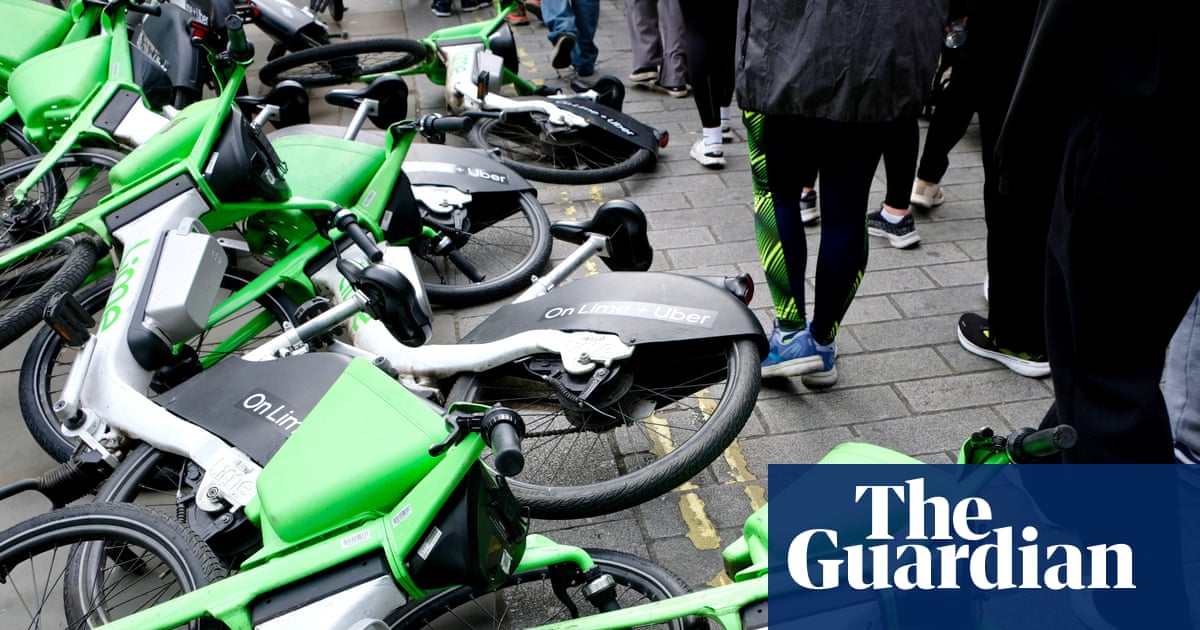
In Westminster, I regularly find hire ebikes and scooters abandoned across pavements, dropped kerbs and crossings. A walking person may step around them. I may be blocked entirely, forced to reverse, or pushed into the road.
I have been hit by an e-scooter while crossing the road near my home. Outside Tate Britain, at a zebra crossing, I was almost run over by a rider looking at his mobile phone. There was a millimetre between my wheelchair and the bike. Had he hit me at speed, the consequences could have been catastrophic.
The level of penalties still feels pitiful. In Westminster, a higher‑rate car parking penalty is £160, reduced to £80 if paid promptly. If a badly parked car can attract that sanction, why should dumped hire ebikes and scooters be treated more lightly when they block disabled people’s safe passage?
Jane’s case exposes a serious loophole. The issue is not only age verification, but whether these bikes can be ridden at all by someone who has not been identified, verified and charged for the journey. A heavy electric hire bike should not be usable anonymously. Allowing that risk to persist is a commercial choice, not a technological inevitability.
When I was a child, cycling came with visible expectations. We did cycling proficiency at school. I still remember a village bobby stopping a friend for riding dangerously. Perhaps that sounds quaint, but the principle was right.
A livable city must be accessible as well as convenient for everyone. For many Londoners, especially wheelchair users, blind people and older people, that balance is badly wrong today.
Colin Hughes
London
Having read your article about ebikes, I should like to propose that a system be devised whereby the person hiring the ebike is firstly registered and approved, during which process the person undertakes to abide by strict terms and conditions that, in the event of any mishap, ensures that the said person becomes potentially liable if a claim is made against them.
As such, the person hiring any bike would either need to prove that they are covered by insurance or, better still, be covered by the hire company’s group policy.
A person’s “licence” to hire an ebike, as identified by their unique registration number, could be revoked or suspended by the hire company in accordance with contractual terms and conditions. Without a licence, it would not be possible to hire an ebike.
The suggestions I have made would obviously need to be considered by the relevant parties involved, but it is of the utmost importance that no victim should remain without due compensation.
Richard C Harris
Wallington, London
Until recently I had commuted in London by bicycle for more than a decade. Going through two parks, it was the highlight of my day. Then came Lime bikes. Mostly ridden and parked with little consideration for others, they have exposed how selfish people can be.
At least the clacking din of hacked Lime bikes gives an “arsehole incoming” warning, but it’s become the soundtrack to the capital.
Charging purely by time and allowing parking on pavements, London is made worse by dockless electric rental bikes. It’s time to change at least those elements.
Richard Beeching
Hove, East Sussex