Wildfires devastating richer areas but fewer hectares burned globally – study
“Devastating” wildfires ripped across the wealthier parts of the world in 2025, a study has found, even as globally, the area ravaged by flames fell.Catastrophic blazes claimed lives, homes and jobs last year...
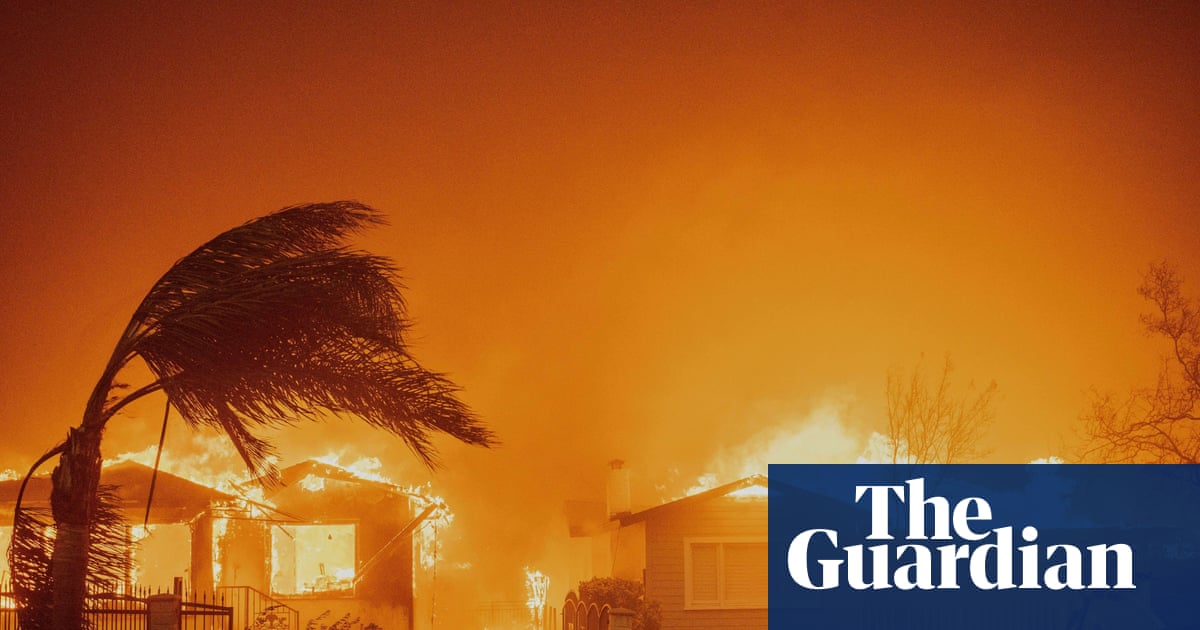
“Devastating” wildfires ripped across the wealthier parts of the world in 2025, a study has found, even as globally, the area ravaged by flames fell.
Catastrophic blazes claimed lives, homes and jobs last year in California, Canada, Europe and South Korea. But the 335m hectares burned was the second-lowest since 2002, the review found, largely owing to the expansion of African farms that have fragmented landscapes and hampered the spread of large savannah fires.
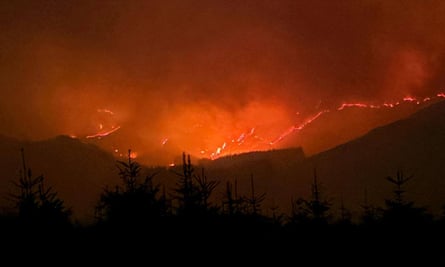
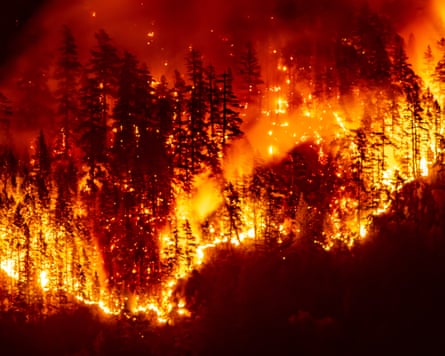
The disasters in 2025 included a Scottish “megafire” that torched more than 100,000 hectares – contributing to the UK breaking its record for burned area – and the Palisades and Eaton fires in Los Angeles, which were among the most destructive in US history.
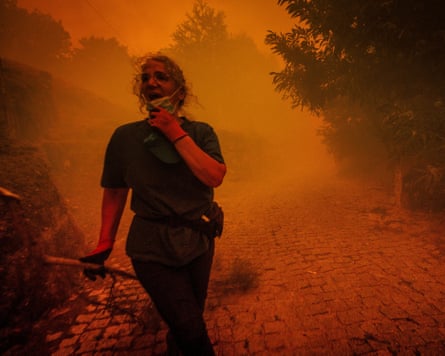
Record-breaking blazes in Spain and Portugal burned more than half a million hectares, while South Korea had its biggest and deadliest wildfire season on record.
Fires accounted for more than 38% of insured losses from weather disasters in 2025, the study found.
“2025 shows that a ‘quiet’ fire year globally can still be devastating,” said Matthew Jones, a climate scientist at the University of East Anglia and lead author of the study. “We are seeing a growing disconnect between total area burned and real-world impacts.”
Changes in land use mean wildfires burn less of the planet than they have historically done, but global heating is creating conditions allowing them to spread, increasing the danger at what researchers call the wildland-urban interface, where people are most at risk.
Adverse weather, inflamed by carbon pollution, turned some of last year’s fires into explosive infernos.
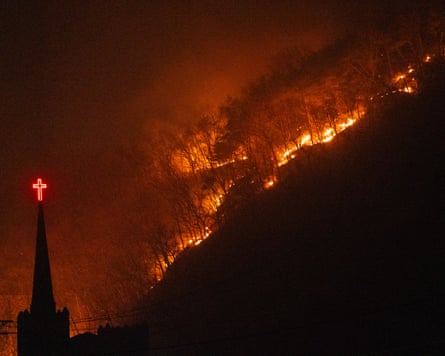
In southern California and South Korea, the researchers found, high winds and dry vegetation pushed fires through densely populated areas, causing “exceptional mortality, mass evacuations, and major infrastructure losses”. In the Mediterranean, meanwhile, drought and extreme heat drove severe blazes, from Portugal to Turkey.
“These conditions do not cause the fires, but in the event of a fire, we have material that is more flammable than usual – because it is drier – and wind conditions that fan the flames,” said David Garcia, an applied mathematician at the University of Alicante, who was not involved in the study. “This makes large fires more likely to occur.”
An attribution study Garcia co-authored last year found the extreme weather fuelling the flames in Portugal and Spain last year was made 39 times more likely by climate breakdown. “If we continue to warm the planet, large-scale fires will continue to increase,” he said.
The overall reduction in global burned area led to a drop in carbon dioxide emissions to their third-lowest level on record.
In Canada, though, extreme wildfire emissions were recorded for the third year in a row. Since 2023, boreal forests in North America have emitted close to 4bn tonnes of CO2, exceeding the total emissions of the preceding 15-year period.
As well as heating the planet, the pollutants in wildfire smoke lead to huge numbers of people dying from breathing dirty air. The toxic particles spewed by Canadian wildfires in 2023 killed 82,000 people, according to a study published in September, with smoke even choking cities in the US, Europe and Africa.
Adrián Regos, a landscape ecologist at the Biological Mission of Galicia, Spain, who was not involved in the study, said last year’s events illustrated how a relatively small number of extreme fires could dominate the ecological, social and economic consequences of an entire fire season.
“The broader pattern highlighted by this study is consistent with what we are observing across southern Europe: while total burned area may fluctuate from year to year, climate change is increasing the likelihood of extreme fire-weather conditions, and fuel accumulation associated with rural abandonment is making many landscapes more vulnerable to large, fast-moving fires,” he said.
“The challenge is therefore not only reducing the number of fires, but increasing the resilience of landscapes and communities to extreme events.”