Animal panic and air pollution: Why Switzerland is set to vote on a nationwide firework ban
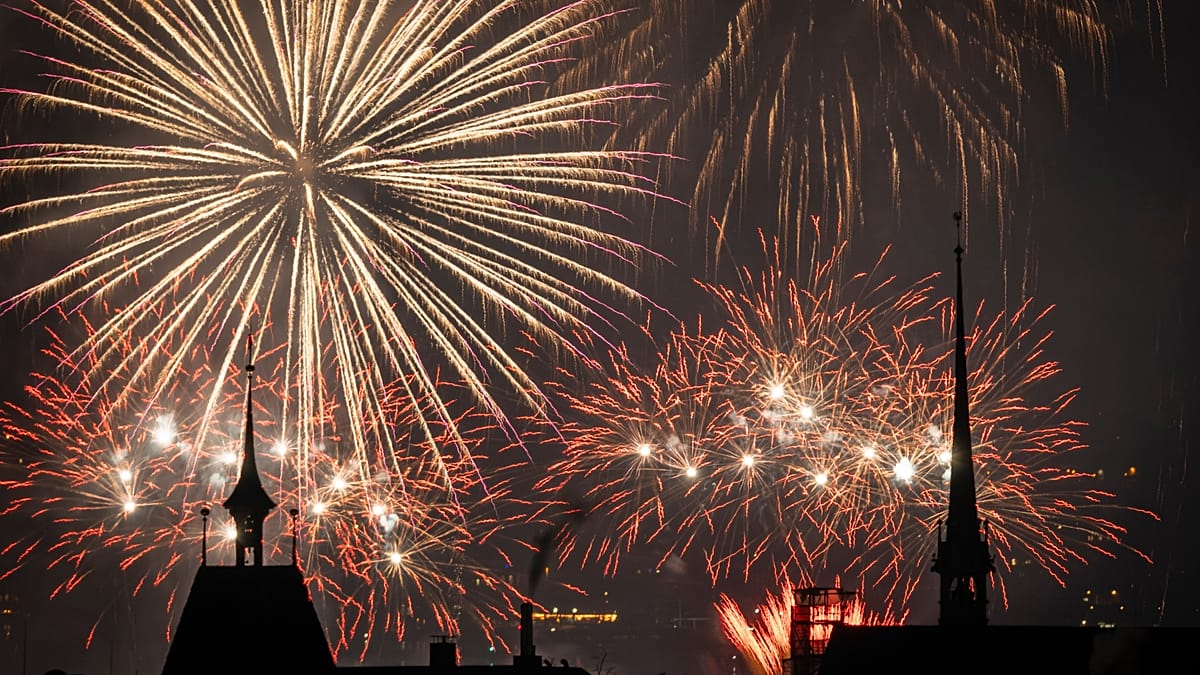
Swiss citizens are gearing up for an explosive vote: whether to ban noisy fireworks. Spurred on by animal welfare and environmental groups, the citizen-proposed ‘popular initiative’ will be put to the ballot...
Swiss citizens are gearing up for an explosive vote: whether to ban noisy fireworks.
Spurred on by animal welfare and environmental groups, the citizen-proposed ‘popular initiative’ will be put to the ballot on 29 November.
“For pets, wild animals, and farm animals, fireworks are not a celebration, but pure stress,” says non-profit Schweizer Tierschutz STS (Swiss Animal Protection), which is supporting the initiative.
The proposal also calls for better protection for people and the natural environment against noise, air pollution, litter, accidents and fires caused by fireworks.
An initial Swiss Broadcasting Corporation (SBC) poll released on Friday (23 October) showed promising support for the ban, with 69 per cent of voters backing it.
While the proposal proved most popular among left-wing voters, it received majority support across the political spectrum, and particularly among women.
Votes like these are common in Switzerland, where any citizen or group can launch an initiative by gaining 100,000 valid signatures from eligible voters. Recent examples include the neutrality initiative, rejected in September, and the pending nuclear disarmament initiative.
Would it mean a complete ban on fireworks in Switzerland?
The proposal seeks to “significantly restrict particularly loud and disruptive fireworks” in private settings by banning the sale of noisy pyrotechnics. Quieter alternatives would still be permitted, such as sparklers and fountain-style volcano fireworks.
It would also allow ‘cantons’ (local areas) to grant exemptions for events of “supra-regional significance”, such as 1 August (Swiss National Day) and New Year’s Eve, but still with a focus on quieter alternatives.
Currently, Swiss cantons and communes may restrict or ban the sale and use of fireworks on a local level. Age limits and licensing requirements also govern their use.
STS says the initiative, ‘For a restriction on fireworks’, would create a clear rule for the entire country.
But industry association the Swiss Fireworks Coordination Office (SFK) argues that the proposal is a “threat to Swiss tradition”, while some politicians have said that it would infringe on citizens’ personal freedoms and should be left up to the cantons to govern.
The Swiss People’s Party, the Centre Party and the Swiss Trade Association have launched a campaign to vote against the measure, warning of its impact on business owners and potential to fuel a "prohibition culture".
After initially being submitted in 2023, the proposal received over 137,000 signatures. A failed counter-proposal in summer means it will now be followed by a public vote.
If successful, it could see Switzerland follow in the footsteps of the Netherlands, where a broader firework ban came into force this summer, primarily for safety reasons but also on animal and environmental welfare grounds. Other countries in Europe have their own rules and restrictions, such as Belgium where the use of large, powerful fireworks is restricted to professionals only.
How do fireworks impact the environment?
When fireworks explode, they release tiny dust particles, which are rich in toxic metals from the gunpowder and colouring compounds they contain.
According to the Swiss Federal Office of Police, between 1,000 and 2,000 tonnes of fireworks – three-quarters of which is made up of packaging – are used annually in Switzerland, producing between 200 and 400 tonnes of particulate matter per year.
This accounts for two-to-three per cent of the country’s annual particulate matter emissions, according to the Federal Office for the Environment (FOEN).
As well as contributing to air, water and soil pollution, these fine particles can be inhaled with harmful health impacts, particularly for vulnerable people with existing conditions.
Unfavourable weather conditions can heighten the harms, such as fog which can trap particles in the air for longer, or hot and dry conditions which can increase wildfire risk.
FOEN urges responsible disposal of used fireworks, which can be placed in regular household waste once cooled down, while packaging should be recycled as normal.
Fireworks trigger ‘fear, panic and disorientation’
Animal welfare groups have been vocal in their support of a firework ban.
“The sudden noise triggers fear, panic, and disorientation [in animals],” says STS. “The consequences range from flight behaviour and acute stress to injuries or even death. Protecting animals from unnecessary noise is therefore a central concern of animal welfare.”
Speaking in a campaign video for the initiative, Swiss veterinarian Maruschka Blaser says that animals hear high-pitched sounds and loud bangs more acutely than humans. Giving horses as an example, she says “things can become dangerous very quickly when they run uncontrollably because of fireworks”, either for people in crowds or other animals in fields.
“When it comes to domestic animals such as cats and dogs, they sometimes need to be given medication to calm them down days in advance” of firework displays, says Blaser. “I also know families who spend the night in an air-raid shelter with their pets, but somehow that isn’t a solution either,” she adds.
“Millions of pets live in Switzerland. For many of them, fireworks trigger stress or panic,” says Casimir von Arx, President of the Bern branch of Schweizer Tierschutz STS (Swiss Animal Protection SAP) in a campaign video. “We can only protect them if, as a society, we show consideration for one another.”