Hantavirus cruise ship outbreak: European health agency says risks to Europeans ‘very low’

The public health risk to Europeans from the hantavirus outbreak detected on a cruise ship in the Atlantic remains very low, the ECDC confirmed, as investigations into the source and scale of the infections continue.
The risk of a widespread hantavirus infection or a pandemic-like event in Europe is very low, the European Centre for Disease Prevention and Control (ECDC) said on Monday, amid growing concern over the virus outbreak on a cruise ship in the Atlantic.
Spain's Ministry of Health has confirmed on Tuesday that a team of epidemiologists will board the vessel this afternoon to screen passengers for symptoms and assess the risk, in a move coordinated with the WHO.
"This will help inform decisions regarding the repatriation processes and the vessel's route," the Ministry said in a post on X.
The World Health Organization has identified seven cases on board, including three deaths, one critically ill patient and three individuals reporting mild symptoms.
“At present, the risk to the general population in Europe from this outbreak is considered very low, given that appropriate infection prevention and control measures are being implemented on board and that hantaviruses are not easily spread between people,” the ECDC said in a statement.
The agency added that measures are being implemented on board the ship to reduce the risk of further infections among passengers and crew.
“Several aspects of this outbreak are still under investigation, including defining the virus species involved, the origin of infection, the extent of spread among passengers and crew, and whether transmission between people has occurred,” the statement said.
The agency noted that most hantaviruses do not transmit directly from person to person.
The exception is the Andes virus strain, found mainly in parts of South America and which has been shown to spread between people, typically through close and prolonged contact.
“It is not yet known whether transmission in the current outbreak occurred through environmental exposure or between individuals, and the specific hantavirus involved has not yet been identified,” the ECDC noted.
What is the hantavirus?
Hantavirus refers to a group of viruses carried by rodents, primarily transmitted to humans through the inhalation of airborne particles from dried rodent droppings.
Contact with infected rodents or their urine, saliva, or droppings — especially when these materials are disturbed and become airborne — is the primary way it spreads.
The infection can lead to hantavirus pulmonary syndrome (HPS), characterised by headaches, dizziness, chills, fever, muscle pain and gastrointestinal problems, followed by the onset of respiratory distress and hypotension.
According to the WHO, symptoms of HPS typically appear two to four weeks after initial exposure to the virus.
However, symptoms may appear as early as one week and as late as eight weeks following exposure.
Where is the ship now?
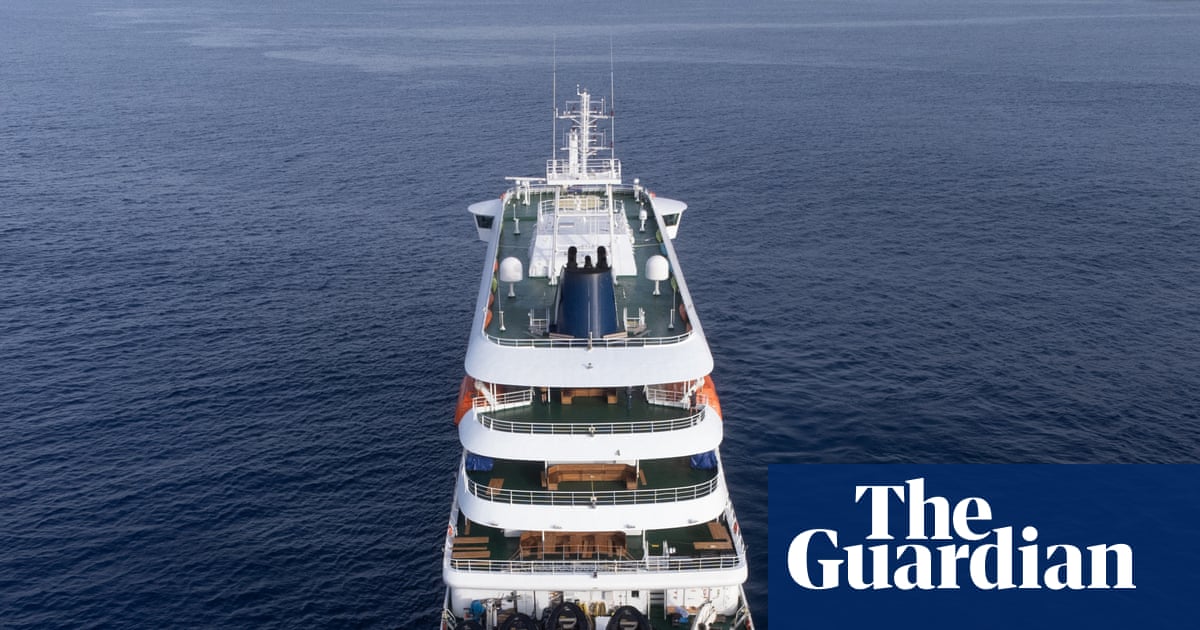
The cruise ship m/v Hondius, operated by the Dutch company Oceanwide Expeditions, is currently anchored off the coast of Cabo Verde and set off with 149 people on board.
Local health authorities have refused to allow the disembarkation of its passengers.
“The atmosphere on board m/v Hondius remains calm, with passengers generally composed,” Oceanwide Expeditions said in a statement.
The company said that two members of the crew presented acute respiratory symptoms, one mild and one severe, and both required urgent medical care.
The statement confirmed that Dutch authorities are “actively preparing a medical evacuation of the two symptomatic individuals, along with the individual associated with the guest that passed away on 2 May”.
“At this time, no other persons with symptoms have been identified,” the statement continued
The alternatives that were considered include sailing on to Las Palmas or Tenerife in the Canary Islands, Oceanwide Expeditions said.