‘Climate change is running rampant’: Europe’s heatwave ‘virtually impossible’ 50 years ago
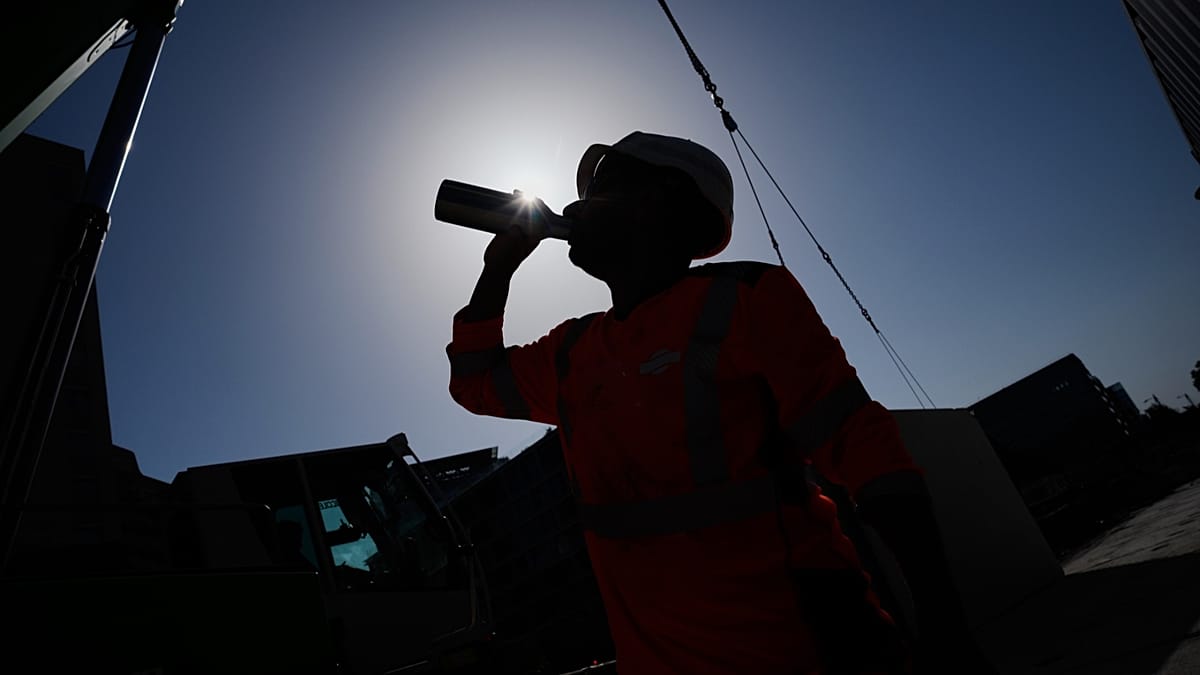
The extreme heat currently scorching Europe would have been almost impossible just a few decades ago – as scientists warn that climate change is “running rampant”. Record-breaking temperatures have caused...
The extreme heat currently scorching Europe would have been almost impossible just a few decades ago – as scientists warn that climate change is “running rampant”.
Record-breaking temperatures have caused widespread havoc across the continent, with schools, hospitals, transport and outdoor workplaces all struggling to cope. Drowning deaths have surged in France, which recently experienced its hottest day since measurements began, as citizens scrambled to cool down.
Across the channel and the UK is bracing for highs of up to 38°C, already witnessing its hottest June day on record after temperatures climbed to 36.1°C.
While blistering temperatures are predicted to abate in Western Europe, weather forecasters warn that weekend highs of 41°C could hit parts of Hungary, Bulgaria and Czechia. These typically cooler nations are significantly less prepared for intense weather than the Mediterranean, for example.
Making ‘impossible’ heatwaves possible
The heat is being driven by a blocked high-pressure pattern that traps hot air over Europe and draws warm air up from the Sahara.
In a rapid attribution analysis, scientists from World Weather Attribution (WWA) used both observed and forecast temperature data to analyse the hottest three-day period across a large area of Europe that has been smothered by the heat dome.
They found that both the daytime highs and overnight temperatures seen during this heatwave would have been “virtually impossible to occur at this time of year” as recently as 1976 – just 50 years ago.
A similar heatwave occurring in that historic climate would be 3.5°C cooler, researchers say.
“The science of how climate change is worsening heatwaves is settled,” says Dr Theodore Keeping of Imperial College London. “Continued fossil-fuel emissions are directly responsible for the disruption people are experiencing this week in their homes, schools and workplaces.
“The speed of change is startling. Every few years we are seeing heat records shattered in Europe. This year it has been in consecutive months.”
Europe’s surging tropical nights
The analysis also found that sweltering overnight temperatures that have been keeping Europeans awake this week are about a hundred times more likely today than they were just 23 years ago during the infamous 2003 European heatwave.
Tropical nights, which are where the temperature never dips below 20°C during a 24-hour period, have been extremely common this week across Europe.
This can have a significant impact on human health, as the body relies on cooler temperatures during the night to regulate its core temperature and recover from daytime heat.
In fact, studies have shown that high nighttime temperatures are linked to increased mortality, particularly among older adults and those with pre-existing health conditions.
Out of the 854 cities analysed across 30 European countries, 45 per cent have broken – or are expected to break – their all-time Wet Bulb Globe Temperature (WBGT) record in late June, WWA found.
WBGT is a measure of heat stress and the body’s ability to cool itself through sweat evaporation. A separate study, which was recently published in the science journal Nature, found that in southern Spain, Italy, Greece and Türkiye some areas will see up to 40 additional days with strong heat stress compared with the 1970s.
Heat stress comes with a slew of symptoms such as elevated core body temperature, increased heart rate, rapid breathing, excessive sweating, nausea and dizziness.
In severe cases, heat-related illnesses such as heat exhaustion or heat stroke can be deadly.
According to the UN, fossil fuels – coal, oil and gas – are by far the largest contributor to global climate change, accounting for around 68 per cent of global greenhouse gas emissions and nearly 90 per cent of all carbon dioxide emissions.
“But the solutions are equally clear: a faster shift to clean energy – which is now much cheaper than fossil fuels – as well as protecting forests and building climate resilience," says UN Climate Change Executive Secretary Simon Stiell.
"No nation can afford more business-as-usual. We must step up the pace, together.”
‘Not El Nino’: The real reason behind Europe’s extreme heat
Despite media coverage suggesting Europe’s heatwave is being caused by El Niño, a natural weather phenomenon that is known to drive up global temperatures, WWA says the event has had no role in the extreme June temperatures.
While El Niño’s impact can be severe, disruption is mainly felt in the tropics. Europe may be indirectly impacted, but this is likely to be later in the year, during autumn and early winter.
“Scientists like me are beginning to sound like a broken record,” says Professor Friederike Otto of Imperial College London.
“We put out similar quotes year after year reacting to heat extremes that climb ever higher. Yes this is climate change, yes it’s us, no it’s not El Niño, yes we have the solutions, no we’re not implementing them fast enough.
“It’s really now a question of what kind of future we want for ourselves, and whether we’re willing to do what it takes to secure it.”