Paco Robles obituary
My family friend Paco (Francisco) Robles, who has died aged 99, was one of the last survivors of the largest ever single day’s migration into the UK, when on 23 May 1937 about 4,000 people arrived in...
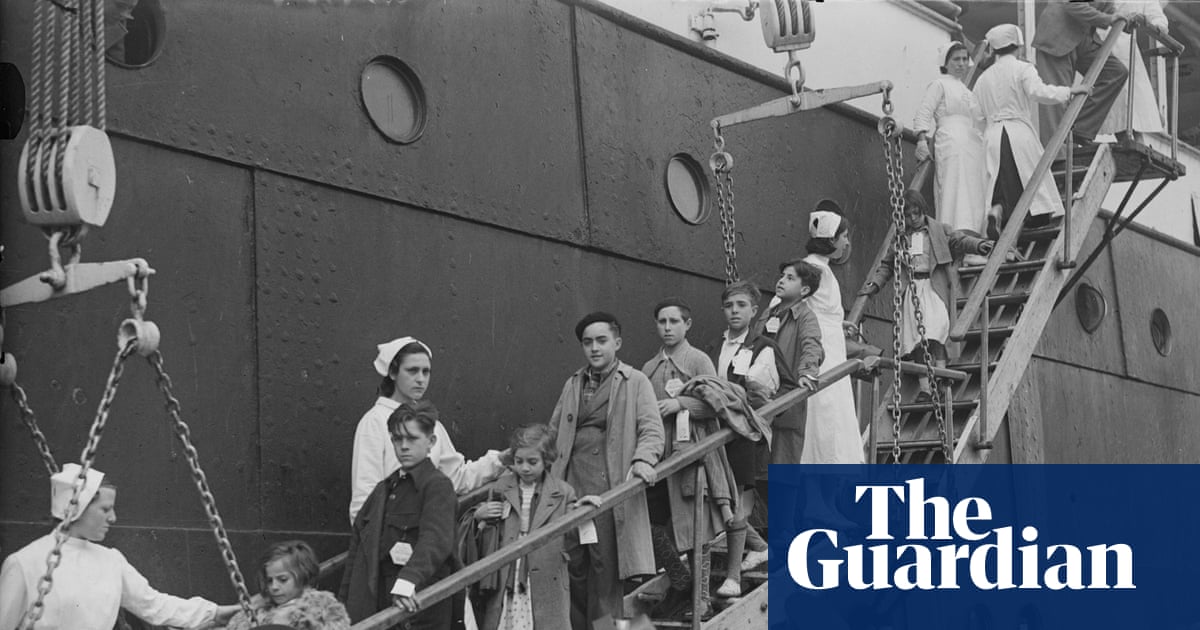
My family friend Paco (Francisco) Robles, who has died aged 99, was one of the last survivors of the largest ever single day’s migration into the UK, when on 23 May 1937 about 4,000 people arrived in Southampton fleeing the Spanish civil war. Paco, who was 10 at the time, and his younger sister, Maria Jesus, were among 3,800 children on board the ageing former cruise ship the Habana, along with volunteer teachers, priests and supporters.
Two aunts of mine, Poppy and Chloe Vulliamy, had become involved in helping to get the children out of the country, and Chloe ran the first two hostels that Paco stayed in, as well as the last to close, in 1951. In 2017 Paco unveiled a blue plaque at the first house, in Wherstead Park in Suffolk, near Ipswich, and spoke emotionally of Chloe’s role as his surrogate mother. He was delighted to discover that the tree he had climbed there remained intact, 80 years later.
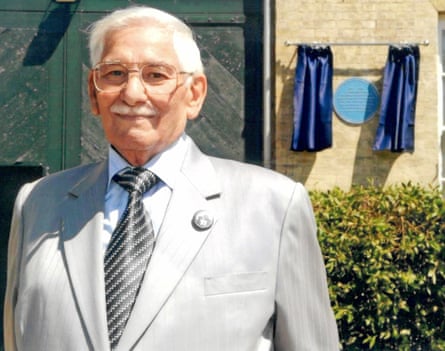
Paco was born in León, in north western Spain, to Martina (nee Hernando), a maid, and Germillano, a deputy for the Socialist party in the city. When Paco was young the family moved to the Basque Country, where his father worked in the chemical department of a steelworks in Bilbao. After the nearby town of Guernica was heavily bombed by German and Italian planes in support of General Franco’s nationalist forces in April 1937, his parents managed to get him and his sister on board the Habana.
Life on arrival was not easy; the UK government refused to provide any public funding for the care of the children, and so Paco was educated at volunteer-run residential homes known as a “colonies” – where he encountered my aunt Chloe.
Once Franco had attained victory over the republicans in the civil war, he demanded the return of the niños who had left – but that often proved impossible. In Paco’s case, as in many others, there was nothing to go back to: his father had been imprisoned, the family home had been stolen, and his mother was struggling to survive, with little food to eat.
He therefore remained in Britain, and worked over the years in various jobs, including at a munitions factory, a bakery and as a labourer on a farm.
Like many of his fellow Habana refugees he felt neither Spanish in Spain nor British in the UK. But his experiences left him skilled in connecting and communicating with people, and throughout his life he maintained his Spanish connections, including as a strong supporter of the Basque Childrens’ Association and as a regular visitor to a Spanish social centre in London, where he lived.
Paco married Maria Román, a factory worker, in 1949; she died in 2012. He is survived by their three children, Elena, Fernando and Maria, six grandchildren and seven great-grandchildren.