Hard cheese: Tough times for Greece's Naxos Graviera cheese as production falters
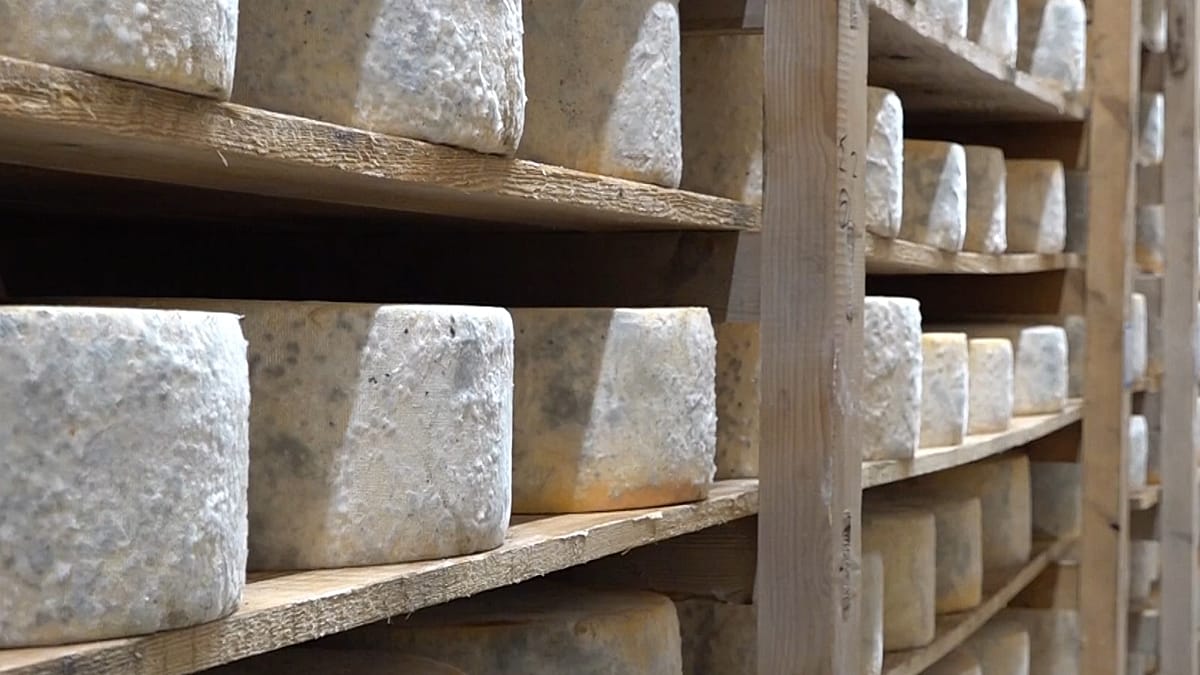
Naxos Graviera, the hard cheese of the Greek Cycladic island was named the world’s best cheese in 2025 by the food guide TasteAtlas, but its makers are now facing increasing production problems.
Naxos Graviera is one of Greece's most famous and important hard cheeses, which secured Protected Designation of Origin (PDO) status as far back as 1996, thanks to a decision by the European Commission.
Its popularity has long since crossed Greek borders, as it is exported to 20 countries. In 2025 it was even ranked first on the international gastronomy platform TasteAtlas – Local food around the world, as the best cheese in the world.
The much-coveted accolade confirmed the enduring reputation of a product that has become synonymous with the gastronomic identity of the Cycladic island and is a cornerstone of the local agricultural economy.
It was the latest in a long series of national and international distinctions. Among others, it has won the gold taste award at the Greek Cheese Festival in 2011, as well as two Stars in the Superior Taste Award competition at the iTQi Institute in Brussels in 2015, 2016 and 2018, while in 2017 and 2020 it took the gold award at the Taste Olymp Awards.
This hard cheese, with its pale yellow colour, thin dry rind, delicate aroma, sweet and subtle flavour, and highly distinctive aftertaste, has for years enjoyed a reputation as one of the island's two flagship products, alongside the Naxos potato. It is one of Greece's top cheeses, ideal for every culinary use.
The dairy of the Naxos Union of Agricultural Cooperatives, is the island's largest cheese-making facility and the driving force behind the product on Naxos.Giannis Politis, Professor of Physiology of Nutrition and Production Traits at the Agricultural University of Athens, has been working with the Naxos Union of Agricultural Cooperatives for the past eight years.
"The distinctive character of Naxos Graviera comes from a combination that is hard to find in cheese-making. First of all, Naxos Graviera has a very sweet taste, which is combined with very high elasticity," said Politis. "My international experience in cheese-making has led me to the conclusion that Naxos Graviera rivals the graviera produced on the border between Switzerland and France. Naxos is the largest island in the Cyclades, with very special features."
"At the moment, around 75% of Europe's aromatic plants are found in Greece. And Naxos is a paradise for aromatic plants. So here on Naxos we have, first of all, cows on the lowlands. In the mountains we have sheep and goats. The small ruminants graze on grass rich in aromatic plants, and as a result Naxos produces milk with a distinctive flavour but also a special composition," added Politis.
Naxos Graviera is made from local cow's milk or a mix of cow's milk with sheep's and goat's milk, in a ratio of 80% to 20%.
The Naxos Union of Agricultural Cooperatives produces this exceptional cheese using milk exclusively from animals that live and are raised on the island, following traditional cheese-making rules at every stage of the process. The Naxos Union of Agricultural Cooperatives produces around 1,250 tonnes of graviera a year.
Konstantina Vadoula is a Food Chemist at the dairy plant: "Our primary raw material is milk, and it comes from short distances. This means we can collect it and have it arrive at the dairy in good time, where it undergoes quality control so we can check it is suitable and meets the specifications, and then it goes through heat treatment to become the final product, which is graviera.
"Every year we produce around 1,200-1,250 tonnes of graviera, which is sold in wheels of 9 kilos, 3 kilos and 1 kilo, as well as in 250-gram pieces. 100 tonnes are destined for export. At the same time, we export 250 tonnes of other cheeses, such as Naxos Kefalotyri, Naxos Goat's Cheese and Naxos Mountain Cheese," said Vadoula.
Most of the graviera produced is destined for the domestic market. Sales could be double or even triple, but the decline in milk production limits the quantities available, which in turn means exports remain lower than in the past. Even so, this particular cheese is the flagship of the island's export products:
"Milk production on the islands faces inherent difficulties. We are not in mainland Greece. Feed does not reach us easily here, and it is expensive. All this creates problems," laments Politis. "The state needs to step in and help. This is a product that is essentially a national champion. It is produced and it sells easily. So what we should be doing here is creating conditions under which it can not only be produced, but produced in the quantities required and in the quantities the market can absorb."
"The key issue, especially as we are currently celebrating 100 years of the Naxos Union of Agricultural Cooperatives, is to keep livestock farming alive on the island. Because if livestock farming is maintained, I can tell you that absorbing the graviera produced will be, as my students would say, "a piece of cake". Naxos Graviera ought to be counted as part of our country's heavy industry," Politis concluded.