Europe's Record-Breaking Heatwave: What You Need to Know
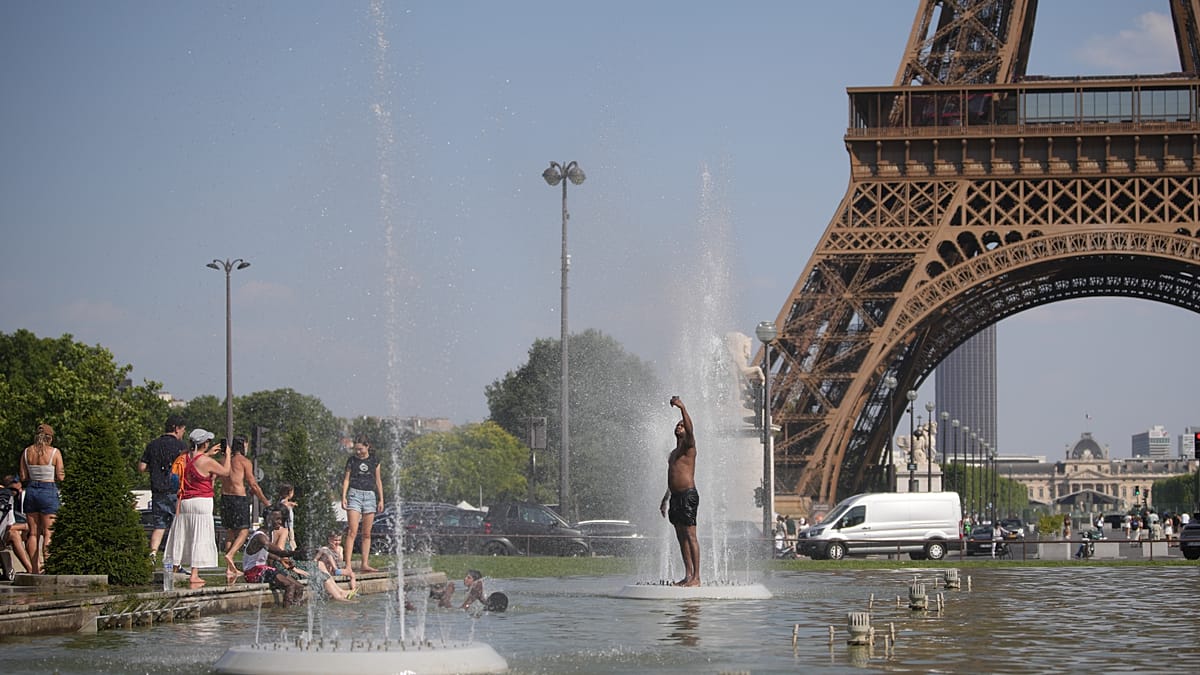
Europe is sweltering through its most severe heatwave on record, with temperatures shattering all-time highs across the continent and the heat now shifting east towards the Balkans and Ukraine. What's driving...
Europe is sweltering through its most severe heatwave on record, with temperatures shattering all-time highs across the continent and the heat now shifting east towards the Balkans and Ukraine.
What's driving it
The heatwave is being sustained by what meteorologists call an omega block -- a weather pattern named for the Greek letter because of the shape it creates in the atmosphere. Hot, dry air from North Africa becomes trapped over a region as low-pressure systems on either side prevent it from moving away. The result is that temperatures have been pushed up to 18°C above their seasonal average. Europe is particularly exposed: only about 20% of European homes have air conditioning, and much of the continent's housing stock was built to retain heat rather than shed it.
This is also the second major heatwave to hit Europe in two months. The first began on 24 May, with temperatures 10-15°C higher than normal, causing several deaths.
The scale
At least 130 million people across central and eastern Europe faced temperatures above 35°C on Monday, down from more than 190 million the previous day, according to AFP analysis. Over 269 million people across the continent are expected to see temperatures exceed 30°C.
The World Weather Attribution group of scientists has said the heatwave would have been "virtually impossible" this early in summer without climate change. WHO chief Tedros Adhanom Ghebreyesus warned that Europe is the fastest-warming continent on Earth, heating at twice the global average.
The death toll
More than 1,300 excess deaths have been recorded in Europe since 21 June, the WHO said, including children who died in locked cars and young people who drowned seeking relief in unsupervised swimming spots.
France has been among the hardest hit. The country's national health agency recorded around 1,000 more deaths than expected since 24 June alone, with the majority among people aged 65 and over. At least 74 drowning deaths have been reported in France since 18 June. Ligue 2 footballer Kenzo Kies also died after reportedly drowning in the Rhone River during the heatwave. Poland, meanwhile, recorded 17 drownings in a single day on Sunday.
Tedros described heat stress as a "silent killer" and called on European governments to implement heat health action plans.
The records
Temperatures shattered national records across much of central Europe over the weekend:
Czech Republic: 41.9°C at Doksany, north of Prague -- the country's highest ever. "This is the first time we have ever registered a temperature of 41 degrees in our official weather station network," the meteorological institute CHMI said.Germany: 41.7°C at Coschen, near the Polish border, breaking a record set just 24 hours earlier. Overnight temperatures also hit a historic low point, with the mercury in the eastern town of Kubschuetz not dropping below 29.4°C -- the warmest night since records began almost 150 years ago.Poland: 40.5°C in the western town of Slubice, edging past a record that had stood for more than a century.Spain: Cantabria hit 43.7°C in the municipality of Tama -- the highest temperature ever recorded in the region in any month of the year. The agency reported that 22 and 23 June were the two hottest days in June since at least 1950 in mainland Spain.
Month-of-June records were also broken in the UK and Switzerland.
Government responses
In Paris, authorities banned drinking alcohol in public over the weekend to relieve pressure on emergency services, while the city's Pride March was postponed. The Eiffel Tower and the Louvre Museum also began closing early amid the hot weather.
France's Prime Minister Sebastien Lecornu called a special cabinet meeting to assess lessons from the heatwave and prepare for further extreme heat, after the national weather service said it was already anticipating another episode in July.
Berlin police deployed water cannons on consecutive days to help residents cool down, including on Sunday at the Olympia venue where Bruno Mars was performing.
In Belgium, the annual reenactment of the Battle of Waterloo was cancelled. "The safety of the public, participants, volunteers and emergency service workers cannot be compromised," organisers said.
France's Interior Minister Laurent Nunez pushed back against opposition criticism of the government's response. "This is not a fiasco -- we were prepared," he said.
More than 130 million euros have been allocated to fund cooling systems and renovation works in French schools and nurseries, according to state-owned utility EDF and several lenders.
Where it's heading
The heat is now bearing down on the Balkans and pushing into Ukraine. Hungary, Serbia, Romania, Croatia, Austria, southern Poland and western Ukraine were all expected to face temperatures above 35°C on Monday, with Bosnia and Albania both forecasting highs of up to 40°C.
Firefighters in Bosnia have been battling wildfires sparked by the extreme heat, including a landfill fire near Mostar that blanketed the surrounding area in smoke for several days.
Ukraine faces a particular challenge. Russian drone and missile attacks have decimated Ukraine's energy network since Moscow invaded in February 2022, causing tens of billions of euros worth of damage and leading to frequent power outages. Grid operators in at least five regions, from Ivano-Frankivsk in the west to Zaporizhzhia on the front line in the south, announced temporary restrictions on energy usage. Sergii Kovalenko, CEO of energy company Yasno, said the grid was already "operating at the limit of its capabilities" due to ongoing summer repair work following winter attacks.
Experts expect the heat to persist for several more days before eventually moving further east towards Turkey and central Asia. A storm front is forecast to bring some relief to the Balkans from Tuesday night, though temperatures are expected to remain elevated.
The bigger picture
"Heatwaves like this are what we expect to see in a changing climate," said John Kennedy, head of climate information at the WMO. "In the 50 years since the historic heatwave in 1976, Europe as a whole has warmed by around two degrees."
French paleoclimatologist Jean Jouzel warned that political attention tends to evaporate once a heatwave ends. "People are closing their eyes -- but it is extremely serious," he told the Tribune newspaper. Of the 52 heatwaves recorded in France since 1947, two-thirds have occurred since the beginning of the 21st century.