
Kazakhstan’s growth to pick up in 2027 despite geopolitical tensions, IMF says
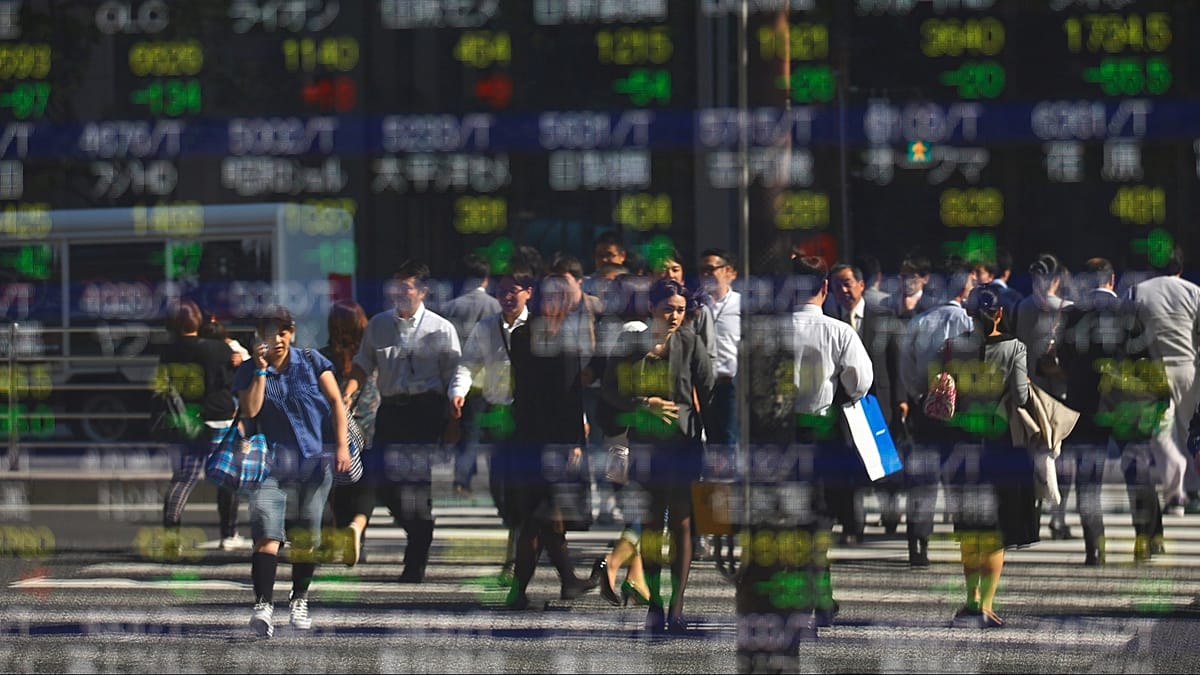
The IMF expects Kazakhstan’s economy to grow by 4.9% in 2027, up from 4.4% this year. Kazakhstan is forecast to grow faster than any other oil exporter in the IMF’s Middle East and Central Asia group in 2026.
Kazakhstan’s economic growth is expected to accelerate to 4.9% in 2027, up from a projected 4.4% this year, according to the International Monetary Fund’s (IMF) latest World Economic Outlook, released in October.
The 2026 forecast marks a slowdown from the 6.5% growth recorded in 2025. Nevertheless, Kazakhstan is projected to post the strongest economic growth among oil-exporting countries in the IMF’s Middle East and Central Asia group this year. The region’s economy is projected to contract by 0.3% in 2026 before growing by 6.3% in 2027.
The closure of the Strait of Hormuz has hit Middle Eastern oil exporters hardest. The IMF expects Bahrain, Iraq, Kuwait and Qatar to suffer double-digit contractions this year, followed by double-digit growth in 2027 as production and exports return to normal.
Meanwhile, the report says commodity prices, remittances and ongoing reforms will continue to support growth in the Caucasus and Central Asia.
Uzbekistan’s economy is forecast to grow by 7.8% in 2026, before slowing to 6.5% in 2027. Kyrgyzstan is projected to record growth of 9% this year and 7% next year, while Tajikistan’s economy is expected to expand by 7.3% and 6.8%, respectively. Turkmenistan is forecast to see growth of 2.4% in 2026, edging up to 2.5% in 2027.
Geopolitical tensions disrupt oil markets
The IMF identifies geopolitics and technology as two major forces shaping the global economic outlook, with the US-Iran conflict posing a significant challenge to energy markets.
The closure of the Strait of Hormuz in March disrupted the transportation of around 20% of the world's oil supply, equivalent to approximately 20 million barrels a day.
The disruption prompted oil producers outside the Persian Gulf, namely Brazil, Kazakhstan, the United States and Venezuela, to increase output to compensate for the shortfall. Some Gulf producers redirected supplies through alternative routes, while the International Energy Agency (IEA) and China released emergency reserves.
The IMF's baseline scenario assumes that the Strait of Hormuz will reopen in March 2027, with a broader return to pre-war conditions expected by October of that year.
Russia's war in Ukraine has also added to disruptions in global oil supplies. Ukrainian strikes on Russian energy infrastructure, both onshore and at sea, have affected shipments of Kazakh crude transported through the Caspian Pipeline Consortium (CPC).
AI investment offers opportunities amid global uncertainty
Despite the negative impact of geopolitical shocks on the global economy, investment in artificial intelligence (AI) and related technologies has provided some support to economic activity.
The IMF points to the growing demand for advanced technology hardware, including semiconductors, as a potential opportunity for commodity-exporting economies such as Kazakhstan. These countries are positioned earlier in the global supply chain, supplying raw materials needed for the production of advanced technology components, much of which takes place in economies such as South Korea and Taiwan.
However, the fund cautions that the sustainability of the AI-driven investment boom remains uncertain. Demand for technology could prove more persistent than expected, but energy constraints and safety concerns could limit the industry's ability to expand.
Overall, the IMF describes the global economy as resilient but increasingly uneven in its ability to withstand external shocks.
The World Economic Outlook projects global economic growth to slow from 3.5% in 2025 to 3.1% in 2026, before recovering to 3.4% in 2027.
Among major economies, US GDP growth is projected to remain at 2.3% in both 2026 and 2027. Growth in the eurozone is expected to slow to 1.1% this year and pick up to 1.2% next year. Growth in China is forecast to slow to 4.5% in 2026 and 4% in 2027.
Global inflation is also expected to come under renewed pressure from war-related supply disruptions. After declining to 4.1% in 2025, headline inflation is forecast to rise to 4.7% in 2026 before returning to 4.1% in 2027.
World trade growth is projected to slow from 5% in 2025 to 4.6% in 2026, before edging up to 4.7% in 2027. The IMF links the slowdown to the effects of tariffs, adjustments to global supply chains and the growing importance of technology-related trade.