Europe’s heatwave could trigger blackouts. Which countries are most exposed?
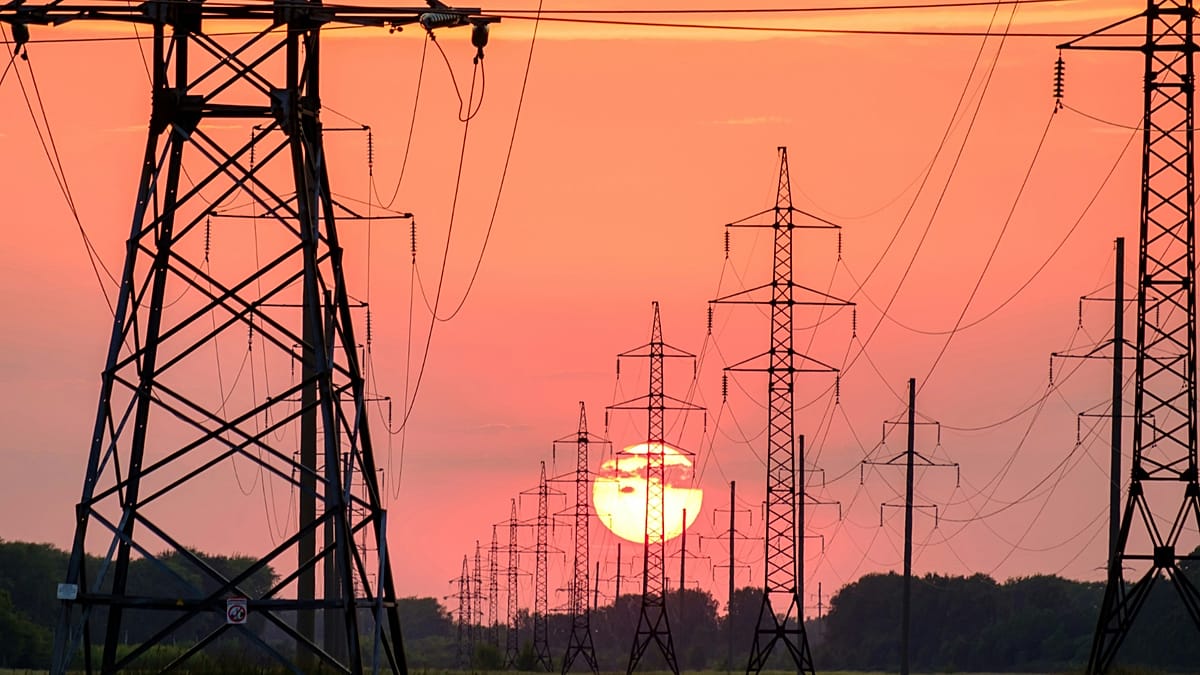
Europe’s energy grid is being put to the test as the continent swelters under its third heatwave of the year. Forecasters warn that temperatures may hit a scorching 43°C in the Mediterranean this week, as...
Europe’s energy grid is being put to the test as the continent swelters under its third heatwave of the year.
Forecasters warn that temperatures may hit a scorching 43°C in the Mediterranean this week, as Western Europe braces for potentially record-breaking heat.
France has already placed more than half of its 96 departments under a danger-to-life red alert, urging citizens to avoid direct sunlight and exercise “absolute vigilance”.
Across the channel, the UK’s Met Office warns that daytime highs in the south of England could reach 38°C in the coming days, along with ‘dangerous’ tropical nights (where the temperature never dips below 20°C during a 24-hour period).
Germany, Spain, Portugal and Switzerland are also anticipating scorching temperatures, which are starting to bring daily life to a standstill.
Across Europe, hundreds of schools have shut or closed early, while train services in busy cities like Paris and Brussels have been reduced to cut the risk of breakdowns. Paris’ Fête de la Musique festival went ahead over the weekend, but the government banned guests from drinking alcohol in public places to reduce the risk of dehydration.
But there is another victim to extreme heat that most people do not consider: electricity.
How soaring temperatures impact Europe’s energy grid
Europe often witnesses a spike in electricity use during heatwaves due to an increased demand for cooling. In fact, space cooling, which is mostly air conditioning (AC) units and fans, consumed around seven per cent of the world’s electricity in 2022.
“The world is baking in extreme heat, driving demand for cooling higher,” the International Energy Agency (IEA) warned back in 2023.
“Record-shattering temperatures are feeding demand for air conditioning and driving surges in demand for electricity – which can result in a vicious cycle of increased greenhouse gas emissions that in turn make the world even hotter.”
During the early summer heatwave of 2025, France recorded an evening electricity peak 25 per cent above the off-season average due to cooling, despite the country having a relatively low ownership of AC.
Which countries will see the biggest spikes in electricity demand?
Price comparison website Compare the Market has analysed 85 countries, representing around 90 per cent of global electricity consumption, to understand how electricity demand changes during extreme temperature months.
The study compared demand during the hottest 10 per cent of months in each country with demand during normal-temperature months.
Researchers found that Greece ranked first globally, with electricity demand increasing by 38.62 per cent during extreme heat periods. This equates to an additional 143.08 kWh per person per month of extreme heat.
Montenegro came second, with demand rising by 22.49 per cent, followed by Türkiye (21.91 per cent), Croatia (17.76 per cent), Italy (14.22 per cent) and Spain (8.86 per cent).
European countries with the longest annual power outages
When overall electricity demand exceeds the available generation capacity or the physical limits of the power grid, it can cause the system’s electrical frequency to drop – causing a blackout.
Using the five most recent years of available outage data, Compare the Market also analysed the average duration and estimated household cost of power outages across selected countries.
Among the European countries analysed, Hungary recorded the longest average outage duration, at 2.92 hours per year, followed by Slovenia at 2.16 hours and Greece at 1.63 hours.
“Although Italy has a shorter average outage duration than Greece, its large household base means it records the highest total estimated annual household cost among the European countries highlighted,” the study states.
“Power outages in Italy are estimated to cost households around €154.7 million per year, followed closely by Poland at €152.1 million.”
These figures come from a standard 'value of lost load' assumption used in energy economics to estimate the cost of without power (for example food spoilage, heating/cooling loss, internet disruption, and general inconvenience). This is not based on local electricity prices.
Can renewables save Europe’s strained grid?
In June and July last year, Europe experienced a heatwave that saw temperatures hit 40°C, triggering daily power demand to increase by up to 14 per cent. This, combined with thermal power plant outages, led to a two to three times increase in average daily power prices.
However, according to energy thinktank Ember, record EU solar generation helped keep power supply stable amid the spike in demand.
“In the peak days of the heatwave, solar delivered up to 50 GW of power in Germany alone, generating 33–39 per cent of Germany’s electricity,” Ember states.
“Germany has 14 GW of battery storage and 10 GW of pumped storage, which helped to store some solar to use when the sun went down.”