'Turning crisis into opportunity': How Lithuania became a wild card for the EU's clean energy race
Published on 22/05/2026 - 7:00 GMT+2 Lithuania has rapidly become a renewables powerhouse after drastically reducing its reliance on polluting fossil fuels. The country’s...
Published on 22/05/2026 - 7:00 GMT+2
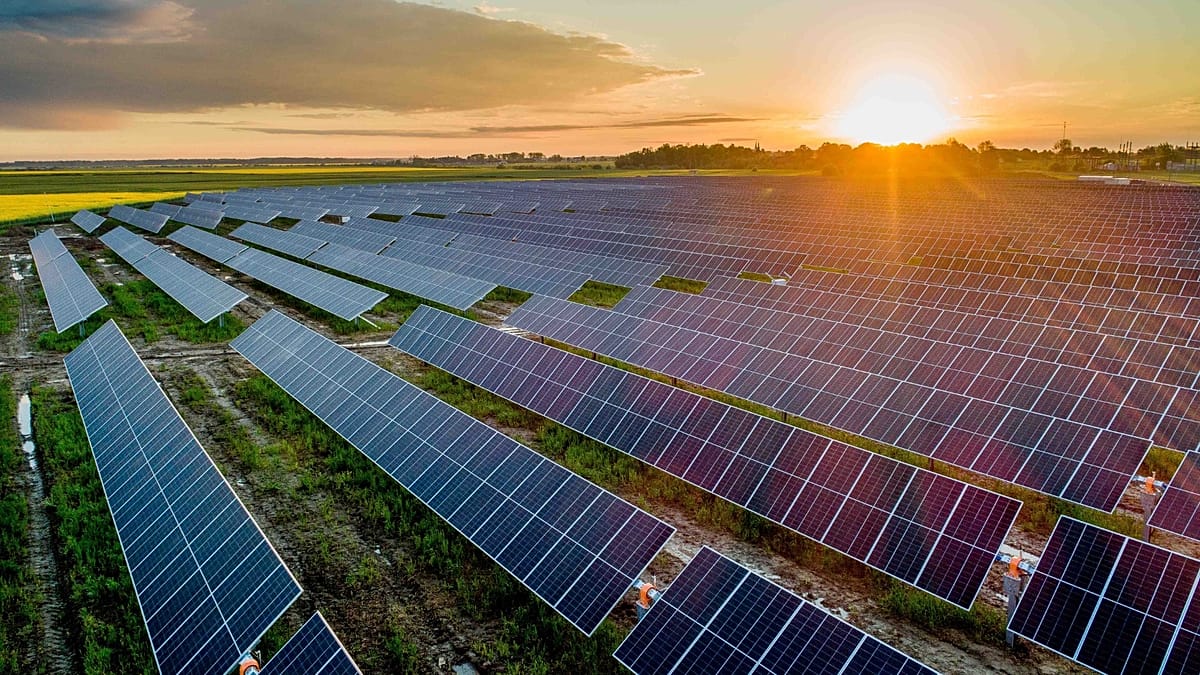
Lithuania has rapidly become a renewables powerhouse after drastically reducing its reliance on polluting fossil fuels.
The country’s domestic consumption of renewable electricity jumped from 15 per cent five years ago to 50 per cent in 2025, thanks to huge investment in solar and wind.
At a conference last week in the European Parliament, Lithuania was praised for having the fastest renewable electricity transformation in the EU over the past four years, helping it become the first in Europe to achieve “complete independence from Russian fossil fuels”.
Lithuania’s renewables boom
A report by Lithuanian NGO Ziedine ekonomika, which was read out at the conference, found that the country’s prosumers (households and businesses that generate their own renewable electricity by using rooftop solar panels, etc.) have increased from 18,800 in 2021 to a staggering 174,500 in 2025.
The country’s installed capacity of solar power has also risen significantly, from 225 MW in 2021 to 3,284 MW in 2025.
Similarly, wind power capacity has shot up from 623 MW in 2021 to 2,535 MW in 2025 – enough to power roughly 1.5 million average households annually.
“In April, solar and wind covered 84 per cent of Lithuania’s electricity demand,” says MEP Petras Auštrevičius. The country has also sharply reduced its reliance on imports, with domestic production meeting 99 per cent of its electricity needs.
“Lithuania is proving that renewables are central to energy resilience,” Auštrevičius adds. “Other countries can learn from Lithuania’s progress.”
Lithuania’s renewables capacity will continue to grow at a similar rate throughout 2026. By 2028, under the current Government Programme, the country aims to have domestic electricity consumption powered by 100 per cent renewable power, with the aim of becoming a net exporter of electricity powered primarily by renewable energy.
‘Turning crisis into an opportunity’
The case for home-grown, clean energy has strengthened in recent weeks – as the price of gas and oil skyrocketed following the war on Iran.
Much of the price volatility has been attributed to the effective closure of the Strait of Hormuz, one of the world’s biggest fossil fuel chokepoints that carries around one-fifth of global oil supplies.
“As Europe endures one of the worst energy crises ever, Lithuania has already provided a stark example of how to turn a crisis into an opportunity,” says Domantas Tracevičius, a member of the European Economic and Social Committee (EESC).
Tracevičius adds that within just a few years, Lithuania will have transformed from a “major consumer” of fossil fuels for power generation to being a net exporter of renewable electricity.