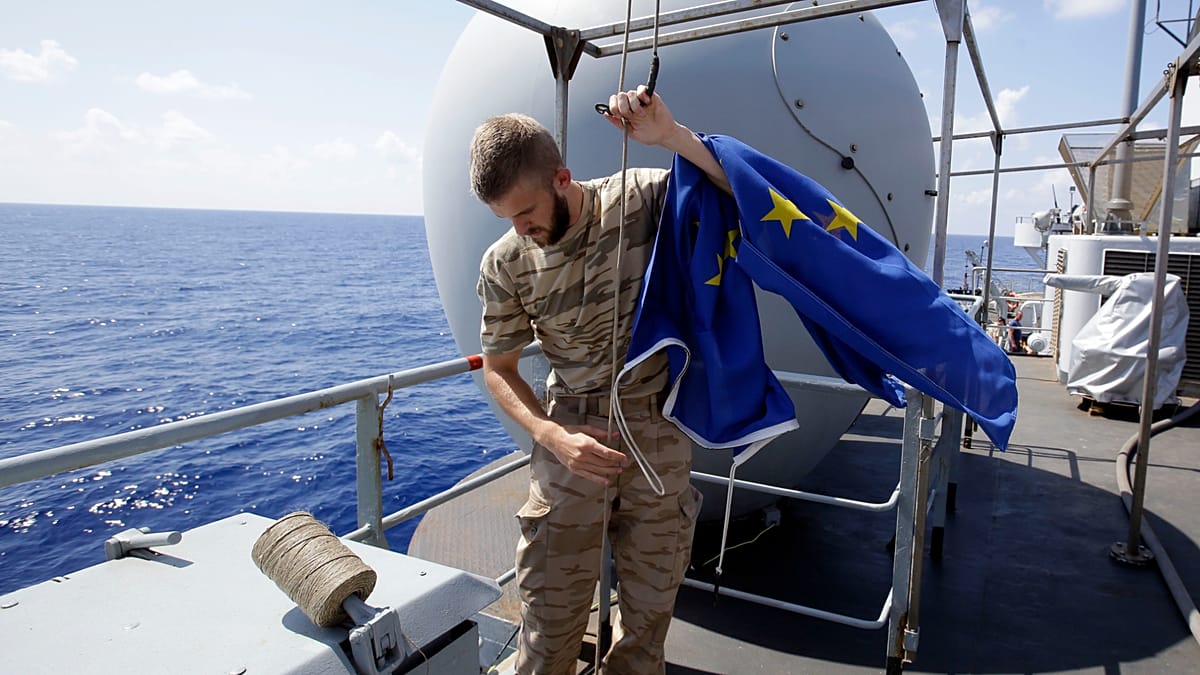
Canada walked away from Trump. Could the EU ever do the same?
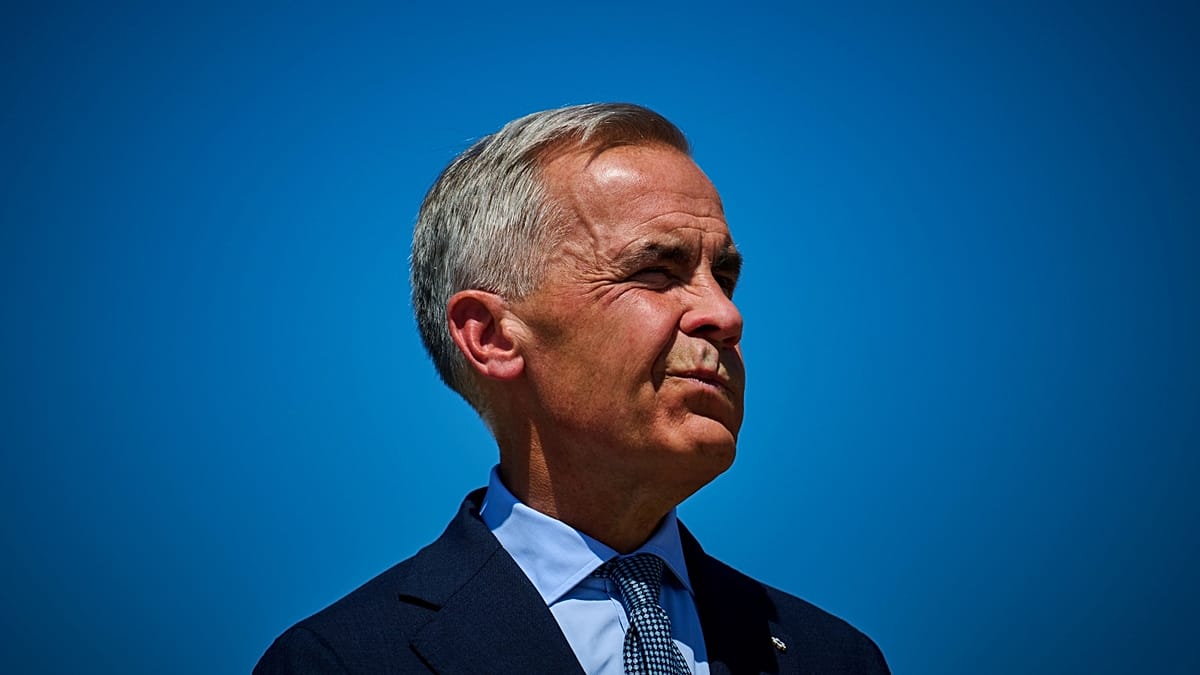
Canada's Mark Carney has shown the EU what walking away from Trump could look like. But would Brussels dare call out the US president and reject his demands that allies play by his rules? For Europe, it's complicated.
Mark Carney said enough.
In a stunning decision, the Canadian prime minister has walked away from trade negotiations with the United States, his country's one-time closest ally. While the economic ramifications remain uncertain and could be severe, the former central banker has made clear that sovereignty is not a price Canada is willing to pay.
Carney denounced Washington's proposed terms as a "bad deal" that would have infringed on Canada's use of the French language, which is constitutionally protected, and its ability to sign trade deals with other nations.
"You're at war when you're attacked, and we got attacked," Carney said, promising to retaliate "dollar for dollar" against his neighbour.
The fallout is set to be painful: steep tariffs on $20 billion in Canadian goods and roughly 87,000 direct and indirect jobs put at risk, according to initial estimates.
And it could soon get worse. US President Donald Trump has already announced a new round of tariffs against Canada, fuelling the cycle of retaliation.
The spectacular fallout has drawn parallels with the European Union, which has also been on the receiving end of the White House's ever-expansive demands and negotiating tactics from a Trump administration fixated on trade deficits and determined to use every weapon to put America first, even before friends.
For over a year, Brussels has been struggling to stave off American pressure to dismantle environmental, sustainability and digital regulations, while trying to keep alive the lopsided EU-US trade deal struck last year in Turnberry, Scotland.
In July, Trump vowed that the EU would pay a "very big price" after the European Commission imposed an €890 million fine on Google for alleged self-preferencing practices and unfair treatment of app developers.
"We anticipate a substantial TARIFF to be placed on them at the earliest possible moment," Trump said. (The duty is yet to be introduced.)
As Brussels and Washington continue to negotiate tariff relief, particularly on steel and aluminium, a new question arises: Could the EU ever walk away?
Yes, it could walk away
The main reason the EU could be tempted into pulling a Carney-like move is its determination to protect its right to regulate and enforce rules within its jurisdiction, which Brussels sees as an absolute red line.
Europeans believe they have made more than enough concessions to placate Trump, most notably a 15% tariff on EU goods, and refuse to bend any further. Amending laws on Washington's whim would be tantamount to capitulation.
EU diplomats note that Trump backing down from a failed bid over Greenland and his decision to unilaterally launch a war against Iran, roiling energy markets along the way, have strengthened the collective resolve to speak up and push back.
Another reason that could embolden the EU to walk away is its vast size as the world's second-largest economy. The 27-member bloc's GDP is €18.8 trillion compared to Canada's $2.32 trillion (€1.99 trillion), making it almost ten times larger.
Last year, EU-US trade (goods and services) reached €1.77 billion, double the $872.3 billion (€748 billion) in Canada-US trade. Both Canada and the EU have a long-standing goods surplus and a services deficit with the US.
What changes is the dependency. Due to its geographic location, Canada is structurally reliant on the American market: Canada exports about 75% of its goods to the US. For the EU, whose trade links are much more diversified, the share falls to 21%.
This, in principle, gives the EU greater leverage and a stronger cushion to weather a trade war with the US should it ever feel it necessary to go down that road.
During the negotiations that preceded the Turnberry deal, the European Commission prepared a list of €93 billion worth of American goods to be targeted in a hypothetical tit-for-tat. The list, which remains valid, would be the first line of defence.
EU officials have also raised the prospect of triggering the Anti-Coercion Instrument (ACI), which allows countermeasures beyond traditional tariffs, such as excluding foreign companies from public tenders or partially suspending IP rights protection.
The instrument gained new significance when Trump doubled down on his threats against Greenland and the bloc's green and digital regulations. Both cases were seen as textbook examples of coercion for political aims.
"If Washington follows through with new tariffs over European digital taxes or regulation, it would very much reopen Turnberry and put Europe in a similar position to Canada's. European governments could well conclude that there is no stable deal to preserve and walking away is the better tactical play," Tobias Gehrke, a senior policy fellow at the European Council on Foreign Relations, told Euronews.
But the reaction would be moulded not just by the US but also by China, Gehrke noted. Trade tensions between the EU and China have soared ahead of an October deadline.
"There is a growing view in Europe that China represents the more systemic economic security challenge, and few want to fight simultaneous trade wars with Washington and Beijing," he said. "If the Trump administration pressures Europe precisely when Brussels is trying to manage a confrontation with China, Washington may calculate that Europe has limited escalation options."
No, it could not walk away
Though the EU has strong arguments and tools at its disposal to walk away, it is far from clear whether it could muster Carney's courage to do so.
Since Trump unveiled his sweeping tariffs, the 27 member states have scrambled to close ranks behind the European Commission, which negotiates on their behalf.
Some, including France, Spain and the Nordic countries, urged Brussels to stand firm and retaliate against unfair terms. Others, including Germany, Italy and Ireland, publicly pushed for a compromise, whatever the cost, to avoid a damaging all-out confrontation.
The cacophony and competing national interests tied the Commission's hands and ultimately produced a deal that satisfied no one. The EU still lacks a common strategy for dealing with Trump — a weakness the White House has sought to exploit.
While US threats on key issues like Greenland have indeed brought EU member states closer, and even ideologically aligned leaders like Italy's Giorgia Meloni have clashed with the US president, the fact that the Anti-Coercion Instrument has never been triggered illustrates just how difficult it is for member states to reach consensus and accept the economic pain that would follow an all-out confrontation with Washington.
By contrast, Carney rallied Canada behind him.
Following the collapse of the talks, Canada's provinces swiftly backed Carney. Ontario Premier Doug Ford, whose manufacturing sector stands to lose from the clash, expressed "full support for a strong response – tariff for tariff, dollar for dollar".
A new pollshows that 76% of Canadians believe Carney made the right call.
For the Canadian prime minister, picking a fight with Trump makes sense politically as it builds on the widespread antipathy that Canadians feel towards the US president, who has repeatedly floated the idea of making Canada the 51st US state.
There is another pivotal factor that could make the EU think twice: Ukraine.
Brussels has acknowledged that the EU-US trade deal was partly driven by a desire to keep Trump engaged in efforts to end Russia's war. The US president's stance on the conflict has shifted dramatically, fuelling anxiety among Europeans who know they cannot replace US intelligence or American-made air defence systems.
"It's not only about the trade. It's about security. It is about Ukraine. It is about current geopolitical volatility," European Commissioner for Trade Maroš Šefčovič said last year. "I believe from now on, we can go only for the better."
Although Canada is a staunch supporter of Ukraine, its role in the conflict is limited.
A European walk-out, by contrast, could give Trump a convenient excuse to retaliate by fully disengaging from Ukraine. (Some officials and diplomats in Brussels believe Trump has already done so, for all intents and purposes.)
"The Turnberry agreement is not a great deal. It's not a balanced deal. But it did not imply any compromise on the sovereignty of the European Union. There's no element that compromises the capacity of the European Union to regulate on digital, on climate, and so on," Ignacio García Bercero, a senior fellow at Bruegel, told Euronews.
Retaliation is also more complicated for the EU than for Canada, he added.
"Canada is a federal state and can impose countermeasures without securing the approval of its provinces," García Bercero said. "The EU is not a federal state, meaning retaliatory measures require a qualified majority of member states. So far, European capitals have shown little appetite for – or tolerance of – a trade war the Canadian way."