Intense heat on the way, but no alarmism: IPMA rejects exaggerated forecasts

Next week it will be very hot across the whole of mainland Portugal, much as it will be in much of Europe. The Portuguese Institute for Sea and Atmosphere (IPMA) has confirmed forecasts pointing to very high...
Next week it will be very hot across the whole of mainland Portugal, much as it will be in much of Europe. The Portuguese Institute for Sea and Atmosphere (IPMA) has confirmed forecasts pointing to very high temperatures in Lisbon, around 37 degrees, and above 40 in inland regions, particularly the Alentejo.
The official designation of a “heatwave” can only be confirmed later, as it requires at least six consecutive days with temperatures at least five degrees above the average of the past 30 years, within a 15-day window.
Meteorologist Paula Leitão, from IPMA, told Euronews that “it is very likely that yellow or orange warnings for high temperatures will be issued for the whole of mainland Portugal”, but such warnings can only be issued a maximum of 72 hours in advance.
Paula Leitão explains that the high temperatures will begin on Saturday 20: “On Saturday they already rise a little, then there is a gradual increase on Sunday and in the following days. In the Alentejo and the hottest parts of the country, temperatures will reach values close to 43 degrees. Our forecasts are drawn up with a certain degree of accuracy, allowing us to inform the public over a 10-day period. Throughout that period, from Saturday to the end of the 10 days, the weather will remain hot, although with a slight downward trend on Thursday and Friday.”
The areas particularly affected, which may record temperatures above 40 degrees, are those that usually suffer most from the heat. As well as the whole Alentejo region, there are also the Tagus Valley, especially the districts of Castelo Branco and Santarém, and the Douro Valley. As for the major cities, Porto should see highs between 30 and 33 degrees, while Lisbon will see values above 35 degrees.
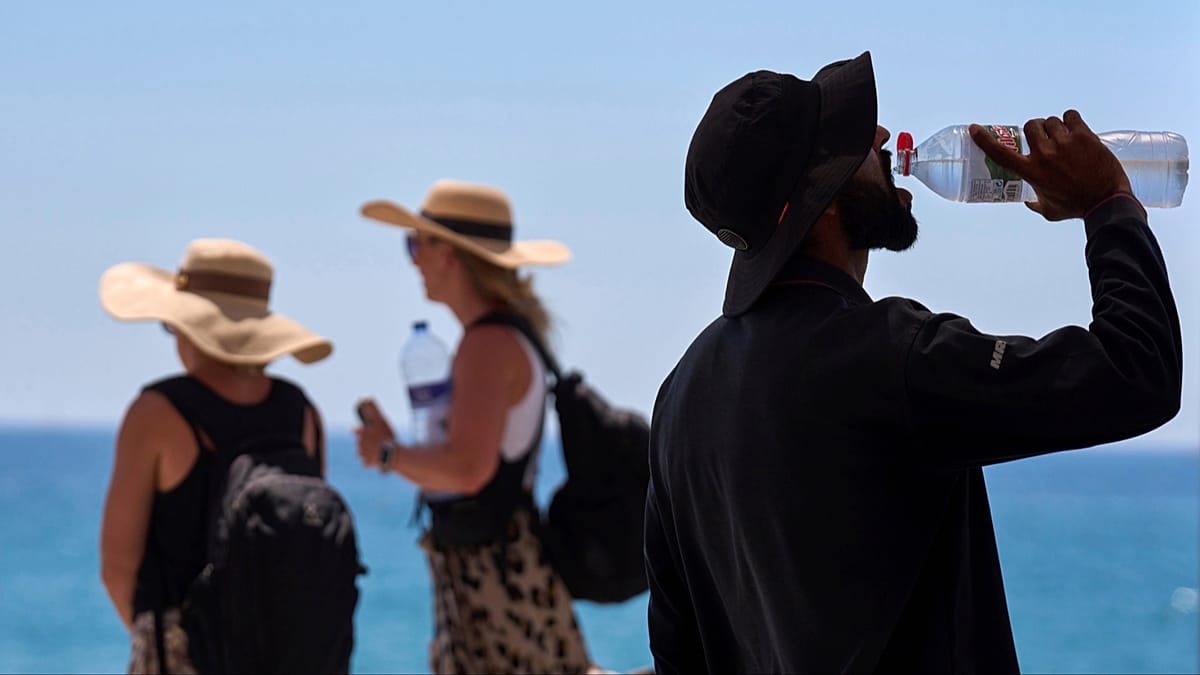
The recommendations are the same as whenever there are high temperatures: “Pay particular attention to children and older people, seek out cool places and avoid being in the sun and doing strenuous work in the sun during the hottest period, as well as taking care to stay hydrated and drink plenty of water.”
IPMA rejects alarmist forecasts
Despite the warnings, IPMA dismisses the alarmist scenarios that some internet users have circulated this week, predicting record temperatures that could reach 50 degrees. Paula Leitão insists that the values forecast for next week “are far from the record figures for mainland Portugal, which are 46 or 47 degrees”.
Why, then, are some websites and social media pages talking about temperatures above 50 degrees?
Paula Leitão explains that this is due to the democratisation of meteorological forecasting tools, which not everyone knows how to interpret correctly: “In the past, only national weather forecasting centres had access to the data. Today, the models that run internationally have open data and anyone can go and look for them. So someone with a bit more training in meteorology can interpret that information and say what they have understood. The models have no filters to carry out a critical analysis of the values they produce. And there are a lot of models. Some are better than others, and 10-day forecasts are highly uncertain.”
The meteorologist is categorical: “Temperatures of 50 degrees or more have never been recorded anywhere on the Iberian Peninsula.”
In summary: “Yes, it is going to be very hot. Yes, there will probably be weather warnings. People should take the necessary precautions next week, but we need to wait and see whether we really are facing absolute record highs, which at the moment is not what we are expecting.”
In other words: keep hydrated, avoid going out during the hottest hours of the day, take care of the most vulnerable, wear light clothing and avoid exertion. But without alarmism. Above all, do not believe everything you read on the internet.