‘Den of spies’: why has Japan been easy prey for Russian espionage, and what is Tokyo doing about it?
After eight decades as arguably the most welcoming environment for foreign spies in the democratic world, Japan – where espionage is technically not illegal in many cases – is racing to build its own spying...
After eight decades as arguably the most welcoming environment for foreign spies in the democratic world, Japan – where espionage is technically not illegal in many cases – is racing to build its own spying and counterintelligence capabilities.
Reports that Japan has become a hub for Russian operatives procuring technology for the Kremlin’s war against Ukraine come as Tokyo undergoes its biggest postwar rethink of its security services.
How did Japan get to be an easy target for spooks – and can it now fix the problem?
Why are Japan’s spying laws and spycraft in the spotlight?
Long regarded as a soft touch for international intelligence operatives, Japan experienced a Russian spy influx after the invasion of Ukraine resulted in their expulsion from western countries.
Nikkei Business reported in August 2022 that about 120 Russian intelligence officers were operating in Japan. That followed a police warning about them approaching employees of technology companies.
One senior post at the Russian trade representation in Tokyo is always an officer of the SVR – the successor of the KGB’s overseas division – according to sources quoted by Nikkei and Jiji Press.
The Tokyo police public security bureau said in January that a Japanese machine-tool company employee had been disclosing trade secrets to a suspected SVR operative who had already left Japan.
Then came a 12 July New York Times article calling Japan a “den of spies” and detailing a Russian technology procurement operation for the Ukraine war run out of a Tokyo office of Aeroflot, the Russian majority state-owned airline.
Japan’s chief government spokesperson, Minoru Kihara, on Monday refused to comment on individual cases but acknowledged that “in a rapidly changing security environment, the need to deal with foreign information activities that threaten our national security, such as theft of important information, is growing”.
Why is Japan’s anti-espionage regime so weak?
As with much of Japan’s modern political, economic and legal architecture, the roots lie in the trauma of the brutal suppression of dissent before and during the second world war.
The postwar constitution enshrines privacy of communications and freedom of expression, which along with a civil society consensus has severely restricted officially sanctioned surveillance.
This has left Japan with no laws against espionage, beyond those for military personnel and contractors. Following a series of embarrassing cases where convicted spies were given lenient sentences, a 1985 attempt to introduce an anti-spy act that included the death penalty as a potential punishment collapsed in the face of a widespread backlash.
The Specially Designated Secrets Act also faced opposition but was passed by the Diet – Japan’s parliament – in 2013. Its harshest measure was 10 years’ imprisonment for leaking state secrets. The January case of the Russian operative cultivating a machine-tool engineer exposed its weakness when the police referred it to prosecutors as a case of unfair competition.
Does Japan have any spies of its own?
It had been widely believed, both at home and abroad, that postwar Japan had no significant spying capabilities or intelligence agency. However, documents leaked by the whistleblower Edward Snowden – who had been a National Security Agency (NSA) contractor at a US military base in Japan from 2009 to 2012 – revealed that Japan’s Directorate for Signals Intelligence (DFS) had been operating since the 1950s in close cooperation with the NSA.
Subsequent investigations in 2017 and 2018 by Japan’s public broadcaster NHK in cooperation with the Intercept detailed at least six facilities with about 1,700 staff eavesdropping around the clock on phone calls and digital communications.
Operations are reported only to the prime minister of the day and their inner circle. The agency is headquartered at a nondescript building designated “C1” inside the defence ministry’s compound in Ichigaya, central Tokyo.
Cooperation between the NSA and DFS has deepened over the decades, with the US agency maintaining at least three major monitoring facilities on Japanese soil, including a surveillance station on Okinawa for which Japan contributed around $500m in costs. In return, the NSA has trained Japanese spies and provided tech including the XKeyscore mass internet surveillance system, according to the leaked documents.
What is Japan doing to up its spy game?
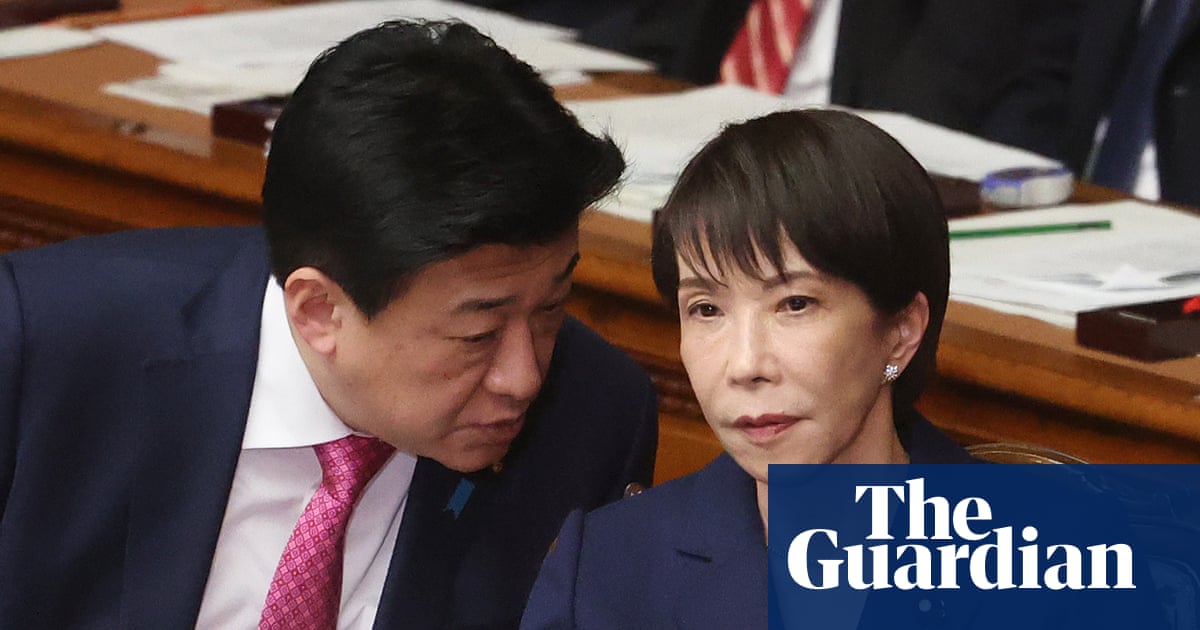
Sanae Takaichi’s government is using its large parliamentary majority, and a recognition that Japan now faces genuine geopolitical threats, to push the first significant postwar intelligence overhaul.
The National Intelligence Council Establishment Act, passed in May, creates a PM-chaired council and 700-strong National Intelligence Bureau (NIB) that brings together previously separate operations.
The NIB is mandated to oversee counterintelligence operations, and new legislation aimed at foreign operatives in Japan is expected to be proposed by the end of 2026.
The DFS will share intelligence with the new bureau but continue to operate separately.
Perhaps the most radical measure is a new foreign intelligence agency – a CIA or MI6 equivalent – set to begin operations by early 2028.