‘Less than a minute of your time’: Driving the speed limit could save you money and cut emissions
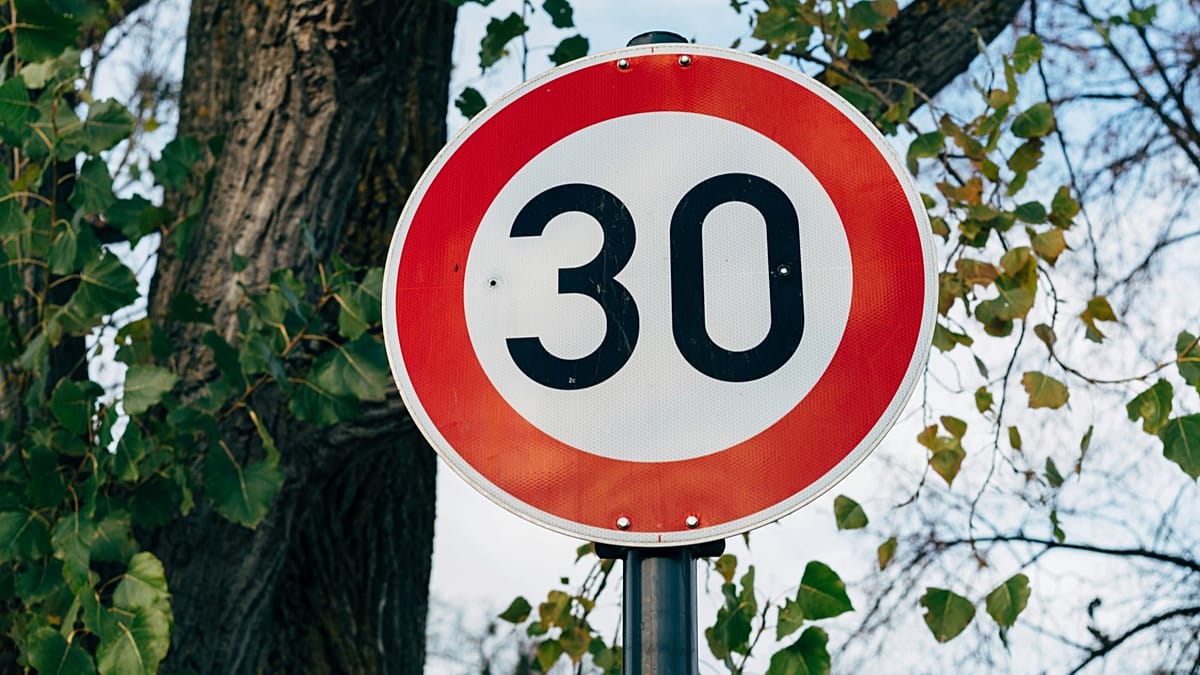
Sticking to the speed limit can “dramatically curb” fuel consumption and greenhouse gas emissions while saving drivers billions of euros annually. Researchers at the University of Minnesota Twin Cities have...
Sticking to the speed limit can “dramatically curb” fuel consumption and greenhouse gas emissions while saving drivers billions of euros annually.
Researchers at the University of Minnesota Twin Cities have analysed more than 120 million real-world vehicle trips in the US to understand the true impacts of speeding.
The study, published in the science journal Communications Sustainability, found that if drivers across the US complied with posted speed limits, it could save an average of $22 million (approximately €19.26 million), more than 25 million litres of fuel and 57,000 tonnes of carbon dioxide every single day.
These savings apply for light-duty engine-powered vehicles (LDVs) such as cars and small vans which account for 14.6 per cent of total energy consumption in the US.
According to a 2024 report by Odyssee-Mure, a project supported by the EU to monitor energy efficiency trends, LDVs consume around half of the energy used in European road transport.
‘Real-world fuel savings potential’
Along with the cash and climate savings, which could increase further following the soaring price of gas amid the war on Iran, researchers found that sticking to the speed limit added less than a minute to the average daily commute.
“While internal combustion engine-powered vehicles have become significantly more efficient in the past decades, they have also become much more powerful,” says William Northrop, University of Minnesota mechanical engineering professor and corresponding author on the paper.
“Driving fast is easier than ever. Our study examines an obvious yet difficult-to-implement intervention for major fuel savings that can be achieved without replacing our cars: driving slower.”
Researchers say that the next step of their research is to expand their framework to cover more diverse roadways and understand the impacts of “aggressive accelerations” on fuel use and emissions.
“Exploring both speed and acceleration reductions will give us an even more complete picture of real-world fuel savings potential,” Northrop says.
EV sales surge across EU
The war on Iran’s disruption of global energy supplies has triggered an electric vehicle (EV) boom across Europe, as more drivers wean themselves off fossil-fueled cars.
New battery-electric vehicle (BEV) registrations across the EU rose 48.9 per cent in March compared to the same period last year, according to the European Automobile Manufacturers’ Association (ACEA).
Battery electric cars reached more than 20 per cent share of the total EU market in March and a 19.4 per cent share for the first quarter. This compares with 15.2 per cent in the first quarter of 2025.
ACEA's report explained that the shift was significantly bolstered by new and revised tax benefits and other incentive schemes introduced across major European countries.
While electric cars are gaining ground rapidly, hybrid-electric vehicles (HEVs) still hold the largest individual share of the market at 38.6 per cent, and registrations surpassed one million units in the first quarter.
At the same time, internal combustion engine vehicles continue to dwindle in popularity. Petrol car registrations decreased further across the EU in the first quarter, dropping significantly from last year’s 28.7 per cent, and diesel followed a similar path, with its share shrinking to just 7.7 per cent.
Italy led the race, with a 65.7 per cent increase in BEV registrations during the first quarter, followed by France, then Germany.
How much will I save with an EV?
According to the UK’s Energy Saving Trust, a full charge in an EV will give a typical range of around 220 miles (354 km) and cost approximately £17 (€19.91) if charging at home.
Driving a petrol or diesel car for the same length would cost more than double, coming in at £45 (€52.69).
As EVs produce zero tailpipe emissions, drivers will also be significantly cutting their carbon footprint.
Energy giant EDF calculates that traditional petrol cars emit around 165 grams of CO2 per kilometre, and diesel cars emit about 170 grams of CO2 per kilometre. EVs average just 50 grams of CO2 per kilometre, including consideration of the electricity generated.
Of course, producing EVs does use a lot of energy. Typically, the emissions created during EV productions tends to be higher than petrol cars due to the manufacturing of lithium-ion batteries which release heat-trapping greenhouse gas emissions.
While advances in technology are making this process more efficient, drivers can opt for a second-hand EV which are often priced on par with petrol alternatives.