
French elections could derail EU enlargement, Croatian PM tells Euronews
Published on 3 November 2026 - 13:20 GMT+1•Updated 13:21 France’s presidential election next year could...
Published on 3 November 2026 - 13:20 GMT+1•Updated 13:21
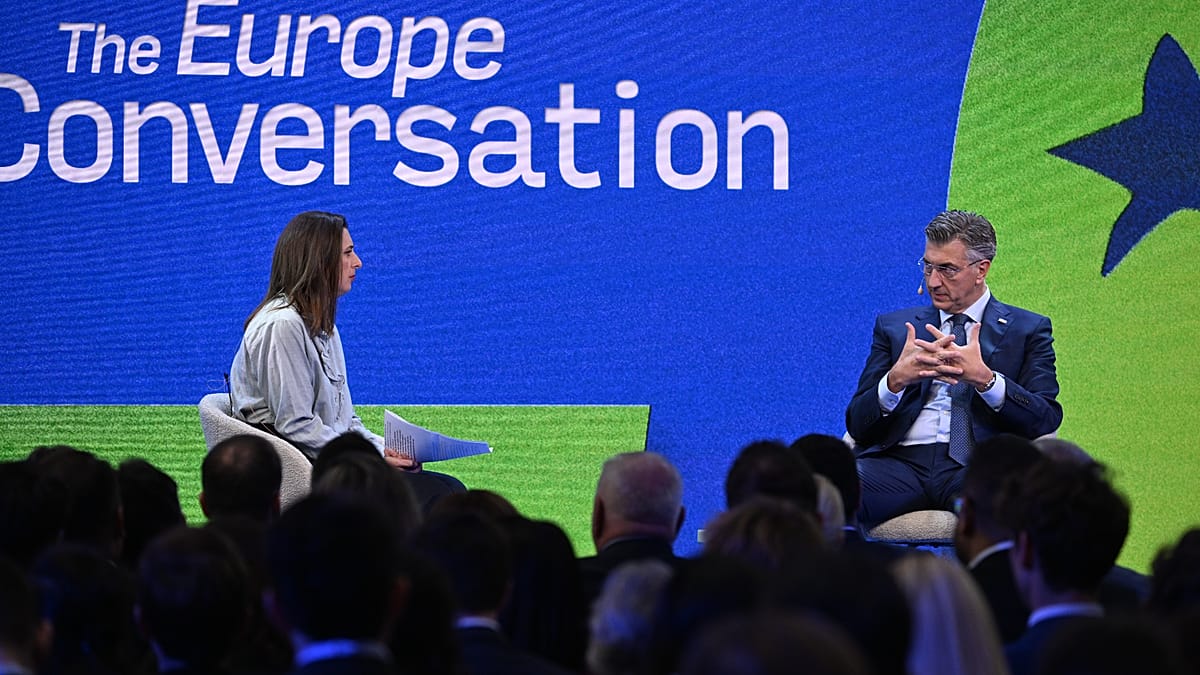
France’s presidential election next year could derail the EU’s enlargement plans, Croatian Prime Minister Andrej Plenković warned at the Euronews Enlargement Summit on Tuesday.
His warning comes as Eurosceptic figures on the far right and far left, including Marine Le Pen and Jean-Luc Mélenchon, perform strongly in polls ahead of the 2027 election.
Nine candidate countries – Albania, Bosnia and Herzegovina, Georgia, Moldova, Montenegro, North Macedonia, Serbia, Turkey and Ukraine – are seeking to join the EU, with accession negotiations at various stages.
“The political events may affect the enlargement more substantially than anybody can imagine today,” Plenković said. He added: “Some of the electors and parties are clearly opposing the process.”
Beyond the rise of Euroscepticism in France, Plenković highlighted the country's constitutional requirements for approving new EU members, which could complicate future accessions.
He said that France's 2005 referendum on the European Constitution showed that voters could be “manipulated”, resort to “false information” and vote based on “the current situation in France” rather than the actual question put to them.
Under French law, EU enlargement must generally be approved by referendum. However, an alternative parliamentary procedure allows accession to be ratified by a three-fifths majority of votes cast in the French Congress, which brings together both houses of parliament.
That route could prove equally difficult given France’s deep political divisions.
Plenković warned that a change of political leadership in France in 2027 could fundamentally alter the prospects for enlargement.
He also questioned the timeline for EU enlargement. Montenegro hopes to join the EU by 2028, Albania aims to conclude the negotiations at the end of 2027 and Moldova at the beginning of 2028. Plenković said this timetable was “not very smart”, warning that “something always unpredictable happens and things get postponed.”