Heatwaves are killing tens of thousands in India. Officials are barely counting them
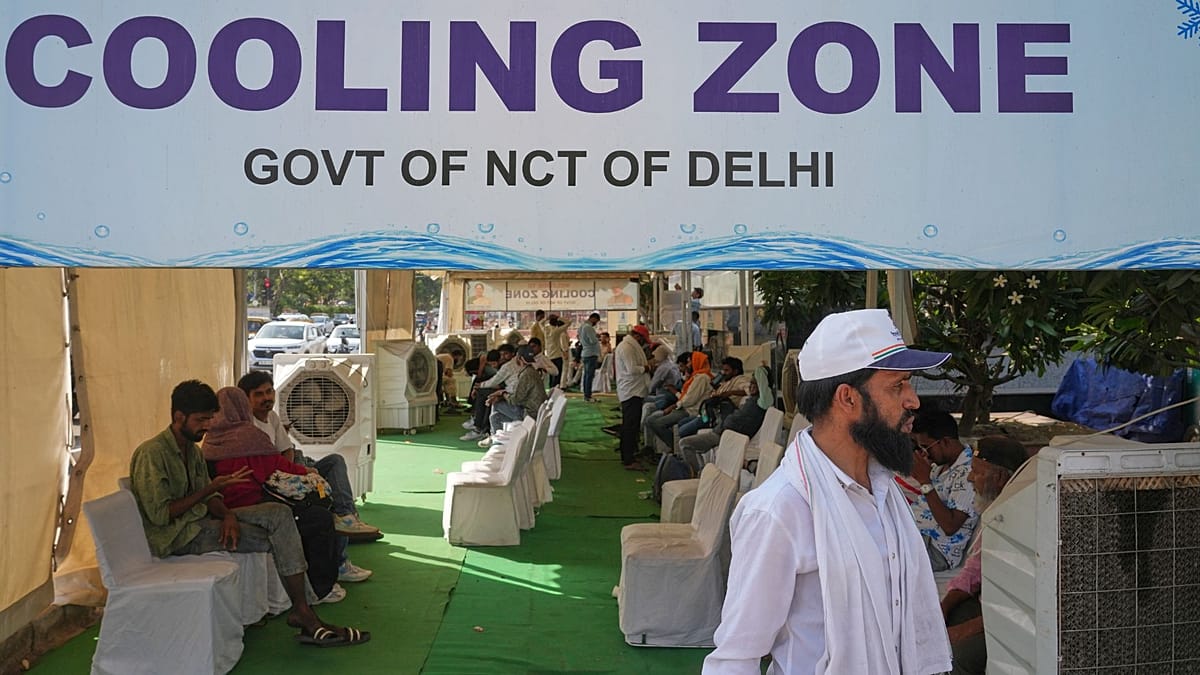
India has been sweltering through a baking hot summer, with temperatures in the northern state of Uttar Pradesh creeping past 48°C in May. A recent study underlines the dangers of these worsening highs. It...
India has been sweltering through a baking hot summer, with temperatures in the northern state of Uttar Pradesh creeping past 48°C in May.
A recent study underlines the dangers of these worsening highs. It estimates that a single day of extreme heat causes approximately 3,400 excess deaths nationally in India.
A five-day heatwave is linked to nearly 30,000 extra deaths, according to the paper published in the Frontiers in Environmental Health journal last month.
These heatwaves are becoming more frequent, longer and more intense as climate change – driven by the burning of fossil fuels – pushes global temperatures higher. The past 11 years, from 2015 to 2025, were the hottest on record, according to the World Meteorological Organization (WMO).
Why are the estimates so much higher than official figures?
Official counts of heatwave deaths in India are much lower – between 500 and 1,500 annually nationwide – but experts warn these are grossly underestimated. This is due to a lack of uniform tracking and a failure to take indirect impacts into account, such as the exacerbation of underlying health conditions.
The study is the first to attempt to rectify this by providing detailed numbers for all of India’s 765 districts. It also captures the full hidden impact of heat by taking into account all excess deaths during a heatwave, rather than only those directly attributable to heatstroke or heat-related disasters.
In the absence of uniform, countrywide data, the researchers looked at past data from 10 Indian cities in different climate zones on excess death rates during heatwaves. They matched each of India’s 765 districts to the city with the most similar climate, to estimate how many extra deaths would occur during hot periods.
India’s meteorological department declares a heatwave when temperatures reach 40°C or more in the plains, or at least 30°C in hilly regions. To qualify, these maximums must also be at least 4.5°C higher than the region’s normal average for at least two consecutive days.
Adding up all the districts to get national and state totals, the researchers found that just one extremely hot day is linked to about 3,400 extra deaths across India. A five-day heatwave is linked to roughly 30,000 extra deaths.
The biggest impacts are in states like Uttar Pradesh, which alone accounts for approximately 8,100 excess deaths during a five-day heatwave. Individual districts such as Ahmedabad, Jaipur and Surat each exceeded 250 excess deaths in a single event.
These findings are still described as conservative estimates, as they rely on historical temperature baselines and extrapolation from urban data. Rising temperatures, combined with the particular vulnerabilities of rural areas – outdoor work, less access to air-conditioning and medical care, higher rates of poverty and existing health conditions – likely mean the true numbers are higher.
Better protections needed for India’s most vulnerable citizens
The study underscores the need for better protections for India’s citizens during heatwaves, especially in the hottest and most crowded areas. This includes more localised heat action plans, improved and heat-relevant healthcare infrastructure, and robust early-warning systems.
The research also reveals deep inequalities. The five states bearing the highest heatwave mortality burden account for 66 per cent of national excess deaths while contributing only 29 per cent of India’s GDP – meaning the places least able to fund adaptation are also those facing the greatest risk. The authors argue this should reshape how federal investment in heat resilience is directed.
The findings have implications far beyond India’s borders. The study’s authors note that countries across South Asia and Sub-Saharan Africa face similar combinations of extreme heat, limited healthcare infrastructure and poor mortality surveillance – making India’s district-level methodology a potential model for understanding a largely invisible death toll elsewhere.
Heat-related deaths in Europe
The findings have implications closer to home too. A study by researchers at Imperial College London and the London School of Hygiene & Tropical Medicine found that climate change was responsible for an estimated 16,500 additional deaths across 854 European cities in the summer of 2025 – 68 per cent of all heat-related deaths that summer.
During the record-hot summer of 2024, more than 62,000 people died in Europe’s heatwave.
In Spain, May 2026 alone saw a record 101 heat-related deaths, 3.6 times the monthly average of the past decade, before summer had even begun – with the health minister warning that heat is now arriving before people’s bodies have had time to acclimatise.
As emissions continue to rise, what the Indian study makes clear is the true human scale of a crisis that official figures have only just begun to capture.