‘So much still needs to be done’: Italian town marks 10 years since devastating earthquake
As people gather in Amatrice on Monday for a mass to mark the 10th anniversary of the earthquake that struck the hilltop town and several neighbouring communities, killing 303 and leaving thousands homeless,...
As people gather in Amatrice on Monday for a mass to mark the 10th anniversary of the earthquake that struck the hilltop town and several neighbouring communities, killing 303 and leaving thousands homeless, politicians and other public figures will pay tribute.
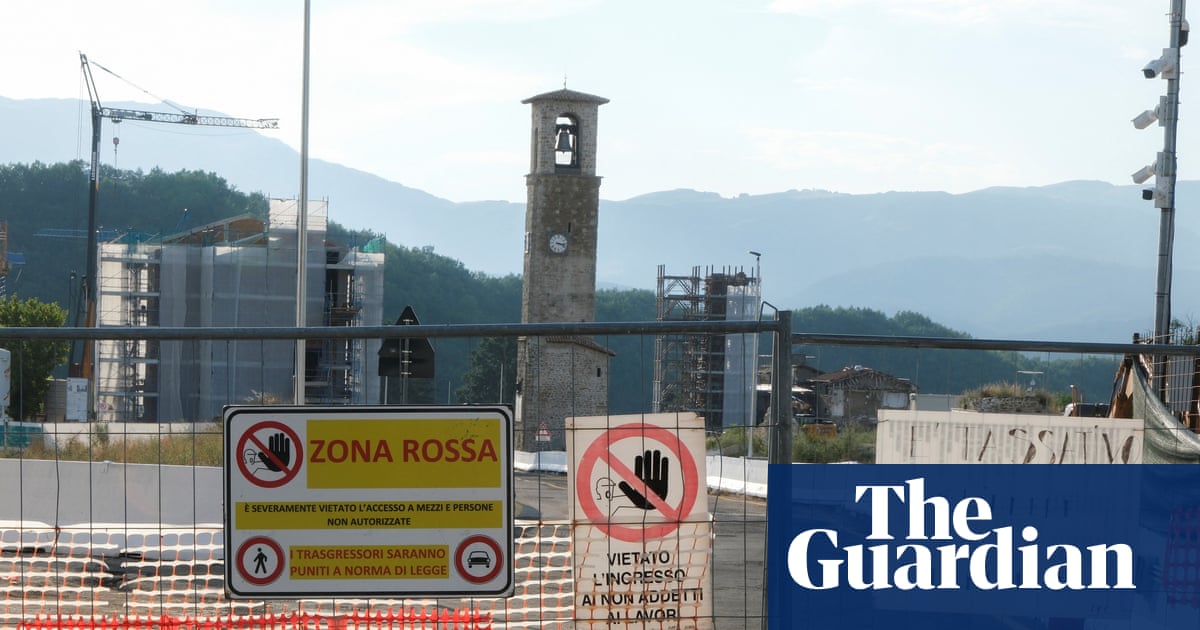
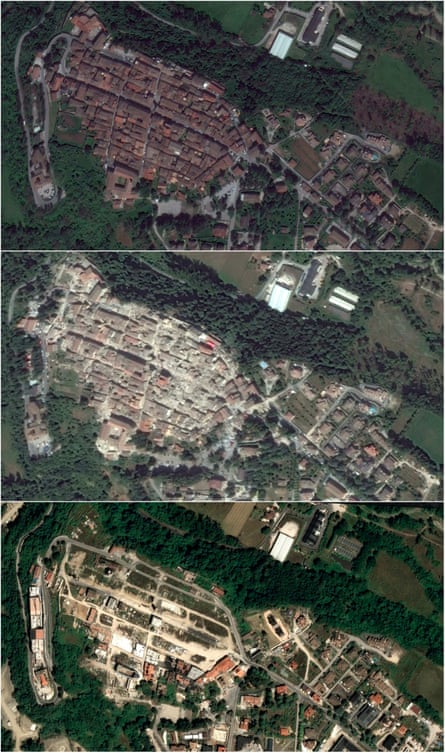
But for many, their words will offer little comfort: 10 years on, much of Amatrice, whose historic centre was wiped out by the 6.0 magnitude quake, is still being rebuilt and more than half of its roughly 2,100 residents continue to live in temporary housing.
“They will make a good show of it, bow their heads and say: ‘We did a lot,’” said Sonia Santarelli, the president of Comitato Civico 3e36, a grassroots initiative established soon after the disaster. “But nobody will put their neck on the line. They will say the reconstruction is going well … but how can that be when so many are in homes that are uninhabitable?”
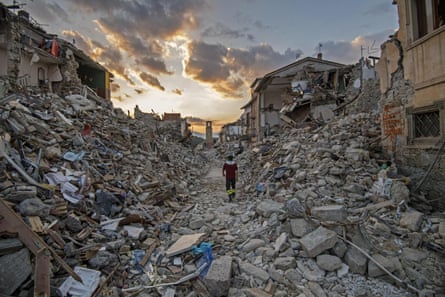
A report published last week by ActionAid Italy highlighted severe delays in rebuilding Amatrice and other areas damaged by the earthquake. According to the findings, as of April 2026, construction on roughly two-thirds of the planned public projects had yet to begin, rising to seven in 10 in the hardest-hit areas. Some €4.85bn (£4.15bn) has been earmarked for the works, the report said.
The earthquake struck in the early hours on 24 August 2016, its tremors felt as far as Rome. Santarelli, who owns an agriturismo, or farm stay, in the hamlet of Torrita close to Amatrice, recalled being woken by a loud blast and the sound of buildings collapsing. There was virtually nothing left of the hamlet, she said, but fortunately nobody there died.
Santarelli counts her blessings that she was not made homeless either. Comitato Civico 3e36, whose name references the precise time – 3.36am – the earthquake hit, was founded to defend the communities affected and to ensure citizens have a voice in the reconstruction process.
Prefabricated housing villages were set up in 41 sites across the affected areas. The wooden homes are cramped and especially stifling in the heat. “The heat and humidity squelch you,” said Santarelli.
Furthermore, they are undignified places in which to die, she claimed, owing to limited space restricting the easy movement of coffins. Residents have also complained that the rooms are too small for traditional wakes.
Some of those displaced are still paying mortgages on homes that don’t exist any more. “You cannot make people live in these conditions for so long,” said Santarelli. “So much work still needs to be done.”
Projects that have been completed in Amatrice include a school and a handful of buildings in the historic centre. Construction of a new hospital is nearing completion and could open in 2027, provided it is fully equipped and staffed.
There are many explanations for the sluggish reconstruction. Matteo Renzi, the prime minister at the time of the quake, had pledged to rebuild the towns as they were. Renzi resigned at the end of 2016 after a referendum defeat and since then Italy has had five different governments, each appointing commissioners for the rebuild.
As with previous major earthquakes, such as the one that hit L’Aquila in 2009, reconstruction has been mired by bureaucracy, legal disputes and the general complexity of rebuilding historic centres in mountainous areas.
Much of the pressure falls on the mayor. Elected in 2021, Giorgio Cortellesi said reconstruction efforts were hampered by the Covid pandemic and then by a government eco-renovation scheme, which was intended to revive the post-pandemic economy but instead pushed up the cost of building materials and lured construction workers away to more profitable jobs in other parts of Italy.
after newsletter promotion
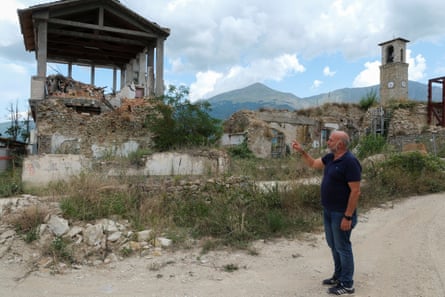
Cortellesi, an engineer who was determined to contribute to Amatrice’s revival after miraculously finding his two sons alive during a desperate search through the rubble in the dark, said the reconstruction has gathered pace over the past couple of years.
However, there is “a significant housing emergency”, he acknowledged, exacerbated by construction firms renting out homes for their staff, in turn driving up rents for people who live there. He said the council is working to reclaim some of those properties.
As for the prefabricated villages, which are nearing the end of their 10-year warranty, they will need to be dismantled and their residents moved into their rebuilt homes. “They will return to their homes, which will be the safest in Italy and the most energy efficient,” Cortellesi said, but without offering a timeline for completion.
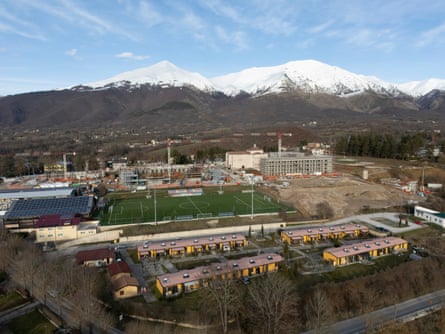
Amatrice’s population has declined over the past decade, with many choosing to move elsewhere for better prospects. But there is also a resilience among those who have stayed.
Sergio Pirozzi, who was mayor at the time of the calamity, is one of them. Within minutes of the earthquake striking, he captured the devastation in a few stark words: “Half of the town is gone.”
A football coach, Pirozzi had been at a dinner marking the 50th anniversary of the local team a few hours before. “Of those who I was with that night, 36 died and there were others who lost their wives and children. It is not something I will ever overcome,” he said.
And yet, despite also having to live with the delays and frustrations of rebuilding, Pirozzi’s attachment to Amatrice is undiminished: “For me, even today, this is the most beautiful place in the world.”