Solar eclipse and meteor shower: Portugal prepares for two rare celestial events
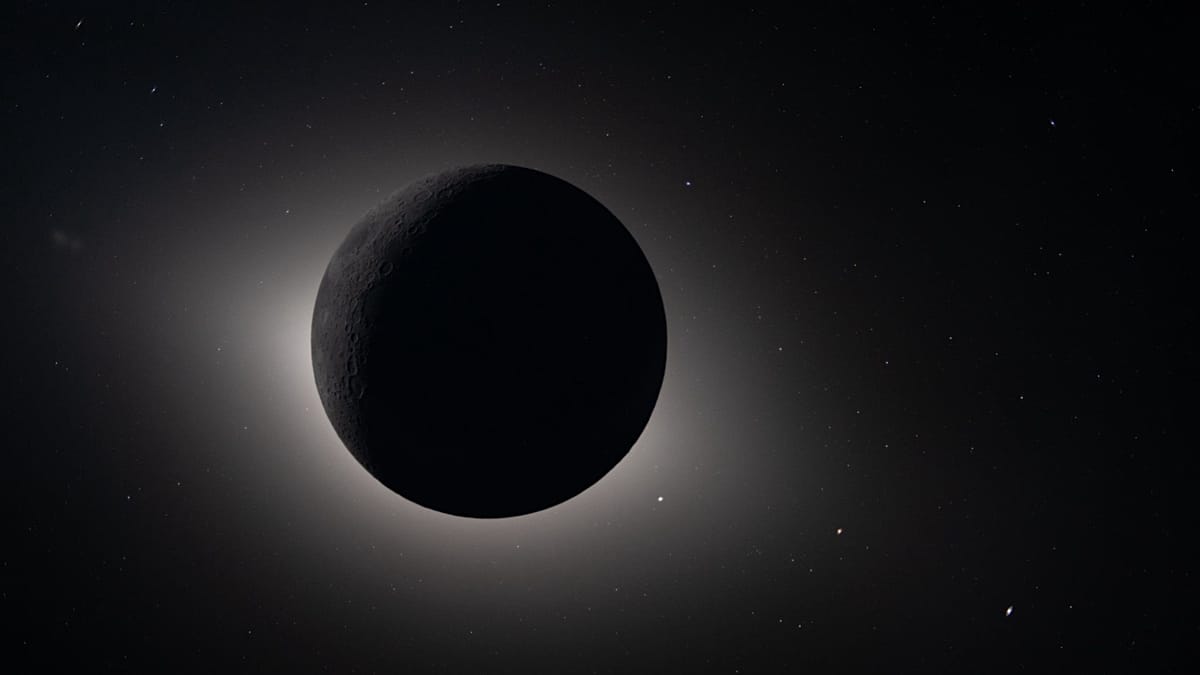
In some parts of the country, the Moon will completely cover the Sun, plunging onlookers into a sci-fi-like scene. Find out all about the total solar eclipse, followed by a meteor shower.
Today the national team are not playing, the prime minister is not addressing the country, there are no COVID-19 press conferences, but the country will still stop at the same time to look at the same thing: the total eclipse of the Sun.
Around 19:30, in the Bragança region, the total eclipse of the Sun will occur, meaning day will turn into night as the Sun is covered by the Moon. As well as getting darker, ambient noise drops, the temperature changes and many more shadows are cast.
This will be an astronomical spectacle nobody will want to miss, not least because it is highly unusual and the last total eclipse visible from mainland Portugal took place in 1912.
But the eclipse will not be the only phenomenon to amaze this evening. From 21:30 on Wednesday, about an hour after the eclipse ends in mainland Portugal, there will also be a meteor shower. These meteors, known as the Perseids, leave a trail of light as they pass through the atmosphere.
This is an annual meteor shower, usually active from mid-July until the end of August. The peak generally occurs around 12 and 13 August.
As the Moon will be practically new, the sky will be very dark and conditions will be especially favourable for observing the phenomenon. However, for the best possible viewing experience, experts recommend finding a dark place with an unobstructed horizon.
Activity is expected to increase between midnight and 02:00, but the most favourable period to try to spot the highest number of meteors will be between 02:00 and 05:00 in the early hours of the 13th, when the Perseus constellation, the point from which the meteors appear to radiate, rises higher in the sky.
The best places to watch the phenomenon are Dark Sky Alqueva in the Alentejo, the world’s first certified dark-sky territory; in the North, the Montesinho and Bragança area in Trás-os-Montes; in the Serra da Estrela, Peneda-Gerês or any high, inland area away from settlements.
For an even more exciting experience, a few tricks also help, and it is essential to avoid looking at screens for 20 to 30 minutes beforehand so that your eyes adapt to the darkness and can focus on the meteor shower.
Back to the eclipse: Euronews has compiled everything you need to know about the phenomenon:
What is a solar eclipse?
The astronomical phenomenon known as an "eclipse" occurs when one celestial body blocks the light from another. In the case of a solar eclipse, the Moon completely or partially covers the light of the Sun, producing what is known as the "diamond ring", which lasts only a few seconds.
Where can I see the eclipse?
The eclipse will be visible across the country; however, it will not look the same in all regions. The total eclipse, which corresponds to 100%, will be visible only in the Montesinho Natural Park, in Bragança.
The deep partial eclipse, with between 92% and 99% coverage, can be observed throughout mainland Portugal.
On the islands, the Azores and Madeira, the percentage is much lower, between 74% and 77%.
It is advisable to watch the moment from a wide-open space, without many buildings in front.
What time does it happen?
The eclipse will begin at around 18:33 and end at around 20:23, lasting roughly two hours. Its maximum will be reached close to 19:30. The total eclipse phase lasts just 25 seconds.
Can I watch it without protection?
No! You must never look directly at the Sun during the phenomenon. There is only one safe way to see the eclipse: using proper eclipse viewing glasses. The phenomenon must not be watched with sunglasses, through telescopes or with the naked eye, as it can cause eye damage. Direct sunlight does not cause immediate pain, but it can burn the retina, leading to later consequences such as permanent loss of vision.
The organisations responsible also warn about the use of cameras and mobile phones, which can likewise be damaged if used without suitable filters.
In Portugal, ZEISS launched a campaign offering free eclipse glasses across the country. All you had to do was go to an optician in the Club de Visão network, after registering in advance. However, the initiative was limited to existing stock and it is no longer possible to obtain them free of charge.
You can buy eclipse glasses, but the optics community has set out some key features to check that you are purchasing the right model. The glasses must have ISO 12312-2 or ISO 12312-2:2015 certification for solar observation, as well as the CE marking printed on the frame. They must also ensure the blocking of UV, IR and intense visible light. They should be prefabricated and ready to use, with no assembly required.
You can buy the glasses in pharmacies, some supermarkets and online shops such as Astroshop, Telescopiomania, ESTUDIOPT, Aff Camera Store or Sol & Salvo, which sell these glasses for prices ranging from 2.90 to 3.25 euros per unit. These shops also offer packs for families or groups of friends.
Are there places where I can watch together with other people?
Yes. On the platform https://eclipse2026.pt (source in Portuguese) hundreds of events taking place on the day of the eclipse are listed. Some no longer accept participants, as they required prior registration. Even so, here are some of these initiatives, from north to south of the country, where you can still try to take part free of charge:
- Faro and Albufeira
Promoted by the Centro Ciência Viva do Algarve, there will be guided sessions for observing the partial solar eclipse in Faro and Albufeira. In Faro, the event will take place in the Parque Ribeirinho from 18:30. Admission is free and the minimum age for participants is 12.
In Albufeira, it will be held in the parish of Paderne, at the parish castle. The event is free and will continue into the night with observation of a Perseid meteor shower.
- Tavira
- "Solar Eclipse and Night-time Observation of Celestial Bodies"
Organised by the Centro Ciência Viva de Tavira in partnership with Tavira municipality, it will take place in Praça da República. Admission is free and the minimum age is 3.
"During the activity, there will be a brief explanation of how solar eclipses form and discussions will be held on the importance of scientific research and observing the sky," the organisers say.
- "Solar Eclipse at Praia do Arraial" and "Solar Eclipse at Praia do Barril"
Both events are organised by the Centro Ciência Viva de Tavira and are free of charge. They start at 18:30, but it is advisable to arrive a little earlier. At Praia do Arraial, the minimum age to take part is 5. At Praia do Barril, it is 3.
- Oeiras The partial solar eclipse will also be visible from Santo Amaro beach in Oeiras. Here, the phenomenon is expected to reach around 95%.
The event is organised by the local authority, which has prepared a festive afternoon from 16:00, combining a summer party atmosphere with observation of the phenomenon.
As well as a DJ set, a large screen will be installed to show the eclipse live, allowing everyone to follow it without risk to their eyesight. The session will be accompanied by explanations of what is being seen.
- Enxara do Bispo (Mafra)
"When the sky darkens: Understanding the Solar Eclipse and how to observe it safely" is one of the initiatives taking place in the late afternoon of the 12th. It is organised by the Associação Astronómica Horizonte Estelar, with the meeting point set for the churchyard at 17:00. The event lasts 3 hours and 30 minutes. Before the eclipse, there will be a theoretical introduction to the phenomenon and, during it, explanations will be given to participants. The minimum age to take part is 6.
- Porto
"Solar Eclipse 2026 at Time Out Market Porto" is organised by the market, which invites everyone to gather in the outdoor square, with a privileged view of the Clérigos Tower. The event starts at 18:00 and runs for 3 hours.
The organisers say that "to mark the occasion, a themed cocktail called 'Eclipse' has been created. With the purchase of this cocktail, a pair of solar viewing glasses will be offered, while stocks last."
- Vila do Conde
Organised by the Centro Ciência Viva de Vila do Conde, the eclipse can be observed in a group from the seafront, in front of the Farol restaurant. Admission is free and the event starts at 16:00. The recommended minimum age to observe the phenomenon is 6.
There are also private initiatives organised by groups of friends on social media pages. Check whether anything is being organised in your area.