‘Nature makes every colour in the world’: Meet the company brewing an end to toxic chemical dyes
By Denis Loktev Published on 24/08/2026 - 7:02 GMT+2 The fashion industry is among the most polluting on the planet, and dyeing fabric...
By Denis Loktev
Published on 24/08/2026 - 7:02 GMT+2
The fashion industry is among the most polluting on the planet, and dyeing fabric a big reason why. The process consumes huge volumes of water, energy and chemicals, leaving a lasting mark on the environment.
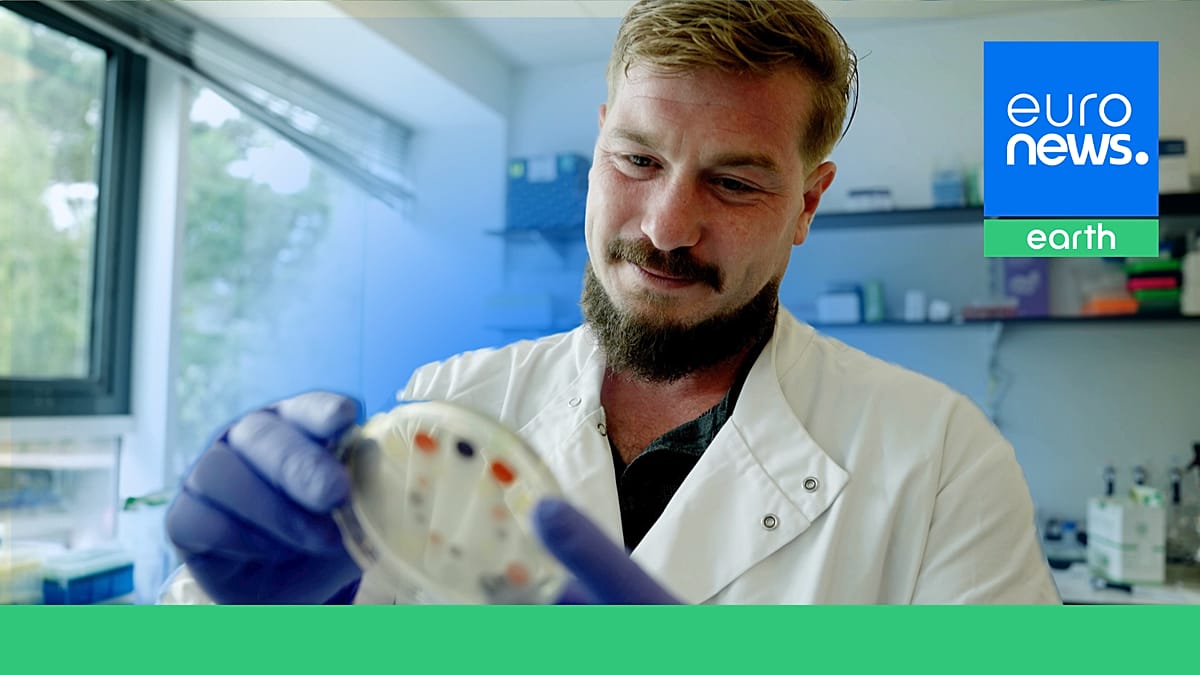
"The industry uses upward of 70 highly toxic chemicals in the dyeing process," Orr Yarkoni, CEO and co-founder of Colorifix, tells Euronews Earth.
He explains that this figure covers not just the dyes themselves but the additional chemicals needed to help colour bond to fabric. "Over 30 of them are irretrievable, meaning no matter what you do to the water after you use them, they stay in the water, so they'll end up in the ocean."
According to Yarkoni, the industry's reliance on synthetic dyes dates back to the 19th century, when manufacturers shifted away from natural alternatives.
"The industry moved to using cheap, effective chemistry that unfortunately proves to be quite toxic for life in general, including humans," he says. Moving away from these chemicals has proven slow, largely due to a lack of viable alternatives that can operate at scale.
Brewing colour like beer
Colorifix's approach borrows directly from nature's own methods of producing pigment, without extracting it from plants or animals. "We borrow the information of how the pigment or dye stuff is made in nature," Yarkoni tells Euronews Earth.
The company inserts that genetic code into bacteria, which are then grown in fermentation tanks. "Very similar to how you make beer, but instead of alcohol, we're brewing the colour," he explains.
Once harvested, the biological dye – along with the biomass used to help it bond to fabric – replaces the synthetic chemicals typically used in the dyeing process.
Yarkoni says this delivers significant environmental savings, citing figures specific to polycotton: "We're seeing upward of 77 per cent savings in water, 51 per cent savings in energy, and 31 per cent savings in emissions by doing things biologically."
He is careful to stress that natural origin does not automatically mean a product is safe. "Natural does not mean non-toxic," he says, noting that Colorifix tests every dye it produces for cytotoxicity, skin irritation and allergenicity, going beyond standard testing required for synthetic dyes.
"We don't want to repeat the mistakes of the past of pushing with something that looks good and causes serious problems down the line."
Producing dyes that meet the performance demands of the textile industry has also been a challenge. Colours must resist fading in sunlight, survive repeated washing and not rub off onto skin.
"We developed hundreds of colours," Yarkoni says, adding that Colorifix now offers a full colour range for synthetic fibres such as polyester, with a more limited but growing palette for cotton and other cellulosic fabrics.
From lab to industry
Colorifix has moved beyond research and into commercial use, with major fashion brands adopting the technology, according to Yarkoni. The company has also begun shipping its dyes as ready-to-use concentrates, rather than requiring manufacturers to install fermentation equipment on site.
"We're releasing these products now as concentrates... that means we can ship the product ready to use in the dye machine without having to do any additional processing on site," he says.
Yarkoni credits Colorifix's recognition as an Earthshot Prize finalist with raising the company's profile among manufacturers and brands. "It's helped really highlight our solution to the problem and bring more awareness to brands and manufacturers," he says. "We've had outreach from all over the world following the exposure."
Looking ahead, Yarkoni argues that petrochemicals should be reserved for uses where no natural alternative exists, rather than applied broadly across industries such as fashion: "Colour is one of the worst things to make out of petrochemicals because nature makes every colour in the world, and rivers still run clean".