Ireland finds 'no evidence' to conclude alumina sales prop up Russia's war
The long-awaited investigation into Ireland's alumina exports to Russia has concluded on an ambivalent note, with the government neither fullying confirming nor denying any link to Vladimir Putin's war machine.
Ireland has found "no evidence" to irrefutably determine that its alumina exports to Russia contribute to propping up the full-scale invasion of Ukraine.
Traded as a white powder, alumina is the raw material used to manufacture aluminium, a lightweight metal commonly seen in battlefield weapons.
Virtually all alumina sales from the European Union to Russia come from Aughinish Alumina, a sprawling Russian-owned refinery in western Ireland.
"I can confirm that no adverse findings have been determined in relation to the export of alumina to Russia by the company," Peter Burke, Ireland's minister for enterprise, tourism and employment, said in a statementreleased on Friday morning
"No information of a sufficient evidentiary level is currently available to confirm the assertions that alumina from Ireland is entering the supply chain of Russian military contractors."
The internal probe, which looked into corporate data, trade flows, media reports and information provided by the Ukrainian and Swedish governments, has been shared with the European Commission "for its consideration", the minister noted.
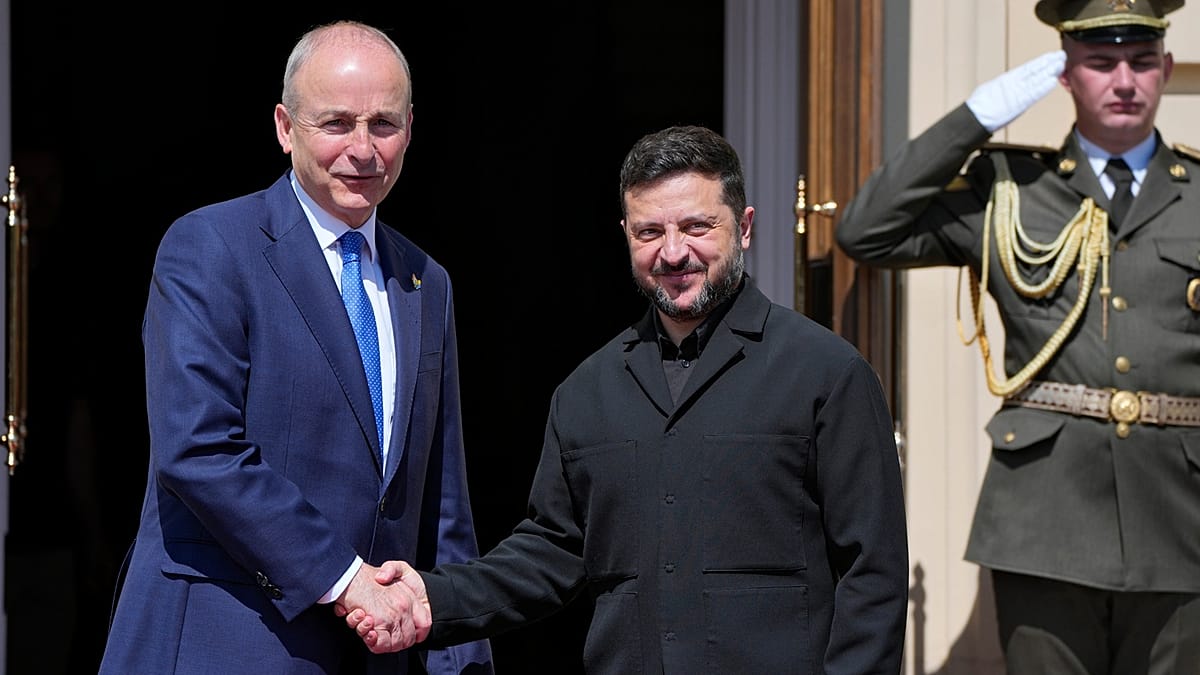
The ambivalent conclusion had been previewed on Thursday by Irish Prime Minister Micheál Martin during his visit to Kyiv.
The investigation "has not found concrete or definitive evidence linking the alumina to a weapons manufacturer in Russia," Martin said.
"That said, neither has it found definitive evidence that alumina may not be going to weapons manufacturers."
Standing by his side at a joint press conference, Ukrainian President Volodymyr Zelenskyy backed measures to curtail alumina sales to Russia, whether through sanctions or otherwise.
"So the number one task that we have – the issue – is that this does not reach Russia, so that this does not help weapons production and so that this does not fund this war," Zelenskyy said.
"If this can be achieved by certain internal steps, we would support these processes, but the EU task and sanctions, we also take this with us."
Ireland has been in damage control mode since a media consortium published a bombshell report in late March exposing the business ties between Aughinish Alumina and the Russian economy.
The media detailed how Irish-made alumina is being sent to Russian smelters owned by the plant's parent company, United Company Rusal, which in turn sells the metal to a trader that supplies aluminium to sanctioned defence manufacturers.
The weapons made by these manufacturers have been deployed to kill Ukrainian civilians and bombard civilian infrastructure, the report said.
Separately, Swedish authorities concluded that Rusal remains under the effective control of Oleg Deripaska, a sanctioned Russian oligarch with close ties to the Kremlin.
The investigation by the Irish government sought to corroborate these claims with its own research. In his statement, Burke honed in on the fact that the journalists themselves admitted they had not been able to trace alumina to a specific lethal product.
Aughinish, he said, provided data stating its alumina exports to Russia are "solely" used for global exports of aluminium, rather than "military purposes", but the Irish government could not independently verify this assertion.
Dublin hopes the findings can put an end to a scandal that has inspired uncomfortable headlines and overshadowed the start of its EU Council's presidency.
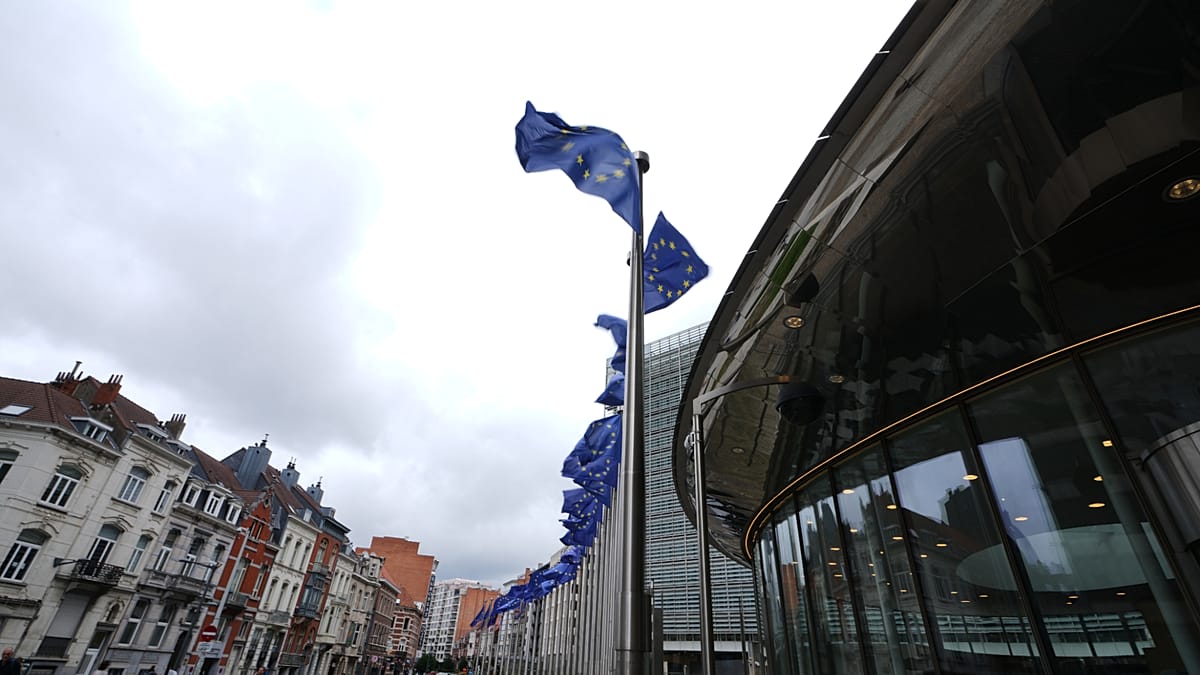
It is now up for Brussels to decide if alumina should be targeted. This week, the bloc wrapped up the chaotic negotiations on its 21st package of sanctions against Russia, and it will take months before a new one is on the table.
Dublin has sent mixed signals. On the one hand, it has promised not to "cherry-pick" sanctions; on the other, it has raised concerns about the potential impact sanctions could have on local jobs, the environment and Europe's broader supply chain. (After Russia, the largest consumer of Irish-made alumina is France.)
In a bid to deter sanctions, Aughinish has raised the prospect of nationalisation. But Irish officials have pushed back, saying the case does not meet the threshold for a takeover.