UK to share SCALP missile blueprints with Ukraine as Coalition of the Willing meets in Kyiv
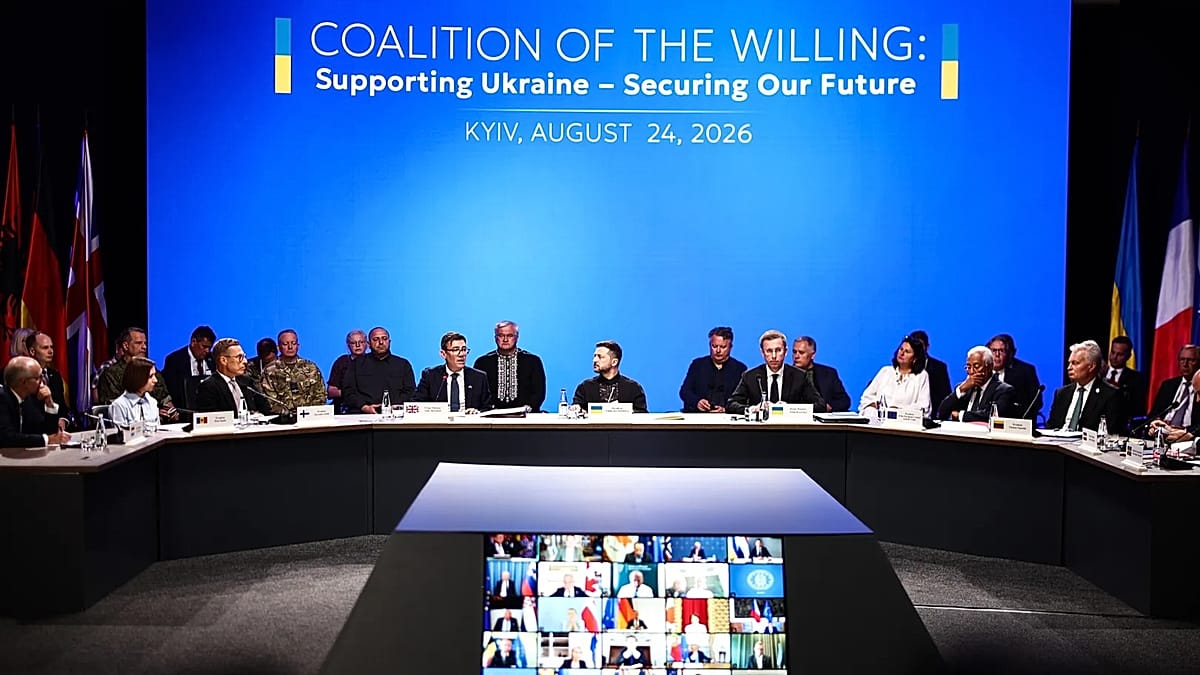
Britain will share technical information on the SCALP cruise missile with Ukraine, bringing Kyiv closer to producing the long-range strike weapon at home. Ukraine is still seeking US approval to manufacture Patriot interceptors.
Published on 24/08/2026 - 19:07 GMT+2
Ukraine has moved a step closer to producing SCALP cruise missiles at home after Britain agreed to provide information on UK-made components of the Franco-British weapon.
The decision clears the way for the missiles to be assembled in Ukraine following months of negotiations between Kyiv and Paris over licensing and local production.
Luke Pollard, the UK's Minister for Defence Readiness and Industry, said the move should strengthen Ukraine’s defensive capabilities.
The air-launched cruise missile, known as SCALP in France and Storm Shadow in Britain, has a range of more than 250km and is designed for precision strikes against pre-planned, fixed targets.
Ukraine has already used the missiles against Russian military targets and infrastructure, including command posts and defence-industry facilities in occupied Ukrainian territory and inside Russia.
The UK became the first country to provide Ukraine with long-range cruise missiles in 2023.
Three years later, the technology transfer marks a further shift in western support - as governments move from supplying finished weapons to helping Ukraine manufacture its own sophisticated systems.
The announcement came as the Coalition of the Willing met in Kyiv, where protecting Ukraine from intensifying Russian missile attacks was high on the agenda.
In a joint declaration, the allies condemned Russia’s “systematic and escalating strikes against Ukraine’s cities, critical infrastructure and civilians” and pledged to strengthen Ukraine’s air defences “as a matter of urgent priority”.
The gathered leaders also committed to sharing relevant technologies, including through the Anti-Ballistic Missile Coalition, as Ukraine prepares for another winter of Russian attacks on its cities and energy infrastructure.
Ukraine’s most urgent military need remains defences against ballistic missiles, for which it is critically dependent on US-made Patriot systems and PAC-3 interceptors.
Kyiv has been pressing Washington not only for additional interceptor missiles but also for permission to manufacture them domestically, which would give Ukraine a more reliable long-term supply.
US President Donald Trump had previously appeared to green light the idea.
At the NATO summit in early July, Trump said Washington would grant Ukraine a licence to produce the interceptors.
But three weeks later, he said no final decision had been taken, describing the transfer of the technology as a significant step.
US ambassador to NATO Matthew Whitaker subsequently said no long-term production agreement was likely before the winter and stressed that PAC-3 technology remained tightly controlled under US export rules.
The mixed signals come as Ukraine runs low on Patriot interceptors amid an intensifying Russian ballistic missile campaign and ahead of expected attacks on the country's energy network over the winter.