From Leonardo to Maria Callas to the white stork: faces and symbols on new euro notes from 2026
Published on 23/07/2026 - 18:44 GMT+2 The future euro banknotes are taking shape and, this time, it will be European citizens themselves who have the final say. The...
Published on 23/07/2026 - 18:44 GMT+2
The future euro banknotes are taking shape and, this time, it will be European citizens themselves who have the final say. The European Central Bank has unveiled the ten finalist drafts from which the new denominations will be chosen, due to enter circulation from the end of 2026. More than 1,200 proposals were examined, but in the end two major themes emerged that can tell the story of the continent's identity: European culture and the richness of nature.
On the one hand are the figures who have left their mark on the history of art, music, science and literature. On the other, rivers and birds that cross the continent's borders, symbols of European biodiversity and the need to protect it.
ECB opens public vote
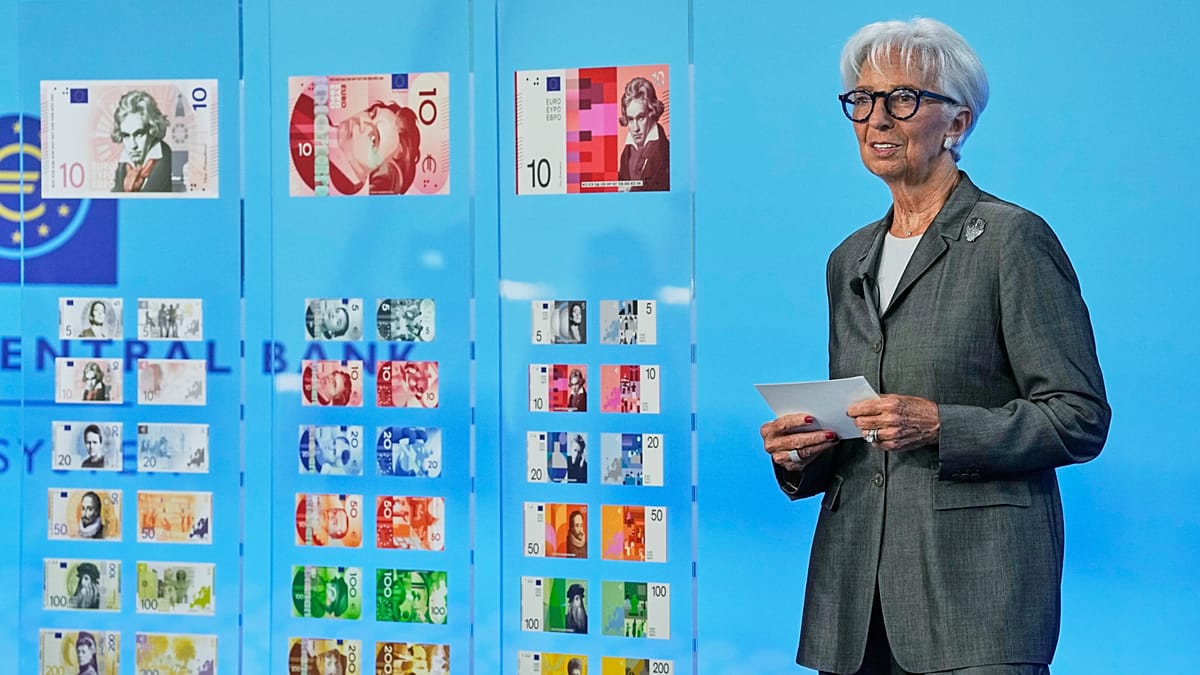
The ten finalist projects were presented by the European Central Bank president, Christine Lagarde (source in Italian), who has invited Europeans to take part in choosing the new face of the euro.
For each of the two themes, five different designs have been produced, with distinct graphic styles: some more modern and minimalist, others more faithful to the subjects depicted. Through a survey published on the ECB website, citizens can express their preference and help shape the final decision.
The "European culture" theme: six key figures from history
If the culture-based option wins, some of the most influential figures in European history would appear on the new banknotes.
The 5-euro note would feature Maria Callas, the famous Greek-American soprano who revolutionised the world of opera.
The 10-euro denomination would be dedicated to German composer Ludwig van Beethoven, while the 20-euro note would honour scientist Marie Curie, Nobel laureate and pioneer of scientific research.
The 50-euro note would show Miguel de Cervantes, author of Don Quixote, one of the most important novels in world literature.
The higher denominations would honour two emblematic figures of European thought: Leonardo da Vinci, on the 100-euro note, and Bertha von Suttner, Nobel Peace Prize laureate, on the 200-euro note.
The alternative proposal: Europe's symbolic birds
The alternative focuses on nature. Each banknote depicts a different species of European bird in a river landscape, while the reverse side is reserved for the European Union's main institutions.
The series pairs the wallcreeper with the European Parliament, the kingfisher with the European Commission, the European bee-eater with the European Central Bank, the white stork with the Court of Justice of the European Union, the pied avocet with the European Council and the Council of the European Union, and finally the northern gannet with the European Court of Auditors.
When the new banknotes will arrive
The citizens' vote is one of the stages in the process that will lead to the final choice of the euro's new design. Once the consultation has been completed and the winning project selected, the ECB will move on to the technical phases required to produce the new banknotes, which are scheduled to be issued from the end of 2026.
The aim is to refresh the image of the single currency while maintaining a strong link with Europe's shared values: its extraordinary cultural heritage and the natural environment that unites all member states.