Iran proposes plan to US to reopen Hormuz in seven days and end the war
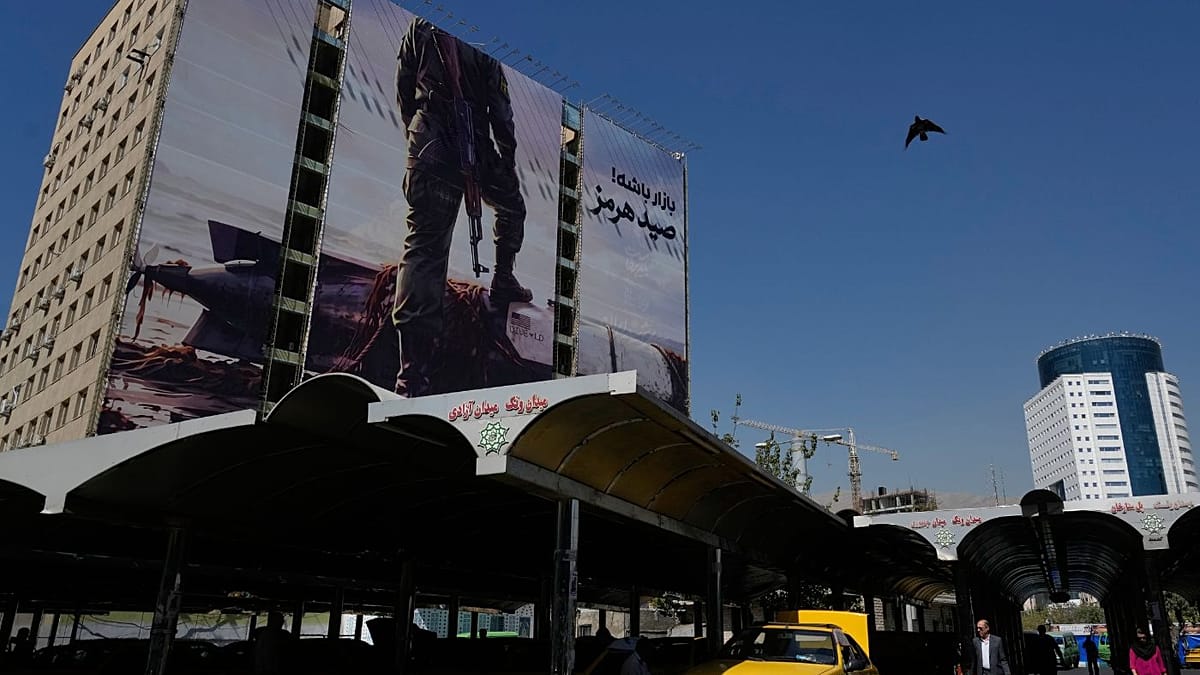
Iran’s foreign minister has proposed a seven-day roadmap to Washington by which Iran would reopen the Strait of Hormuz within seven days if the US lifts its naval blockade, together with other conditions aimed at ending the war.
By Peter Barabas & Euronews Farsi
Published on 25/09/2026 - 19:33 GMT+2
Iran has sent a new proposal to Washington that it would reopen the Strait of Hormuz and resume talks on its nuclear program in seven days if the US lifted its naval blockade, waived oil sanctions and observed a ceasefire that includes Lebanon, Iran’s Foreign Minister Abbas Araghchi told a private gathering on the sidelines of the UN General Assembly on Thursday, according to the Associated Press.
According to participants at the UNGA gathering, Araghchi said the proposal, which was given to the US through intermediaries, presents a seven-day roadmap to end the war and that Iran would be ready to implement it if Washington accepted it.
“If certain conditions are met, the Strait of Hormuz would be open on the end of the seventh day and talks would restart,” the Iranian foreign minister reportedly said.
The Associated Press said the conditions of the proposal resemble the previous Memorandum of Understanding signed by Iran and the US in June which later collapsed.
Accusations against 'certain European nations'
Iranian officials in Tehran, especially the military hard-liners who seem to dispute the civilian leadership’s actions, did not comment on the details of Araghchi’s proposal emerging from the UNGA gathering, but oil prices fell as Brent dropped to $105 amid the new reports of new US-Iran negotiations.
Meanwhile on Friday, Araghchi held talks with UK Foreign Secretary Ed Miliband during the UNGA in New York in which he accused “certain European nations” of their “destructive and irresponsible” actions and of their “the support and complicity” in the US and Israeli “military aggression” “which has inflicted immense damage on Iran, the region, and the world”.
Also on Friday, Iranian President Masoud Pezeshkian held talks with Qatari Prime Minister and Foreign Minister Sheikh Mohammed bin Abdulrahman bin Jassim Al Thani in New York, as Qatar presses on with its efforts to mediate between US and Iran, including during hours of indirect Iranian-US talks at the UN this week.
Do not mistake Tehran's position for 'stratregic retreat'
Qatar’s Foreign Ministry said that the two leaders discussed “the latest developments in the region, along with efforts to de-escalate tensions and create a conducive environment for dialogue, thereby contributing to the enhancement of regional security and stability.”
Former head of Israel’s military intelligence research department Danny Citrinowicz said in a post on X that “Tehran appears to believe that a political window is opening in Washington,” and that “with the US midterm elections approaching and President Trump facing strong incentives to bring down oil prices, Iran sees an opportunity to test whether economic and political pressure can translate into American flexibility.”
“But Tehran’s position should not be mistaken for a fundamental strategic retreat,” Citrinowicz added.