Von der Leyen to visit Azerbaijan and Armenia to build on EU engagement
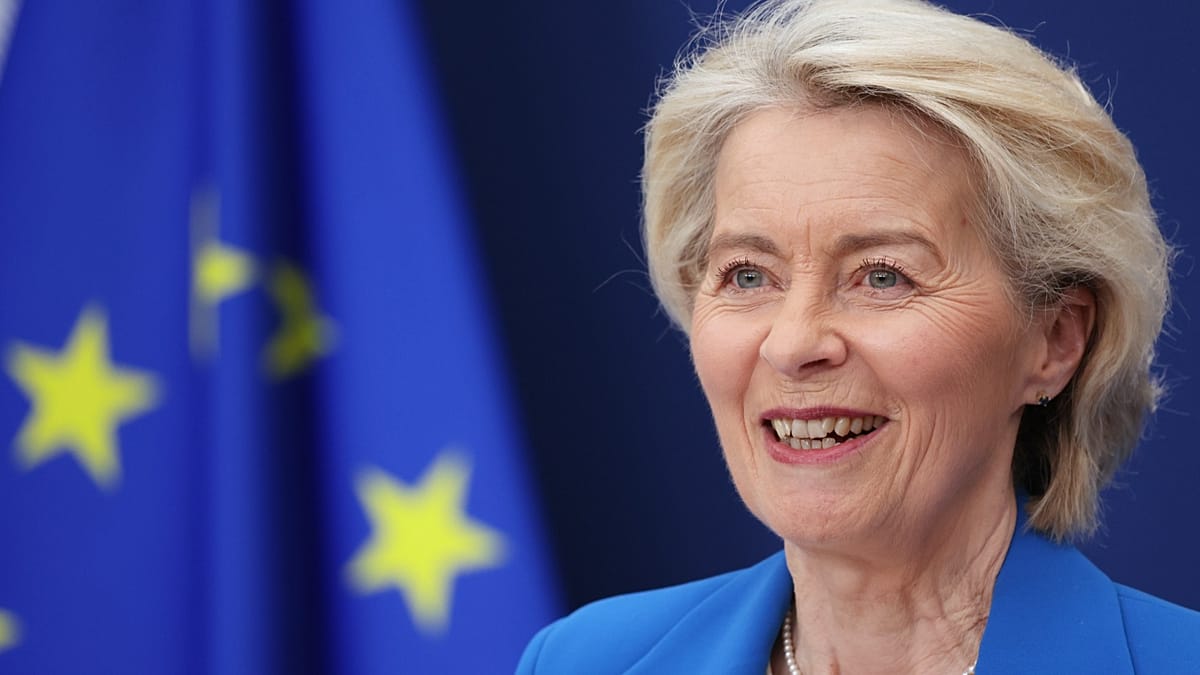
The European Commission president will visit Baku and Yerevan to build on the EU’s strategic engagement with the South Caucasus and to strengthen energy cooperation, trade and regional connectivity for the EU economies.
European Commission President Ursula von der Leyen will visit both Azerbaijan and Armenia next week to further develop the EU’s strategic engagement with the two former rivals in the South Caucasus, sources in Yerevan and Baku with knowledge of the matter confirmed to Euronews.
The head of the EU executive is set to visit Baku on 1 July, where she will hold talks with Azerbaijan’s President Ilham Aliyev on the country's expanding energy supplies to Europe as the main pillar of EU-Azerbaijan relations, as well as cooperation on key regional infrastructure projects that are now crucial for the EU economies.
This will be von der Leyen’s first visit to Baku since 2022, when the EU and Azerbaijan signed their strategic energy partnership as Europe moved away from Russian energy and needed urgent alternative gas supplies.
It is also the first visit since Armenia and Azerbaijan agreed to make peace after decades of war over Karabakh, in a region formerly in Moscow's orbit.
The visit continues the strategic EU political dialogue with the region, following European Council President Antonio Costa’s talks with Aliyev in Baku back in March, when Costa said that Brussels and Baku were now working on a new framework for closer cooperation on defence, security, and digital developments intended to widen relations beyond the existing energy and key infrastructure links.
“This sends a strong signal of our joint vision for the future,” Costa said in March, adding that “energy security is a cornerstone of the EU’s cooperation with Azerbaijan,” and underlining how Azerbaijan has been central to the EU’s efforts to diversify its supply sources for gas, oil, and green energy.
A total of 16 European countries currently receive Azerbaijani gas, with 10 EU member states among the recipients, and Italy is the top EU importer of Azerbaijani energy, as underscored by Italian Prime Minister Giorgia Meloni's visit to Baku in May.
The Middle Corridor, Europe's new trade priority
Connectivity is now another key area for EU-Azerbaijan cooperation, with the development of the Middle Corridor representing a strategic opportunity for new, alternative transport connections between Europe and Asia through the South Caucasus following the Iran-generated disruptions.
European Commissioner for Enlargement Marta Kos, who is expected to join Von der Leyen on both visits, launched this week the EU's new Connectivity Agenda Platform by which the EU will participate in the Middle Corridor projects with investments from governments, financial institutions and private investors, which up to now have reached more than €80 million in EU funding, with a goal of over €2 billion for transport, energy and digital infrastructure investments.
In a video posted on X, Kos outlined the new EU connectivity project, saying it was critical for Europe to make its trade routes and energy more secure, avoid the now-unreliable traditional routes, and that it was time for Europe to do its part.
“Take a look at the plane map before and after the start of the recent war in Iran. Almost all planes started passing through the Caucasus. It's through here, the Middle Corridor, that we can secure our trade, energy and digital links,” Kos said by explaining that the Middle Corridor connects Europe and Asia through Turkey and the South Caucasus.
The EU commissioner for enlargement explained that trade along the route is now four times higher than in 2022 due to bottlenecks and hurdles, and that shipping cargo to Europe can still take up to 45 days to reach Romania.
“Our goal? Cut that to just 15 days, this is significantly faster than shipping by sea to Europe. How? By improving roads, railways, ports and reducing delays at borders,” Kos outlined the EU’s ambitions.
“This will help lower costs for our businesses and make goods cheaper for people in the EU. It will help us grow our economy," the EU enlargement commissioner said.
"It will also support the improving relations between countries in the region after decades of conflict, also strengthening the economies of our neighbours to the east. That is what coal and steel did for us in Europe after World War II," Kos explained.
She concluded that “this is the priority for the European Commission, securing our trade, energy and digital links via routes we can trust," setting the stage for the EU leadership’s visit to Baku.
Back in March, Aliyev told Costa that amid disruptions to global transit systems caused by the war in Iran, the South Caucasus’ economic and transit potential was growing, including new opportunities to develop the Middle Corridor connecting Asia and Europe.
During her visit to Baku in May, Meloni said she wanted Azerbaijan to strengthen its role as an energy hub between Europe and Asia, with Italy serving as "the privileged gateway to the European market."
Expanding capacity would require enlarging the Trans-Adriatic Pipeline, the final leg of the Southern Gas Corridor that carries Azerbaijani gas across Turkey, Greece and Albania into southern Italy.
Peace as backdrop for new regional agenda
The new initiatives are now possible after Azerbaijan and Armenia signed their historic peace agreement after almost four decades of a tragic conflict, and are now fully engaged in forging a common economic future for their nations and the region.
The Commission president’s visit to both countries carries not just a political message but also the symbolism of the EU now engaging with them within a peace framework, rather than confrontation, for joint economic projects ahead.
Von der Leyen will travel to Yerevan for talks with Armenian Prime Minister Nikol Pashinyan as the EU has just rolled out a support package for Armenia and to further develop the strategic EU-Armenia relations after Pashinyan secured a decisive pro-West mandate in the recent elections.
The European Commission endorsed Pashinyan just days before the crucial elections on 7 June and announced a support package to counter the Russian onslaught of sanctions following Yerevan’s cautious pro-Western, pro-EU turn.
Pashinyan carefully balanced Armenia’s approach to Russia in the last days of the election campaign, stating that Armenia’s EU membership bid was “theoretical" at this time.
The EC announced at the time a support package of financial assistance and practical measures to support Armenian agri-food trade after Moscow unleashed an economic onslaught, restricting imports of various Armenian fruits, vegetables, flowers, and fish products, as well as wine, brandy and mineral water, while also threatening to cut critical Russian oil and gas supplies to Armenia.
Von der Leyen’s visit will take place following a new announcement by the European Commission last Friday that it “disbursed €34 million to Armenia to help mitigate the impact of Russia's trade restrictions on the country's private sector."
“The EU is delivering swiftly on its commitments to support Armenia and its people," the European Commission said in a statement.
“Additional support will be provided to sectors affected by the trade restrictions, including agri-food products, flower production and other export-oriented industries, through trade initiatives, business matchmaking events and targeted market access initiatives,” the statement added.
The EU-Armenia Task Force on Economic Resilience continues to meet regularly to steer and monitor the implementation of these measures, the Commission added.
Kos earlier said that “the EU stands firmly with Armenia, a sovereign, democratic and independent country" and that the EU package would "help address immediate economic challenges while opening new opportunities for Armenian businesses to trade with regional and European markets."
"This is European solidarity in action," she emphasised.