Asian tiger mosquito spreads as far as Berlin: how dangerous is it?
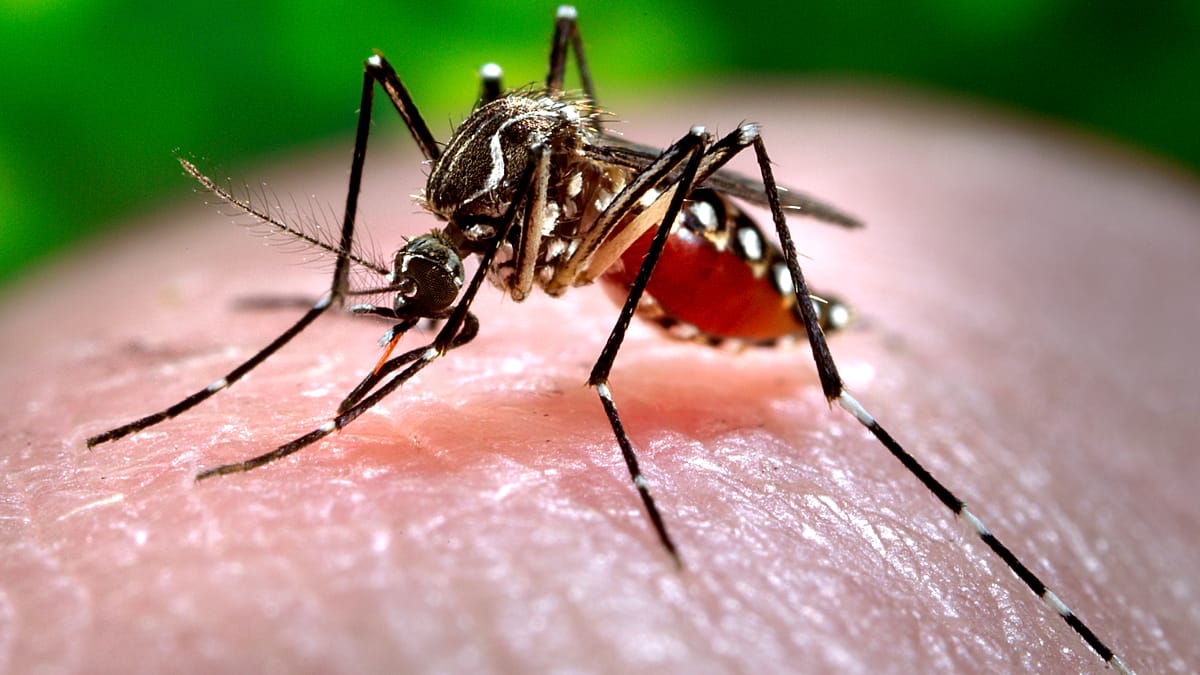
Just a few millimetres long, the Asian tiger mosquito is spreading steadily across Germany. As a potential carrier of dengue and chikungunya, it is worrying health authorities. How can you protect yourself?
By Diana Resnik
Published on 31/05/2026 - 15:58 GMT+2
A species of mosquito from the tropics in Germany? The Asian tiger mosquito is apparently spreading in Germany. It is particularly on the rise in North Rhine-Westphalia.
So far, established populations have been detected in Bonn, Euskirchen and the Rhein-Erft district. The city of Cologne is now also warning that the tropical mosquitoes could multiply over the coming months. The northernmost place where a population has been confirmed is Berlin.
Why Asian tiger mosquitoes could spread particularly widely this year
Asian tiger mosquitoes thrive in warm, humid conditions. That is precisely what Germany is currently experiencing: frequent rain, while it remains sunny and warm.
In North Rhine-Westphalia, winters are becoming increasingly mild. The climatic conditions are therefore favourable for the spread of these species.
Another factor driving the spread of the mosquitoes, according to the Bernhard Nocht Institute for Tropical Medicine (BNITM), is the increase in international travel and goods traffic.
Are Asian tiger mosquitoes dangerous?
The species originally came from the tropics. As a result of climate change, it has spread massively across southern and central Europe since the 1990s.
This mosquito shows little aversion to daylight, and its bites are painful. It is easily recognisable by its black-and-white stripes and measures between half a centimetre and one centimetre in length.
The worrying thing is that tiger mosquitoes can transmit pathogens such as dengue and chikungunya viruses.
How can you tell if you might have been infected?
Dengue is an infectious disease caused by dengue viruses, found mainly in tropical and subtropical regions and transmitted through the bite of infected mosquitoes. The illness usually begins four to ten days after infection with high fever, severe headache, muscle and joint pain, and a skin rash. The infection is therefore also known as breakbone fever.
Most patients recover within one to two weeks, but in some cases dengue can lead to serious complications such as bleeding, circulatory failure or severe dengue, which can be life-threatening. There is still no specific antiviral therapy; treatment focuses on relieving symptoms and ensuring adequate fluid intake.
The chikungunya virus causes chikungunya fever and is transmitted primarily by the yellow fever mosquito and the Asian tiger mosquito.
After infection, symptoms such as sudden high fever, severe joint and muscle pain, headaches and rashes usually appear. A particularly typical feature is the often very severe joint pain, which can persist long after the acute phase of the illness has subsided.
Although chikungunya is not usually life-threatening, the disease can severely affect those infected for weeks or even months. As there is no specific antiviral treatment, management consists mainly of rest, plenty of fluids and measures to relieve symptoms.
In Germany there have so far been no known cases of transmission by tiger mosquitoes that have become established here, but experts believe that, because of climate change, it is only a matter of time, as reported by the Pharmazeutische Zeitung.
How can you protect yourself?
The most effective measures are to replace standing water regularly, for example in watering cans, buckets or plant saucers. It also helps to prevent rainwater from collecting.
In addition, members of the public can catch Asian tiger mosquitoes and send them to the so-called Mosquito Atlas for research, a nationwide project in which scientists identify mosquito species and gain further insights into how they are spreading.