Tourism hit by war fears: Seven EU countries seek Brussels funding for frontline regions
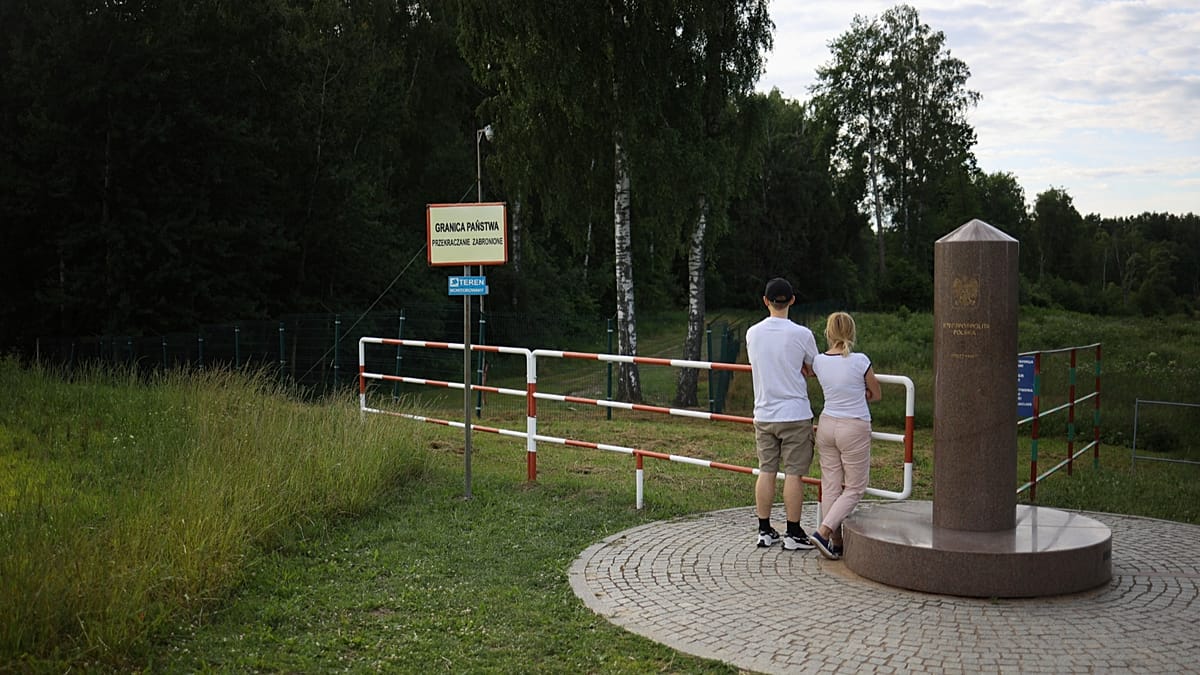
Seven frontline European Union nations want the bloc’s next long-term budget to help their hotels, businesses and operators weather the fallout from Europe’s security crisis — and their proximity to it.
A group of seven frontline EU countries have called for funding from the bloc’s proposed €2 trillion Multiannual Financial Framework (MFF) to support their tourism sectors in regions affected by their proximity to Russia, Belarus and Ukraine.
In a letter to European Commissioners for Tourism and Cohesion, Apostolos Tzitzikostas and Raffaele Fitto, the tourism and finance ministers of Bulgaria, Estonia, Latvia, Lithuania, Poland, Romania and Slovakia outlined how their tourism sectors have been affected by “geopolitical developments and security concerns” linked to Russia’s full-scale invasion of Ukraine, among other factors.
"Tourism flows have declined considerably in most of these regions," the letter states.
"Moreover, small and medium-sized enterprises (SMEs) are facing reduced investor confidence, increased operational uncertainty and limited access to finance at a time when seasonal revenues are crucial for their year-round viability."
The ministers also added in the letter that they stand ready to engage in a "constructive dialogue" regarding the development of the upcoming EU Strategy for Sustainable Tourism.
"We remain committed to working together with the Commission to build a resilient, competitive and sustainable tourism sector across all regions of the European Union," the letter continues.
The strategy is a non-binding plan aiming to promote competitive and sustainable tourism across the bloc. The strategy is expected to tackle, among other things, conventional issues such as overcrowding in tourist hotspots and cross-border mobility.
But the ministers from Europe's frontline regions want proximity to war included.
The Latvian example
According to Jurģis Miezainis, Latvia’s Economics Ministry Parliamentary Secretary, every time an unnamed aerial vehicle strays into the small Baltic nation’s airspace, it sows fear. Not just among locals, but also foreigners.
“These drone incursions immensely affect the tourism sector because the tourism sector is very based on emotions,” he told Euronews.
Miezainis said he would like a response from the European Commission regarding this conundrum impacting at least half a dozen countries along Europe's eastern borders: that their proximity to Russia is impacting who visits. "When we talk about a sector like tourism, it somehow falls through the cracks, and there isn't enough focus," he said.
Miezainis said the drone incursions are followed by hotel and event cancellations, leading to lower turnover for small and medium-sized businesses. Many of the drones are reportedly Russian — but sometimes Ukrainian — and enter Latvia through the country’s east, as it shares a 449-kilometre border withRussia and Belarus.
The drones mostly enter Latvian airspace over Latgale, an eastern region known to locals as the Land of the Blue Lakes. It is dotted with over 2,000 small reservoirs.
The Latgale Tourism Association recently conducted a survey among 94 tourism and hospitality businesses in the region. Their findings show 72% of respondents suffered a decline in turnover and visitor numbers from June 2026 compared to June 2025. One-fifth reportedly lost at least half their earnings over the 12-month period.
Miezainis is cognisant that other factors may be deterring tourists from visiting the region, such as inflated airfare prices due to the war in Iran. Many of these tourists were also previously Russian and Belarusian.
"Before the full-scale invasion, there was quite a lot of people (from Russia and Belarus) because of the borders, and of course it had some benefit for the tourism industry. But still, we have to understand the risks currently," he said, adding that the borders are virtually now closed.
To make up for this missing cohort, Latvia is now targeting new countries, such as Japan, Canada and the United States, to attract hopeful visitors, Miezainis said.
"We are working currently with quite a lot of cruise ship operators as well. They are stopping here and bringing the guests to Riga, but the thing is cruise ships are very short term. We are thinking about more of long term," he added.
Despite activities on a national level, Miezainis said what is needed is an EU-wide solution.
Fewer tourists in Finland
Data collected by the United Nations World Tourism Organisation corroborates the downturn, with figures showing 38% fewer tourists visited Latvia in 2022 compared to 2019. In the same period, Slovenia saw 42% fewer tourists and Finland, 36%.
The European Commission’s latest cohesion report reinforces this picture.
"Russia’s war of aggression against Ukraine led to some regions experiencing a sharp reduction of investment, trade flows and economic activities (including tourism), as well as new economic barriers and job losses," the report states.
A strategy underway
In response to questions from Euronews, a European Commission spokesperson confirmed that the letter had been received and said the EU executive would respond “in due course”. However, the spokesperson said he could not comment in advance on the content of the reply.
The spokesperson added that Brussels is taking into account the challenges facing the tourism sector across Europe as part of its “preparatory work” on the upcoming tourism strategy, including those affecting frontline regions.