Euronews explains: Does the EU have enough gas for winter?
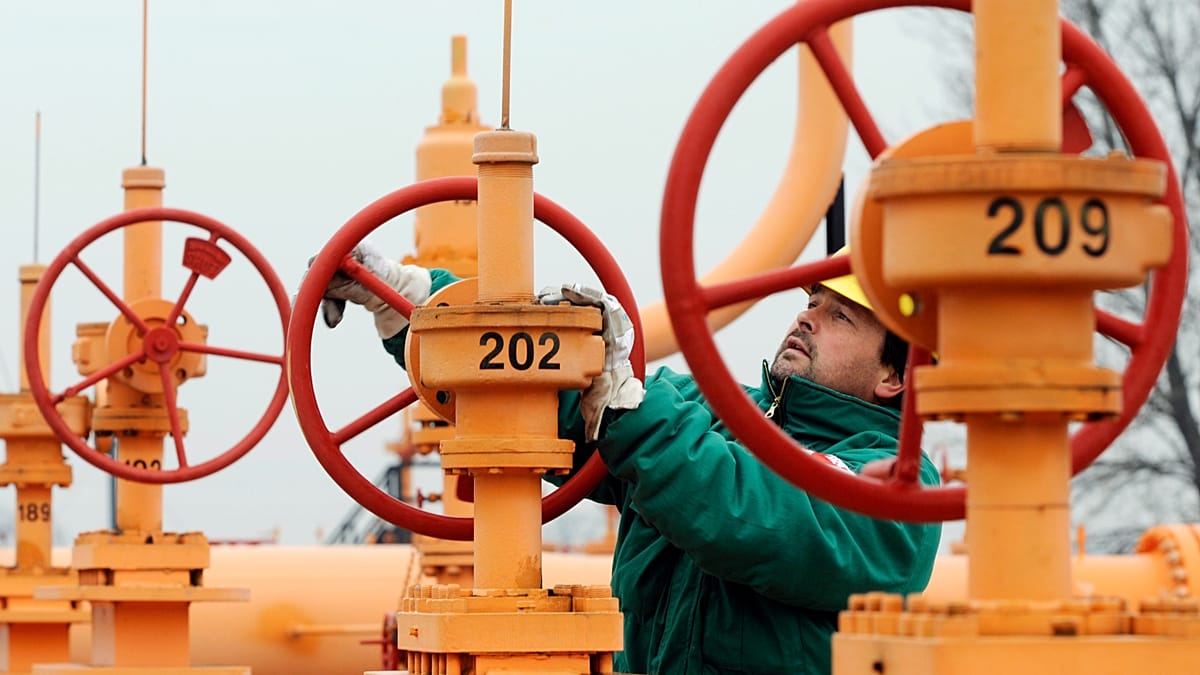
With winter approaching and gas storage at record-low levels, EU governments are bracing for soaring costs as they compete with Asian buyers to secure supplies and avert power outages.
The European Union is heading into winter with a thin gas cushion, prompting Brussels to warn that the bloc’s energy price crisis could become a supply problem.
In a recent letter to EU capitals seen by Euronews, Energy Commissioner Dan Jørgensen said gas storage levels remain “exceptionally low” after a summer in which hot and dry weather forced countries to burn more gas for electricity, reducing the amount available to refill underground reserves.
Meanwhile, the global market remains deeply affected by the US and Israeli war against Iran, which has cut liquefied natural gas (LNG) flows through the vital Strait of Hormuz to just 15% to 25% of pre-war levels.
On Monday, gas-rich Qatar said it was extending force majeure on LNG shipments to Asian and European customers by another month, with deliveries to the latter set to resume in December.
The result: EU countries keep scrambling to fill their storage levels ahead of winter without incurring astronomical bills.
What is gas storage?
Under EU law, member states need to store natural gas underground — usually in large underground facilities, such as depleted gas fields or salt caverns — when there is plenty of gas available and prices are relatively favourable.
When demand rises, especially in winter, gas can be taken back out and sent into the gas network to heat homes, supply businesses and generate electricity.
Since the Russian invasion of Ukraine in 2022, EU countries are obliged to refill their storage levels to 90% by 1 November in a typical year. Given how natural gas prices skyrocketed due to the Middle East disruption, the European Commission gave capitals flexibility in March, allowing them to refill as little as 75% to 80% to avoid panic buying.
"With winter soon approaching, we must continue our preparatory work. Making use of the flexibility provided by the Gas Storage Regulation and reducing the filling target to 80% can help alleviate immediate pressure on prices and refilling costs," reads Jørgensen's letter.
Cyprus, Estonia, Finland, Greece, Ireland, Lithuania, Luxembourg, Malta and Slovenia do not have gas storage facilities. However, under the EU's gas storage law, they must make solidarity arrangements with other member states to secure their gas reserves.
Are we running out of gas?
Jørgensen said there are currently no immediate risks to security of supply and stressed that the current energy crisis is "very different" from that in 2022, when the EU abruptly cut Russian gas following the war in Ukraine. Back then, European countries did not experience actual gas shortages or mandatory rationing that left homes without gas.
However, EU storage levels are now lower than they were in 2022, averaging around 70%. Latvia (47.1%), the Netherlands (52.1%) and Germany (55.6%) are registering some of the lowest fill levels based on industry data from 13 September. In contrast, by November 2022, EU gas storage levels averaged 94.9% and ended the year at 83.4%, according to the Commission.
Despite German gas storage levels trailing well behind the EU average and the previous year's figures, the Federal Ministry for Economic Affairs and Energy said on 21 August that it anticipates no winter shortages.
Energy analyst Emil Constantinescu, Founder of EnergyRiskIQ, noted that "the physical buffer is improving, but the market is still attaching a substantial premium to future gas availability and external supply risk".
Nonetheless, the real verdict will come on 8 October, when the EU's association of Europe's transmission system operators, ENTSO-G, is due to unveil its gas supply outlook for the winter.
Why is gas price linked to supply?
With supply tight and demand high, gas is getting more expensive. The smaller the storage buffer, the harder and more expensive it becomes to replenish reserves before winter.
Before the Middle East conflict escalated, Europe's main gas price benchmark, the Dutch TTF, was trading at around €30–31 per megawatt-hour (MWh). It is now around €72–74/MWh — more than twice as high — after briefly jumping above €80–89/MWh earlier in September.
Even if the EU's top energy leader said that the bloc is better prepared than it was before the 2022 energy shock, its low gas stocks leave it less room to absorb another global supply disruption without paying a heavy price.
Dutch Climate Minister Stientje van Veldhoven said that the Netherlands wants the EU to end its mandatory natural gas storage filling targets when the current rules expire in 2027, arguing that forcing countries to fill their gas reserves to set levels puts an unfair burden on them.
Gasunie, the Dutch natural gas infrastructure and transportation company operating in the Netherlands, voiced similar concerns, citing the country's increasing dependence on international gas flows.
"We recommend preparing for a crisis that could last several months. Ultimately, it is for policymakers to determine what level of risk the Netherlands is prepared to accept," Gasunie recently stated.
What is the worst-case scenario?
Energy analysts argue that if the EU experiences a severely cold winter combined with continued closure of the Strait of Hormuz, global LNG prices could nearly double current prices, forcing Europe to aggressively outbid Asian markets for US gas.
Ultimately, a gas shortage could turn into an electricity crisis because of the way power grids and energy markets are designed. Since many power plants rely on natural gas to make electricity, a drop in the gas supply quickly drives up power bills and strains the grid.
Ronald Pinto, principal insight analyst at the market intelligence firm Kpler, said that gas shortages aren't foreseen at the moment. However, in such an event, the power sector would likely feel the impact.
"Gas often ends up as the marginal producer, particularly in winter; a gas shortage could propel a TTF rally, which could in turn lead to high power prices across Europe. The situation could be exacerbated if it coincides with cold temperatures and low wind generation," Pinto told Euronews.
Europe's energy crisis comes at the worst possible time for EU countries, which have already introduced tax cut measures, subsidies, and other market-based tools to cushion soaring prices — while struggling with domestic finances.
A deteriorating scenario could prompt the Commission to coordinate joint gas purchasing to ensure lower prices and better distribution, as it did in 2022. French President Emmanuel Macron recently urged Brussels to revisit the measure.