5 things to know about OpenAI’s potentially record-breaking IPO plans
OpenAI is moving closer to one of the most anticipated stock market debuts in history, with plans to file for an initial public offering within days, according to the Wall Street Journal. Chief executive Sam...
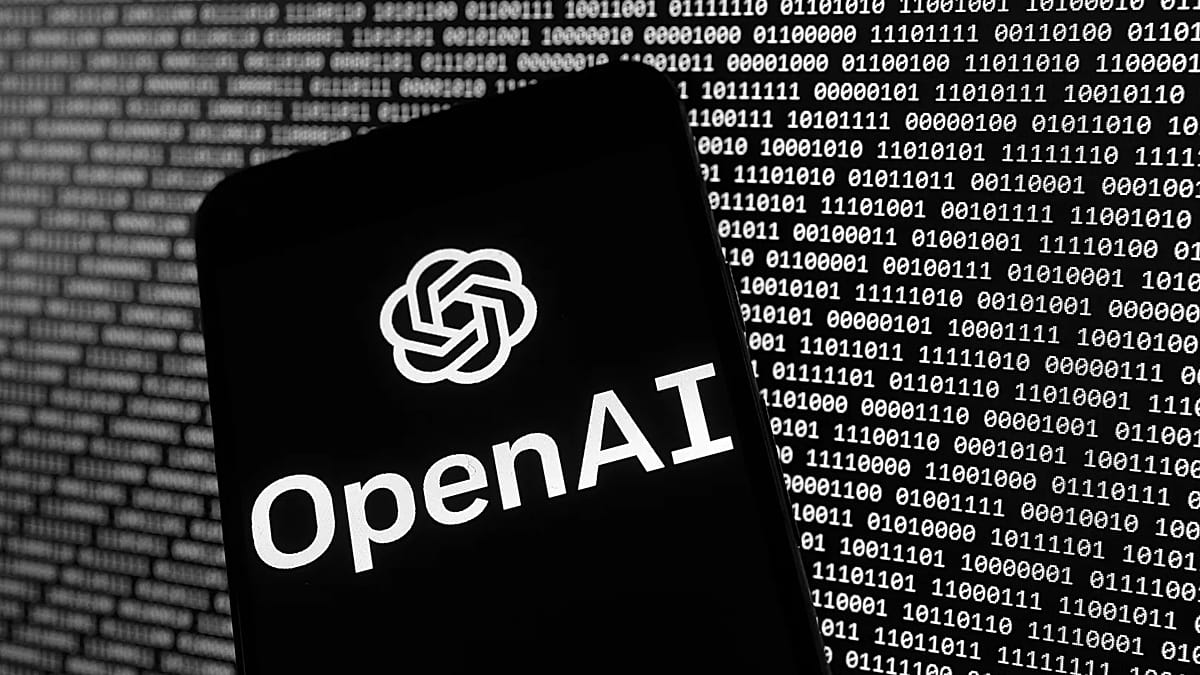
OpenAI is moving closer to one of the most anticipated stock market debuts in history, with plans to file for an initial public offering within days, according to the Wall Street Journal.
Chief executive Sam Altman is targeting a public debut in September 2026, marking a major shift for a company that began as a nonprofit research lab in 2015.
1. It could be the biggest IPO ever
OpenAI is reportedly aiming to raise $60bn (€55.4bn) in its stock market debut. According to Deutsche Bank Research, this would more than double Saudi Aramco's 2019 listing of $25.6bn (€23.6bn), the largest IPO on record at the time.
There is a caveat. SpaceX, which filed its own IPO prospectus this week, is targeting a raise of up to $75bn (€69.1bn). It is seeking a valuation of between $1.75tr (€1.61tr) and $2tr (€1.84tr). This puts the two companies in direct competition for the largest listing in history.
The Wall Street Journal reported this week that OpenAI has engaged Goldman Sachs and Morgan Stanley to prepare a prospectus that could be filed confidentially with regulators within days.
2. A $1tr valuation would make it the 14th biggest company in the world
Reports suggest OpenAI could be valued at more than $1tr (€922bn) at listing. Deutsche Bank Research analyst Adrian Cox has crunched the numbers on what that would mean.
It would place the ChatGPT maker just behind Berkshire Hathaway. The conglomerate generated revenues of over $370bn (€341bn) and net earnings of $67bn (€61.8bn) last year. OpenAI would rank just ahead of Eli Lilly, whose sales topped $65bn (€59.9bn) with a profit of $21bn (€19.4bn).
Nvidia remains far ahead. The company has the largest market capitalisation in the world and is the closest public markets have to a large pure-play AI investment. It is valued at $5.4tr (€4.98tr), after its shares surged more than 13-fold since ChatGPT launched on 30 November 2022, Deutsche Bank Research notes.
3. Investors are chasing pure-play AI exposure
At present, retail investors seeking AI exposure have limited options. They can invest in semiconductor firms, cloud providers, or large technology companies.
According to Deutsche Bank Research, an OpenAI listing would trigger "a scramble to make the most of investor appetite for direct exposure to pure-play AI companies in the public markets" — something that simply does not exist today.
4. The AI IPO race is heating up
OpenAI is not alone. Anthropic, the maker of Claude, has been growing rapidly.
It overtook OpenAI in sales last month, hitting $30bn (€27.7bn) in annualised recurring revenue against OpenAI's $25bn (€23.1bn).
Anthropic is projected to reach around $40bn (€36.9bn) in annual recurring revenue this month, according to projections cited by Deutsche Bank Research from The Information.
The company may be looking to raise more than $60bn (€55.4bn) in its own IPO this year. Anthropic is also in talks with investors about funding at a valuation of $900bn (€830bn). This would put the firm ahead of OpenAI's current $852bn (€786bn) private market valuation.
A $60bn raise would also be larger than the total raised in US IPOs in all but four years since 1980, Deutsche Bank Research notes, citing University of Florida data.
The US stock market is now worth around $70tr (€64.6tr). That is roughly five times larger in nominal terms than at the peak of the dot-com bubble.
5. Big questions remain about its business model
Despite its scale and ambition, OpenAI has never turned a profit.
According to Deutsche Bank Research, the company is projected to generate around $30bn (€27.7bn) in annualised revenue this month.
But internal projections reported by The Information suggest it is on course to lose $14bn (€12.9bn) in 2026 alone. Cumulative losses could reach $44bn (€40.6bn) before profitability in 2029.
As Deutsche Bank Research puts it, "it has yet to be seen how public markets will value OpenAI and its peers once they open up their financial statements to scrutiny and explain the still little-understood economics of their business models."
OpenAI has taken steps to prepare. It has streamlined its products, focused on enterprise customers and clarified its partnership with Microsoft.
In October 2025, it completed its transition from a nonprofit to a public benefit corporation. But questions remain over how to value AI model companies.
OpenAI has been laying the groundwork carefully in recent months by streamlining its products, focusing on enterprise customers, and clarifying its partnership with Microsoft.
In October 2025, it completed its transition from a nonprofit to a public benefit corporation. But questions remain about how to value AI model companies.