Middle East crisis live: Hezbollah urges Lebanon to pull out of talks with Israel; blockade of strait of Hormuz begins
Key events1m agoHezbollah says it will not abide by agreements from Lebanon-Israel talks4m agoSummaryShow key events onlyPlease turn on JavaScript to use this featureHezbollah says it will not abide by...
Key events Show key events only Please turn on JavaScript to use this feature
Hezbollah says it will not abide by agreements from Lebanon-Israel talks
The Lebanese militant group Hezbollah will not abide by any agreements that may result from direct Lebanon-Israel talks in the US, negotiations it firmly opposes, a senior Hezbollah official has said.
Wafiq Safa, a high-ranking member of Hezbollah’s political council, spoke on the eve of talks expected in Washington between Lebanese and Israeli ambassadors to the US.
It will be the first time in decades that envoys from Lebanon and Israel, which do not have diplomatic relations, meet face-to-face in direct talks.
“As for the outcomes of this negotiation between Lebanon and the Israeli enemy, we are not interested in or concerned with them at all,” Safa told the Associated Press.
Separately, the leader of Hezbollah urged Lebanon to pull out of the talks with Israel. Naim Kassem spoke in a televised address on the eve of the scheduled meeting.
The latest round of fighting was sparked by Hezbollah firing rockets into northern Israel on 2 March, after the US and Israel attacked Iran.
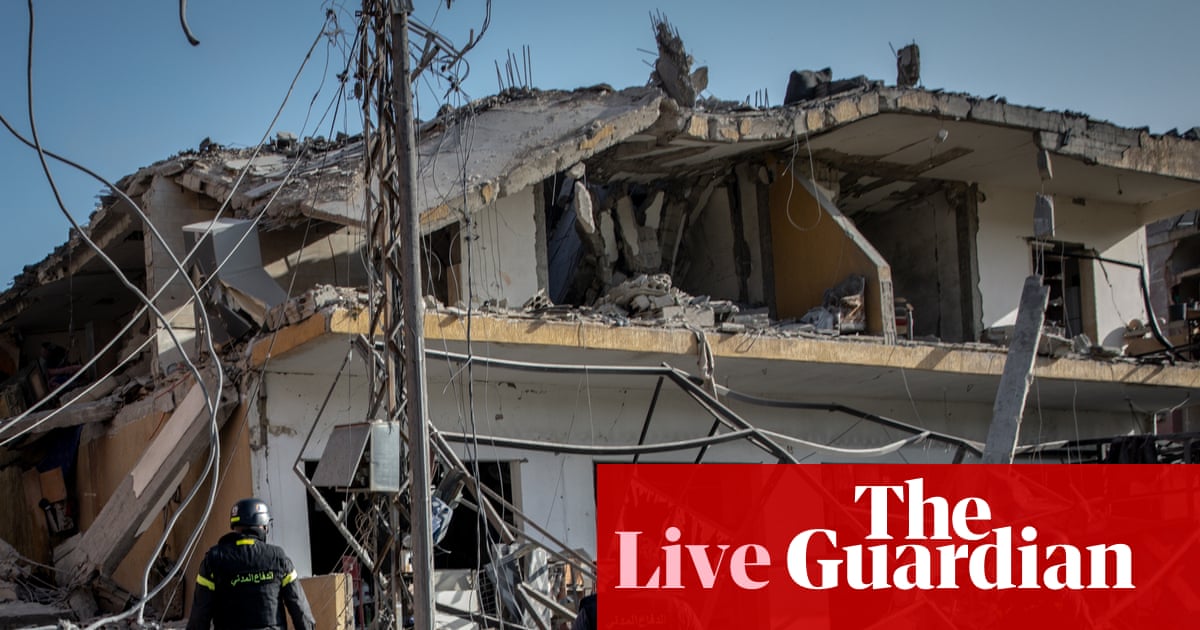
At least 2,055 people have been killed in Israeli strikes in Lebanon, the health ,inistry says, among them 252 women, 165 children and 87 medical workers, while 6,588 others were wounded. More than 1 million people have been displaced.
Lebanon’s government – which says it is committed to disarming Hezbollah – had called for direct talks early on in the war. Last week, Israel announced its approval of talks.
Summary
Welcome to the Guardian’s continuing coverage of the crisis in the Middle East.
The US blockade of ships using Iranian ports in the Gulf began on Monday, turning the six-week-old conflict between the US-Israeli coalition and Iran into a test of economic endurance.
US Central Command (Centcom) made no formal announcement of the start of the blockade but had said it would take effect at 5.30pm Iranian time on Monday, and would apply to any ships entering or departing Iranian ports or coastal areas. Ships using non-Iranian ports would not be impeded.
Donald Trump claimed that 34 ships had passed on Sunday through the strait of Hormuz, the gateway to the Gulf, but gave no supporting evidence. Speaking to reporters at the White House, the president also claimed: “We’ve been called by the other side,” who he said would “like to make a deal very badly”.
-
Trump said the blockade would be on all Iranian ports along the strait from Monday onward. About 20% of the global oil and gas supply moved through this waterway before the war. Seafarers as well as the United Kingdom Maritime Trade Operations received advisories indicating Trump’s blockade would apply to all ship traffic, regardless of the vessel’s flag.
-
Trump claimed that Iran wanted to reach a deal. He insisted the US would not agree to any deal that would permit Iran to have a nuclear weapon. “We can’t let a country blackmail or extort the world,” he said at a last-minute press conference at the White House on Monday.
-
After receiving a McDonald’s delivery at the beginning of the presser, Trump invoked bellicose language in discussing Iran. “Iran will not have a nuclear weapon, and we’re going to get the dust back. We’ll get it back, either we’ll get it back from them, or we’ll take it,” he said. At one point, when questioned about some sort of prior ultimatum regarding Iran, Trump said: “I don’t want to comment on that but it won’t be pleasant.”
-
Talks are expected in Washington between Lebanese and Israeli ambassadors to the US. It will be the first time in decades that envoys from Lebanon and Israel, which do not have diplomatic relations, will meet face-to-face in direct talks. Lebanese officials are looking to broker a ceasefire in the Israel-Hezbollah war.
-
There were reports indicating that US officials were continuing talks with Tehran. One official told CNN: “There is continued engagement between the US and Iran and forward motion on trying to get an agreement.” Meanwhile, some administration officials were having internal talks about how a second sit-down with Iranian officials might look, should the opportunity arise, CNN reported.
-
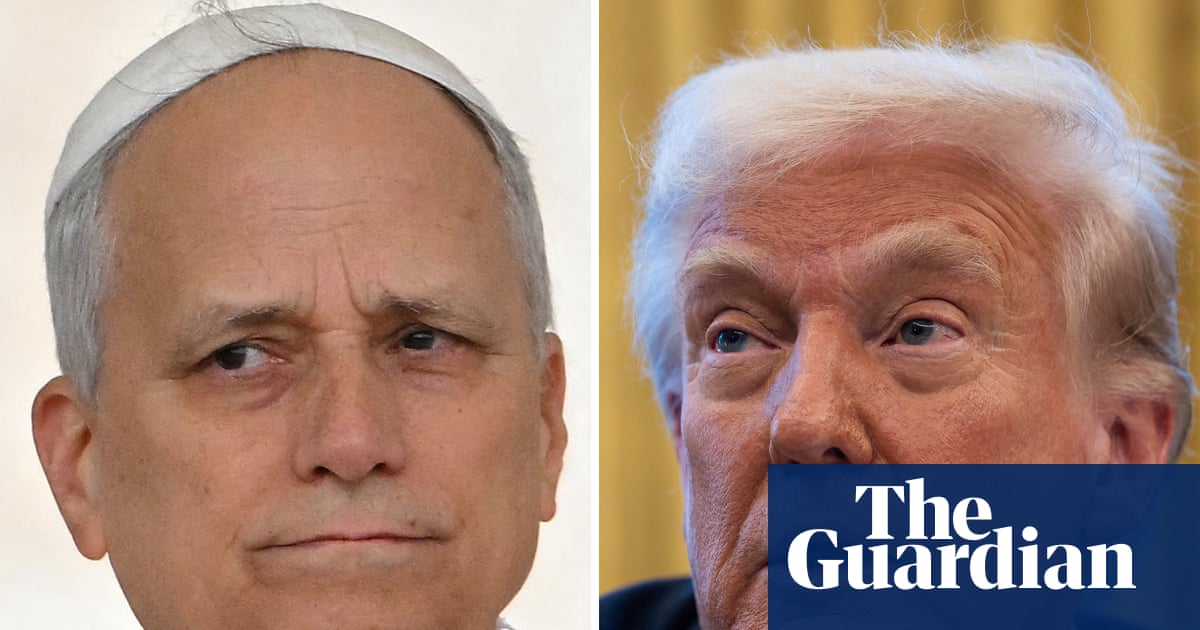
Trump blasted Pope Leo XIV on social media in response to the pontiff’s call for an end to the war. The president claimed the pope was trying to appease the “radical left”. The pope said he had “no intention to debate” Trump over Iran but would continue to advocate for peace. US vice-president JD Vance urged the Vatican to “stick to matters of morality”.