Thursday briefing: Nato can no longer count on US protection – so what now for Europe?
Good morning. Slowly, then all at once, Europe has realised that it can no longer rely on the United States for protection. For generations of western Europeans, the US has been the ultimate guarantor of...
Good morning. Slowly, then all at once, Europe has realised that it can no longer rely on the United States for protection. For generations of western Europeans, the US has been the ultimate guarantor of peace on the continent through its network of military bases and nuclear umbrella developed after the second world war. But the presidency of Donald Trump has shaken this assumption to its core.
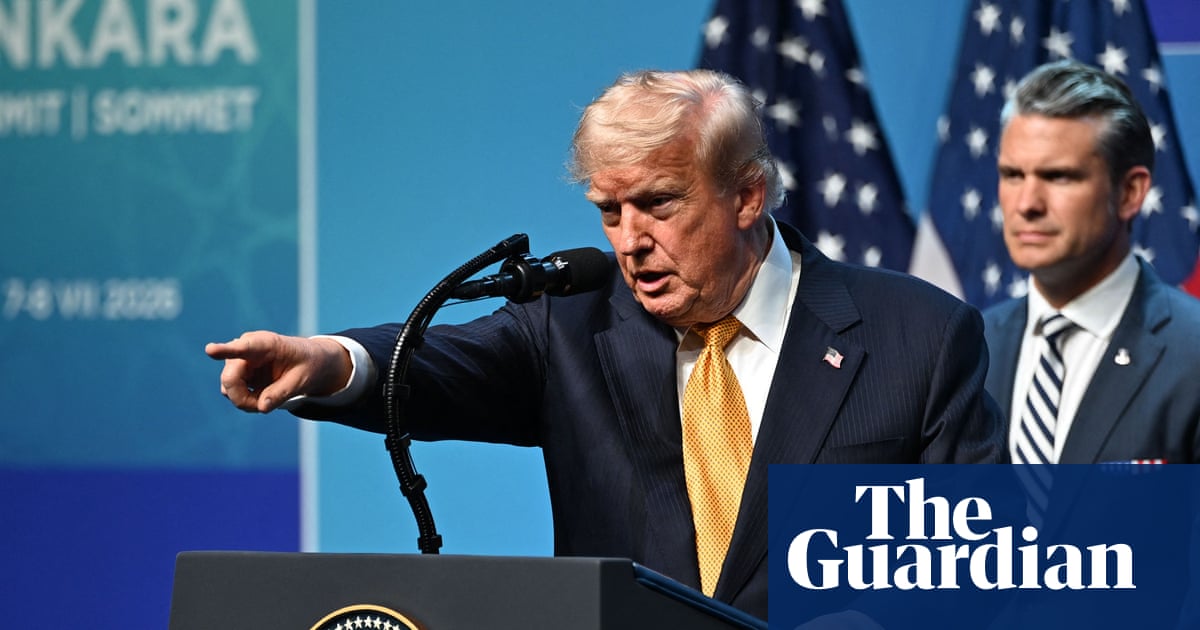
In Ankara this week, Nato leaders gathered for their annual summit. Ahead of the meeting, diplomats scrambled to prepare a joint statement reaffirming article 5 – that an armed attack on one is an attack on all – in an attempt to highlight that even in the era of Trump, US military deterrence remains ready to protect Europe. But away from the cameras, it remains unclear what this commitment would actually mean if the worst happened.
For today’s First Edition, I spoke with Dan Sabbagh, the Guardian’s defence and security editor, who was in Ankara for the summit, about how Europe is preparing to fight without the guarantee of US protection – and whether the continent can realistically defend itself against aggressors without American help. But first, this morning’s headlines.
Five big stories
-
UK politics | All lobbying of government ministers, aides and senior officials should be publicly declared – from WhatsApp chats to party conference meetings – in a fundamental shake-up of transparency laws, the government’s ethics watchdog has said.
-
Middle East | The US military carried out strikes on Iran for a second day, hours after president Donald Trump said that an interim agreement to end the war was “over”.
-
UK politics | Police have launched an investigation into £37,500 of donations to Robert Jenrick’s campaign to become Conservative leader in 2024 after a referral from the elections watchdog.
-
Environment | Western Europe has been scorched by its hottest June on record, scientists have said, as the UK enters its third heatwave of the year and wildfires ravage France and Spain.
-
UK news | UK vets may have to have a licence and cap prescriptions for pet medicine at £21 under plans being considered by the government.
In depth: ‘Europe’s recognised that you can’t get away with leaning on America any more’
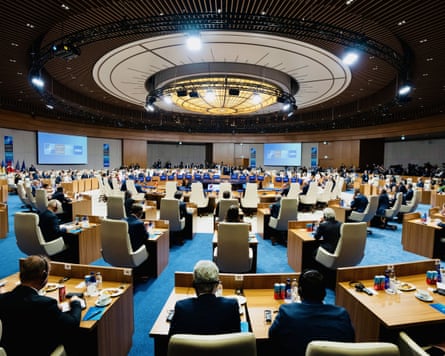
This week, Nato chiefs have been thrust back into the chaos of Trump’s orbit once more. The final day of the annual summit began on Wednesday with the US president suggesting the ceasefire agreement with Iran was “over” following an exchange of hostilities after commercial vessels were attacked in the strait of Hormuz. (Overnight, Trump threatened Iran that “much worse” could come after another round of strikes). During the summit, Trump reaffirmed his desire to annex Greenland, slammed his peers for failing to join Israel and the US’s attack on Iran, and requested that the US stop trading with Spain over its reluctance to increase defence spending.
It was a greatest hits of grumbles from the unpredictable president, who was in a particularly bad mood. By all accounts, the subsequent meeting with the other 31 leaders went well – many had been eager to show off large increases in military expenditure since the previous summit, when member states agreed to raise defence spending to 5% of GDP by 2035. An embarrassing public argument has been avoided this time.
Europe appears to have finally got the message on defence spending: big increases are needed, and the US will no longer foot the bill for the continent’s security. Nato secretary general, Mark Rutte, framed the summit around delivery, emphasising that Europe and Canada were “stepping up” after demands from the US president.
“Europe has gone through the five stages of grief and we’re certainly arrived at acceptance,” says Dan Sabbagh. “We are now at the point where people are starting to plan. They realise that you can’t rely on the US as much as before, that Europe’s run down its arms industry. Although this realisation varies depending on how far east in the continent you go. Poland and the Baltic states are spending more than 4% of GDP on defence already, whereas Spain has refused to sign up to 3.5%. But for the countries that are really motivated, we are at the point where Europe is starting to build.”
Does Europe really need massive military investment?
Ahead of the summit, Britain and 11 other Nato countries committed to a £37bn project over the next decade to build new missile capabilities to protect Europe. Other joint defence projects are already under way: Germany may join an effort from the UK, Italy and Japan to build Britain’s next generation fighter jet. But critics of the increase in defence spending are strongly questioning whether such a massive investment in Europe’s military is really necessary.
Russia has been weakened by the Ukraine war, according to many analysts: almost half a million Russian soldiers have died, and the country is facing fuel shortages from Ukrainian drone attacks. Despite the threatening language from Vladimir Putin, Moscow is likely several years away from being ready to attack Europe if it chooses to once again.
“Nato says that Russia might be ready for another war by 2030. But this seems very, very early given that the Ukraine war is still ongoing, thousands of young Russian men have died in the conflict, and lots of materials have been expended,” says Dan. “We can’t rule it out, but if it were to happen, it would be in many years. I think we should all want to reflect on that.”
Europe’s worst fears
Even so, governments must prepare for the worst, and many European governments have spent the second Trump presidency thinking about how they would defend themselves if the US did not come to their aid. So far, Europe’s worst fears about the US leader have not played out: Trump has not forced Ukraine into a peace deal with Russia or teamed up with the Kremlin to reshape the continent in their own image. But it still remains unclear how the US would respond in the face of Russian aggression to a European country.
“Europe has a population of about 600 million people, Russia has a population of 140 million. The idea that Europe could not stand on its own two feet against Russia with its economic power and technological advantages is unlikely if there really was a crisis tomorrow,’ says Dan.
The US has signalled that it wants to reduce its numbers in Europe and the amount of fighter jets it has stationed on the continent by a third, while also redeploying naval and bomber divisions away from the continent, leaving gaps in the defence.
“Can Europe compensate for that? Of course it can, but it comes at a cost to European taxpayers. The question becomes: what is the level of will among European governments and electorates to do that? As we have seen, that is variable.”
‘People are less certain what the US would do in a crisis’
At least some of the reaction to America’s turn away from Europe is emotional. In the wake of the end of the cold war, the US kept defence spending at a much higher level as part of its ambitions to remain the global superpower. Europe, keen to embrace its peace dividend, cut military spending, choosing to build up its welfare states instead.
“Europe’s recognised that you can’t get away with leaning on America any more. Europe’s been getting away with it for a long time and in a lot of European countries, there’s a recognition that it needs to change. The price of deterrence may well be greater than the price that has been previously paid,” says Dan.
Even when Trump leaves office, the US position is unlikely to change on its military presence in Europe, says Dan. There may be more political stability from a future US leader, but there is no going back.
“Europe has just got to do more to stand up for itself. People are less certain what the US would do in a crisis, and they understand they need to be self-reliant. It is a process that will take time. But do they believe that America can’t be relied upon at all? I’m not quite sure we’re at that stage,” he says.
What else we’ve been reading
-
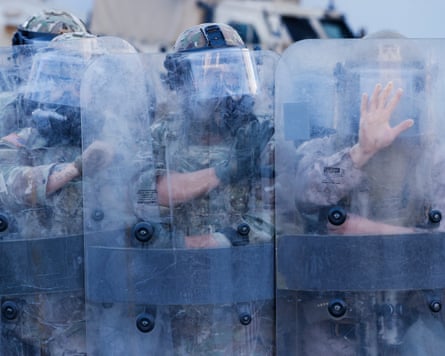
Last summer, ICE officers descended on Los Angeles. Residents were arrested, detained and deported – many vanished from their neighbourhoods. In this chilling piece, three share their stories. Michael
-
Between now and Monday, Guardian writers are writing about their holidays from hell. The series starts with Tim Jonze and a terrible lads trip to Ibiza that went wrong. Patrick
-
Every summer, optimistically bought courgettes sit melancholic in my fridge, constantly demoted in the pecking order of ingredients. Now, at least, I know how to ferment them, thanks to Tom Hunt’s handy recipe. Michael
World Cup 2026

Morocco | The 2022 semi-finalists are the only Africa team left in the competition. Osasu Obayiuwana previews their quarter-final tie with France – and the lessons from their success for other African nations, some of which managed to snatch defeat from the jaws of victory.
Power rankings | Three goals in 13 minutes against Egypt were not enough to move Argentina up the Guardian’s World Cup power rankings. But it was good news for Switzerland after their penalty shootout victory against Colombia on Tuesday.
Pundits | From Kevin-Prince Boateng to Clint Dempsey, Guardian football writers have crowned the six best TV pundits during the World Cup in Australia, the US and the UK.
after newsletter promotion
Today’s fixtures
France v Morocco, 9pm, ITV
Sport
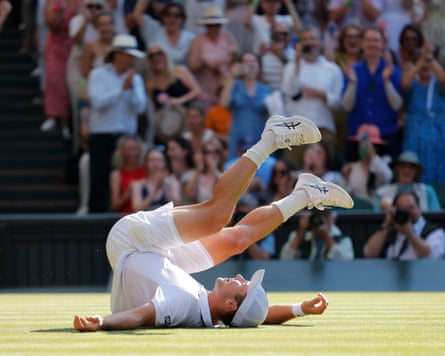
Tennis | Arthur Fery’s fairytale continues after the British wildcard easily beat ninth seed Flavio Cobolli 6-4, 7-6 (4), 6-0 to reach the men’s semi-finals. In the women’s draw, rising stars Marta Kostyuk and Linda Noskova set up a semi-final clash after both winning their quarter-finals in straight sets.
Cycling | Olav Kooij, teammate to Paul Seixas at Decathlon CMA CGM, emerged out of the heat haze in Pau to win stage five of the Tour de France in the Place de Verdun.
Football | London City Lionesses have announced the signing of Alexia Putellas at an event in New York, confirming the arrival in the Women’s Super League of one of the women’s game’s all-time greats.
The front pages
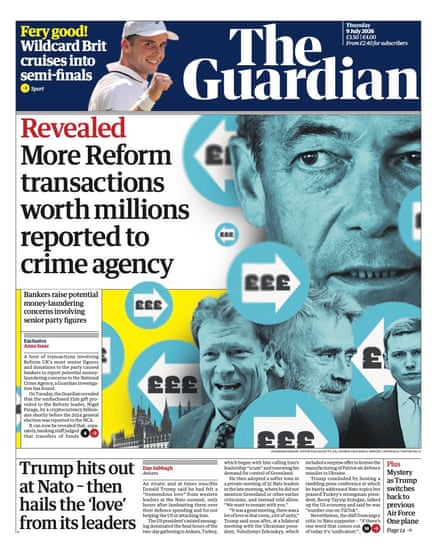
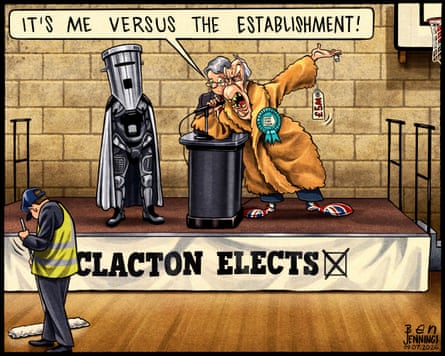
“More Reform transactions worth millions reported to crime agency”, is the Guardian’s front page today. The Mail says “Farage: Binface by-election is deadly serious”, the Express has “Farage: Labour and Tories ‘running scared’” and the Mirror writes “Bin him off”.
Elsewhere, the i Paper has “Police launch investigation into £37,500 donation to Robert Jenrick campaign”, the Times writes “Burnham: I’ll aim defence spending at British firms”, the Telegraph leads with “Rochdale rapist will be deported”, and the FT splashes “Tesco concedes end to global dreams by exploring sale of European business”. Lastly, Metro goes on Iran with “Trump tears peace hopes into pieces”.
Today in Focus: The Latest
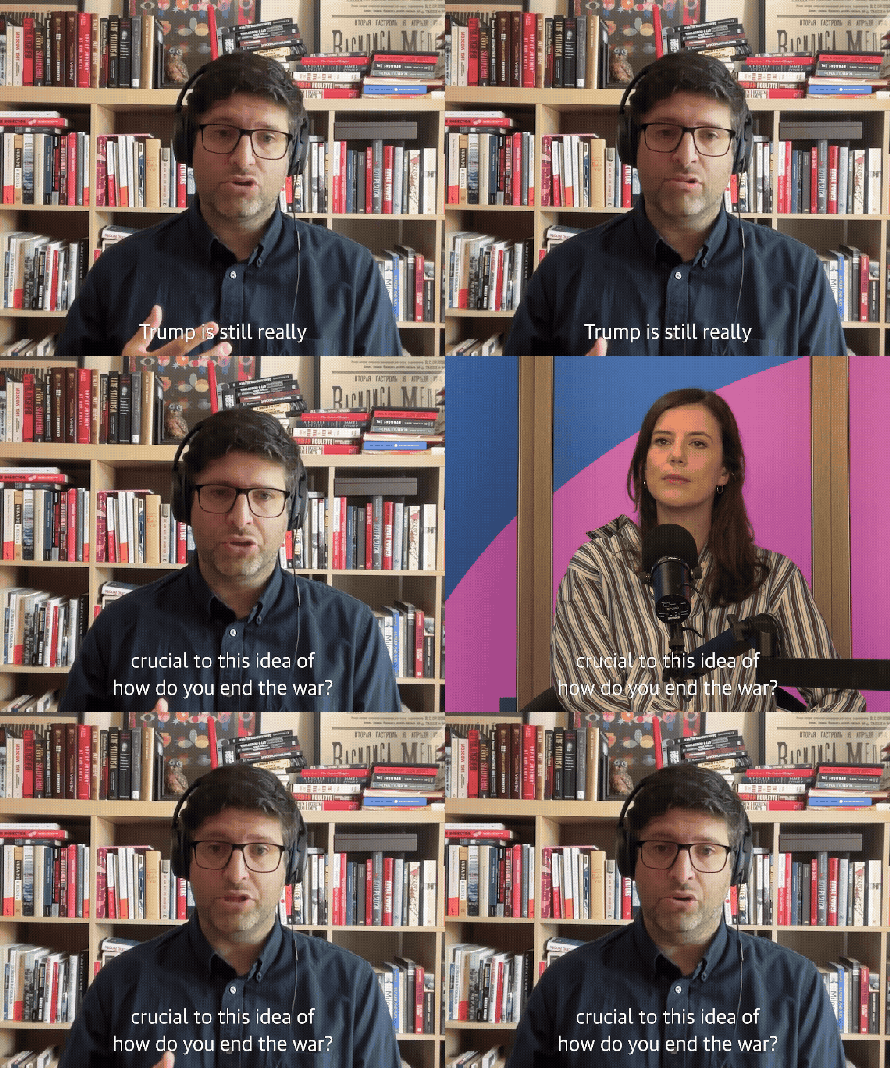
Trump on rampage at Nato summit: what does it mean for Ukraine?
There are divisions over Russia’s war in Ukraine, defence spending, and the US-Israel war in Iran. The Ukrainian president, Volodymyr Zelenskyy, is holding talks with leaders as he rallies the European cause against Russia’s war that has reached the Ukrainian capital, Kyiv, as Nato allies present an increasingly united front against an unreliable US. For more, Lucy Hough speaks to the Guardian’s central and eastern Europe correspondent Shaun Walker.
Cartoon of the day | Ben Jennings
The Upside
A bit of good news to remind you that the world’s not all bad

For the Guardian’s Seascape series, Tamara Davison spoke to men and women who have turned to the sea to confront problems ranging from anxiety to addiction and trauma.
“Research from ecotherapy shows us that nature, but particularly water, gives us this feeling of calm that we don’t get in other spaces,” geographer Catherine Kelly tells her. “A lot of our daily lives are spent on very focused attention – often on screens, unfortunately, and that makes our brain quite tired. When we go to the water, our shoulders drop, our eyes and face soften. We start breathing more slowly … we’re in a state of drift.”
Davison reports that it’s not only wild swimming or simply dipping our toes in that restorative value: “Therapeutic practices are now emerging in scuba diving and freediving, where participants can experience the added sensations of weightlessness in the water.”
Whether that sounds truly relaxing, we leave up to you.
Sign up here for a weekly roundup of The Upside, sent to you every Sunday
Bored at work?
And finally, the Guardian’s puzzles are here to keep you entertained throughout the day. Until tomorrow.