Middle East crisis live: Iran warns it will close strait of Hormuz if US blockade continues
Key eventsnowUK to make ‘wide-ranging’ contribution to Hormuz mission, says envoy8m agoOpening summaryShow key events onlyPlease turn on JavaScript to use this featureUK to make ‘wide-ranging’ contribution to...
Key events Show key events only Please turn on JavaScript to use this feature
UK to make ‘wide-ranging’ contribution to Hormuz mission, says envoy
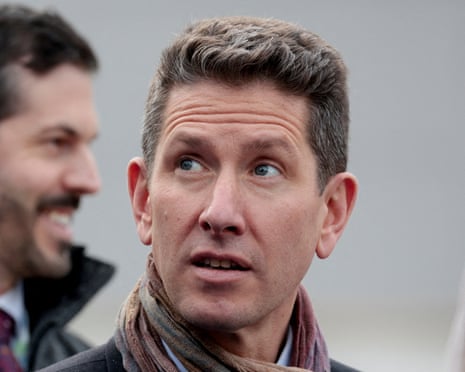
Britain will make “a wide-ranging military contribution” to an international mission to protect shipping in the strait of Hormuz trade waterway, the UK ambassador to the US has said.
Christian Turner’s commitment comes amid long-running concerns over the state of Britain’s armed forces and warnings of under-funding.
The multinational mission, led by the UK and France, aimed to provide reassurance to vessels using the critical waterway once the Iran conflict was over, Turner told an event in Washington.
PA Media also reports that the initiative was announced at talks in Paris involving nearly 50 countries, which Turner said signalled global resolve to prevent tolls or restrictions being imposed on the shipping route, normally used to move one fifth of the world’s oil and gas supplies.
So far about 12 nations have committed to take part in the mission.
The move has been derided by Donald Trump, who used it as a fresh opportunity to criticise Nato as “useless” after it refused to support his offensive against Iran.
Opening summary
Welcome to our live coverage of events in the Middle East.
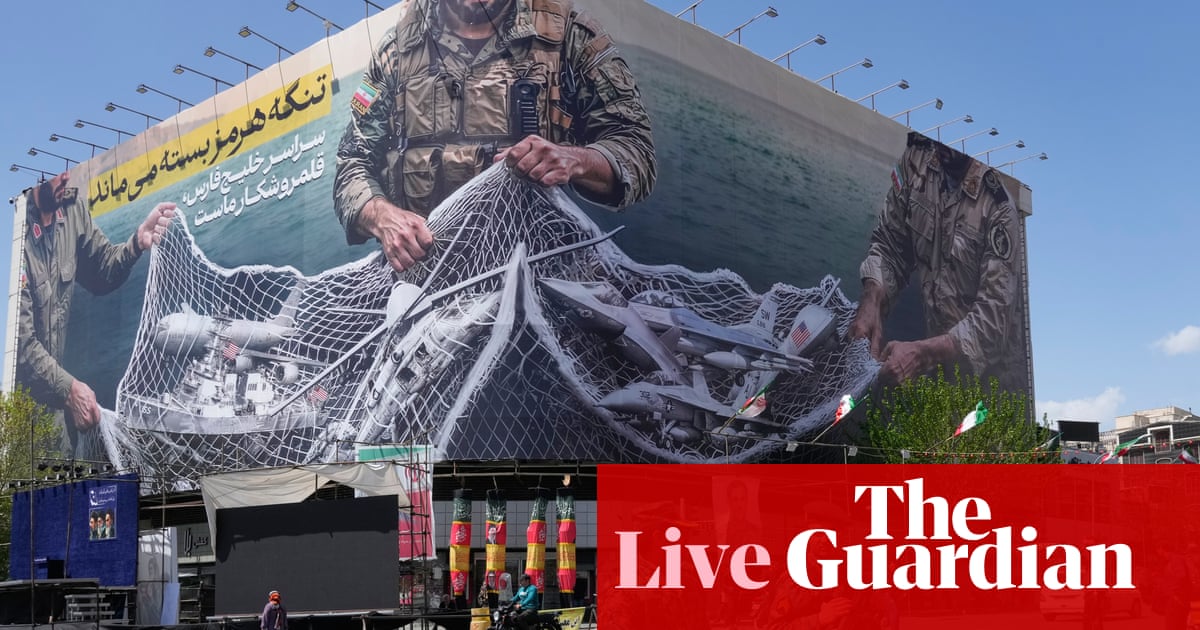
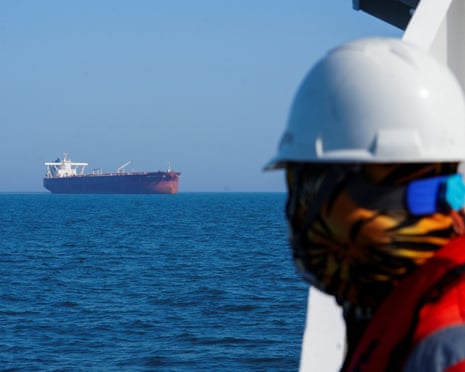
Iran temporarily reopened the strait of Hormuz on Friday after a truce agreement between Israel and Lebanon, raising hopes for a broader peace, but Tehran warned that it would close the waterway again if the US naval blockade of Iranian ports continued.
Foreign minister Abbas Araqchi announced the global energy chokepoint was open for all commercial vessels for the remainder of the 10-day, US-brokered truce agreed on Thursday and Donald Trump said Iran’s move marked “a great and brilliant day for the world”.
But subsequent statements and clarifications from both sides left uncertainty over how quickly shipping might return to normal, and some vessels could be observed making unsuccessful attempts cross the strait on Friday before turning back.
Trump said a US blockade of ships sailing to Iranian ports would remain until “our transaction with Iran is 100% complete”.
Iran parliamentary speaker Mohammad Bagher Ghalibaf retorted by saying the Hormuz strait “will not remain open” if the US blockade continued and that Trump had made multiple false claims on Friday.
Trump later said he might end the ceasefire with Iran and “start dropping bombs again” if a long-term deal to end the war was not agreed by Wednesday, when their truce expires.
In other developments:
-
World leaders welcomed Iran’s announcement on reopening the waterway, with UN chief António Guterres calling the move “a step in the right direction” and urging “the full restoration of international navigational rights and freedoms in the Strait of Hormuz, respected by everyone.” British prime minister Keir Starmer and French president Emmanuel Macron – who on Friday co-chaired a virtual summit of about 50 countries on the issue – said the reopening must become permanent.
-
Oil prices tumbled after Iran’s Hormuz announcement amid hopes that energy supplies could resume after nearly two months of disruption. Brent crude – the benchmark for oil traded globally – plunged below $90 a barrel, a 10% fall.
-
Trump said US “prohibited” Israel from bombing Lebanon and that “Israel will not be bombing Lebanon any longer”. Minutes before Trump’s post on social media, Israeli prime minister Benjamin Netanyahu uploaded a video address declaring that Israel was not done yet with Hezbollah.
-
The Lebanese army claimed “a number of violations” by Israel of the ceasefire on Friday morning, as thousands of displaced families began making their way home to southern Lebanon. The fighting since 1 March has killed more than 2,100 people in Lebanon and displaced more than 1 million.
-
Trump said Iran’s enriched uranium would be brought to the US, also claiming the US and Tehran would work together to recover the uranium but denying reports that the US was considering a $20bn cash for uranium deal. “No money is changing hands,” he told Reuters.
-
A cruise ship successfully transited the strait of Hormuz on Friday, making it the first passenger vessel to make it through since the war began, according to ship tracking service MarineTraffic.
-
The Trump administration issued a waiver permitting countries to buy sanctioned Russian oil and petroleum products at sea for about a month, seeking to control soaring global energy prices.
-
The UN children’s agency said it was “outraged” after two truck drivers it contracted to deliver clean water to families in Gaza were killed by Israeli fire.
-
The world’s largest aircraft carrier, the USS Gerald R Ford, has again entered the waters of the Middle East, US defence officials said.