Military strikes on water facilities in Iran may constitute a war crime, experts say
Military strikes that damaged two water storage facilities in southern Iran may constitute a war crime, military and legal experts say, after reviewing media reports and visual evidence of a 10 June strike on...
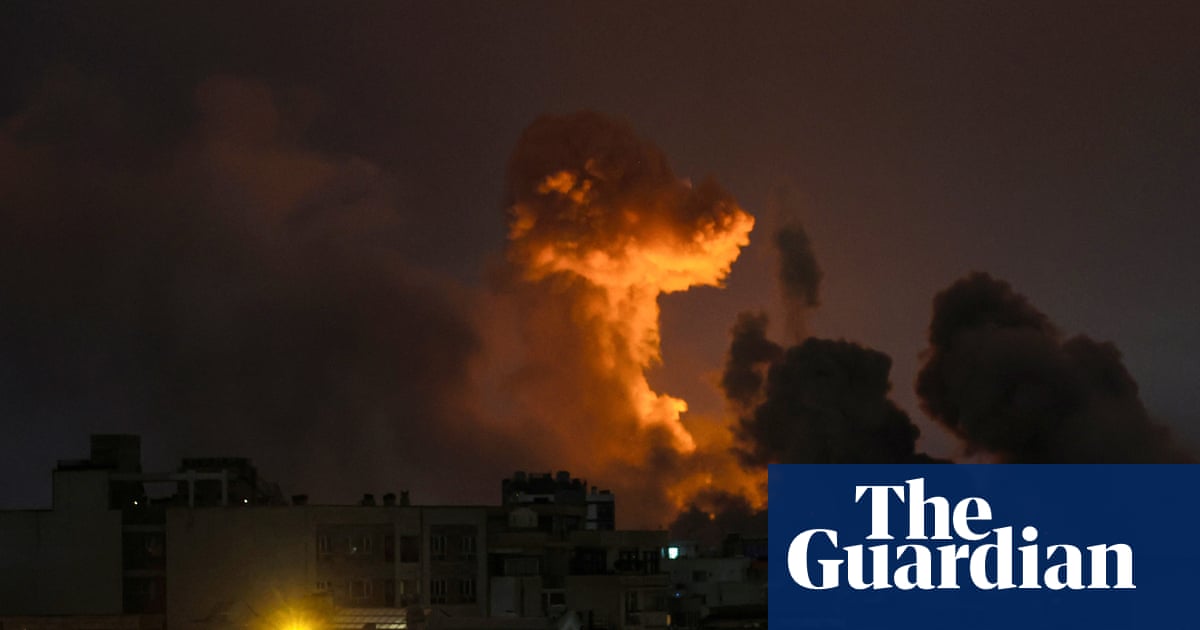
Military strikes that damaged two water storage facilities in southern Iran may constitute a war crime, military and legal experts say, after reviewing media reports and visual evidence of a 10 June strike on Bemani, a small district about 2 miles from the strait of Hormuz.
It’s unclear if the strikes deliberately targeted the district’s water tanks, or if they unintentionally destroyed a key reservoir for about 20,000 people living nearby. But if the tanks were the target, then the legal question becomes critical, Brian Finucane, a former state department lawyer, said. “It’s either a military objective or it’s a civilian object: attacking one is lawful, attacking the other is a war crime,” Finucane said.
Iran’s state broadcaster said Wednesday’s strikes were carried out by the US military, though the Guardian could not verify if that was the case.
“We are aware of reports and are looking into it,” Tim Hawkins, a spokesperson for US Central Command (Centcom), the operating authority for US military operations in the Middle East, said in a statement.
The strikes on Bemani may be part of an escalating effort to force Iran to accept a deal on US terms, breaching the terms of a tenuous ceasefire agreement that has been in place since April and compounding US threats to capture Iranian infrastructure and take control of its oil industry. Donald Trump has warned that Iran will “pay the price” for stalling negotiations and boasted Wednesday that “we hit them hard yesterday and we’re going to hit them hard again today.”
Conflicting reports emerged Thursday about whether the US, Iran and several Gulf countries had reached a deal to end the conflict. Trump said he was calling off planned strikes in advance of what he characterized was a deal agreed to in principle on most major points. Trump has claimed dozens of times to be close to an agreement to end the war, and that the Iranian leadership had agreed to a deal when in fact they had not.
The destruction of Bemani’s water tanks occurred shortly after Centcom announced strikes on “Iranian air defense, ground control stations, and surveillance radar sites near the Strait of Hormuz” by US air force and navy fighter jets in a post on X. The White House declined to comment on the strikes on Bemani and referred all questions about the operation to Centcom.
The attack on Iran’s water infrastructure comes amid the heat of summer and a historic drought.
“Iran’s water crisis has left the country with virtually no margin for error,” said Ali Vaez, an Iran expert at the International Crisis Group. “Further disruptions could prove catastrophic for the population. But Tehran is more likely to endure a deepening thirst at home than satisfy Trump’s thirst for a political victory.”
Lawmakers have also raised questions about the president’s continued use of force in Iran, and cited the risks of any expanded campaign that targets crucial water infrastructure.
“Iran is one of the most water challenged countries in the world right now, and we’re in the hottest part of the year where damages to civilian water access are going to have the most acute consequences,” said Tim Kaine, a Virginia senator. “Whether it was a mistake in targeting or intentional targeting, this is not a minor matter.”
Iran’s semi-official news agency posted photos of destroyed water tanks as well as images of munition fragments that Trevor Ball, a former US army technician, identified as pieces of a GBU-39 bomb – a precision-guided munition produced in the US and often sold to allies in the Middle East including Israel and the United Arab Emirates.
Ball described the damaged water facility as “remote” and said that it was “very unlikely that two buildings were both directly hit if that’s not what they were aiming for”.
Several military analysts and Iran experts said that the Bemani strike was the first publicly reported attack on water infrastructure in Iran. Earlier this year, the US hit a girls’ school in Minab, killing dozens of students aged seven to 12. The US military has not commented on its role in the elementary school attack.
Multiple former officials with deep experience in military targeting said that if the US did intentionally target a water facility, it would be unprecedented.
“It’s never been on the table to hit any water infrastructure – in any campaign that I’ve been a part of,” said Wes Bryant, who advised the US military on the use of force in Iraq and Syria. “Pre-Trump 2.0, I would have said that ‘Absolutely we don’t target water infrastructure. This is a misidentification.’ But now I’m not sure.”
Finucane, who consulted on use of force issues for both Republican and Democratic administrations in more than half a dozen countries, agreed.
“I don’t recall ever seeing the US military conduct a deliberate strike on water infrastructure this way,” he said. “It’s not clear to me whether that is what took place here,” he said.
Before the US military conducts a deliberate operation, it must evaluate the legality of any potential strike against two key criteria, Finucane said. First, commanders must determine if the target is a lawful military objective. And second, the military must determine that the expected harm to civilians would not be excessive compared to the anticipated military advantage.
“Checking that first box as to whether it was a lawful military objective is critical,” Finucane said. “Because if it’s not a lawful military objective, you’re attacking a civilian object, and attacking a civilian object is a war crime.”
Congress voted to constrain US action in Iran on 3 June, securing four Republican votes in favor of an unprecedented resolution to rein in Trump’s power to continue the conflict. Kaine said that he plans to bring a war powers resolution to the Senate in response to the latest strikes on Iran, and will also demand answers from the Pentagon.
If the strike on Bemani’s water facilities turns out to be intentional, Kaine said that it will “absolutely” affect Republicans’ support for the war.
“The one thing the president cares about is his own popularity,” Kaine said. “The combination of American citizens being mad about gas prices and losing Republican votes who had been supportive … they don’t affect his ability [to wage war], but they start to affect his calculations about going in a different direction.”
While it’s unclear exactly how the strike on Bemani came to be, Kaine also raised concerns about the use of AI in selecting US military targets. “AI, without appropriate human oversight, could lead you to commit an egregious mistake,” Kaine said. “We are obviously deeply concerned about the role that AI may have played in the Minab strike, and we will have the same questions about the water strike.”