Twelve EU countries seek green funds beyond 2030 to cope with energy transition
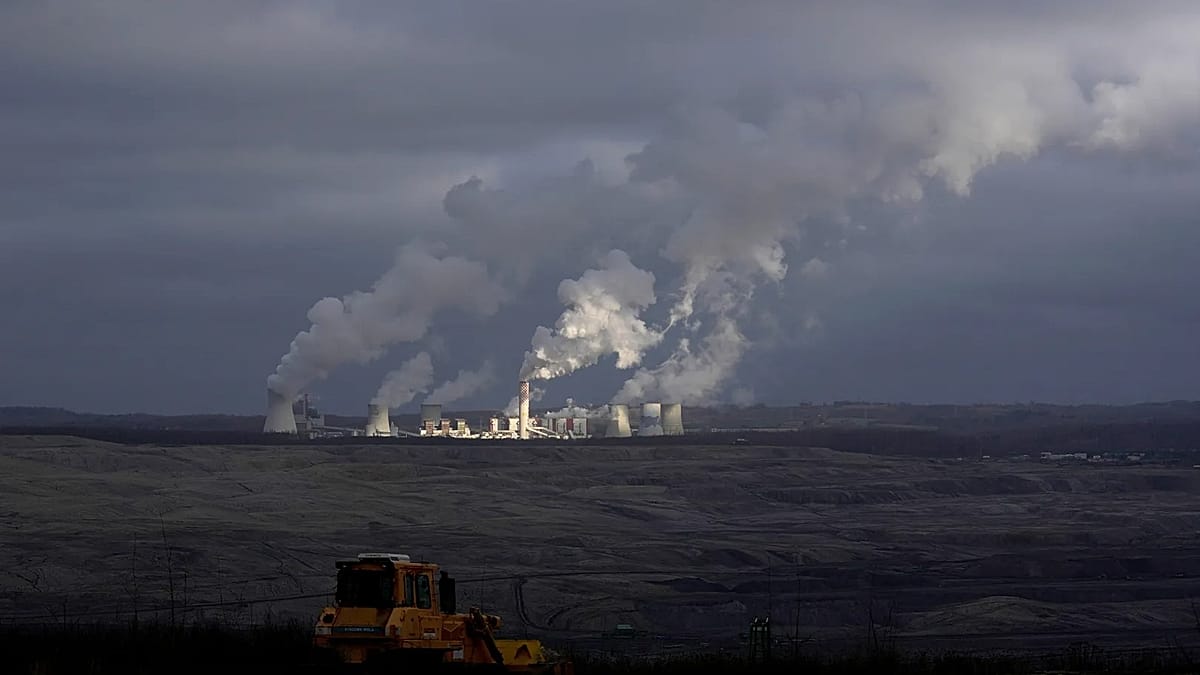
The member states are historically more dependent on fossil fuels than other EU countries, and have benefited since 2021 from special funding to cope with the accelerating shift to renewable energy sources.
Twelve European Union countries are asking the European Commission to preserve and expand a key fund for lower-income countries investing in the energy transition beyond 2030, arguing that without it, the bloc's economic competitiveness and energy security may slow down.
In a letter addressed to Climate Action Commissioner Wopke Hoekstra and seen by Euronews, Croatia, Bulgaria, the Czech Republic, Estonia, Greece, Hungary, Latvia, Lithuania, Poland, Romania, Slovakia and Slovenia argue that the Modernisation Fund remains a crucial instrument for EU countries facing substantial investment needs in the transition to cleaner energy systems.
The Modernisation Fund has been financing several EU countries since January 2021, drawing its revenues entirely from auctioning 2 percent to 4.5 percent of the bloc's carbon market, the Emissions Trading System (ETS). It has mobilised over €57 billion for the 2021–2030 period and it is meant to be terminated by 2030.
But with increasing geopolitical stability driving up energy prices, the 12 countries historically dependent on imported fossil fuels argue it's too early to consider ending such EU funding.
"We call for the continuation and strengthening of the Modernisation Fund beyond 2030 (and) for a significant increase in the scale of financing, aligned with the growing challenges of the transition," reads the letter, which was sent in anticipation of an ETS revision slated for 15 July.
"From the EU’s perspective, the Modernisation Fund enables less affluent member states to undertake ambitious, capital-intensive investments, thereby contributing to their strategic resilience and autonomy from imported fossil fuels."
Just transition
Several EU member states supported by the Modernisation Fund face significant challenges due to their historical dependence on fossil fuels and legacy energy systems.
Poland has long relied heavily on coal for electricity generation and employment, making the shift to cleaner energy both economically and socially complex; Slovakia, Bulgaria, Romania and others have historically depended more on fossil fuels and often face challenges related to ageing energy infrastructure, investment gaps, and concerns about energy affordability and security.
The letter argues that the last five years have shown that the Modernisation Fund is both "effective and adaptable", channelling resources directly into energy transition projects and helping beneficiary countries undertake large-scale investments that might otherwise be difficult to finance.
"At a time when many EU funding instruments face increasing complexity and administrative burden, it provides a proven model for delivering climate and energy objectives while ensuring sound governance," reads the letter.
The governments argue that this has increased public support for EU climate policies by delivering visible benefits to local economies and communities.
Gligor Radečić of the Central Eastern Europe Bankwatch Network acknowledged that the region requires additional support to catch up with more advanced EU countries, and that current absorption rates from the fund suggest more time may be needed for implementation.
"However, if (central and eastern European) governments are committed to a genuine energy transition, they must stop opposing the exclusion of fossil fuel, waste and biomass incineration from the fund. These have so far received substantial backing," Radečić told Euronews.
He also warned against undermining the ETS, arguing it would be a "significant blow" to the EU’s decarbonisation efforts and ultimately reduce the financial resources available for the Modernisation Fund.
Recently, Bulgaria, the Czech Republic, Greece, Poland, Romania and Slovakia warned that their steelmakers, cement plants, aluminium smelters and chemical producers are being squeezed between soaring energy costs, geopolitical instability and tightening carbon rules under the ETS.