World's most valuable AI start-up: Anthropic nears $1 trillion valuation as it overtakes OpenAI
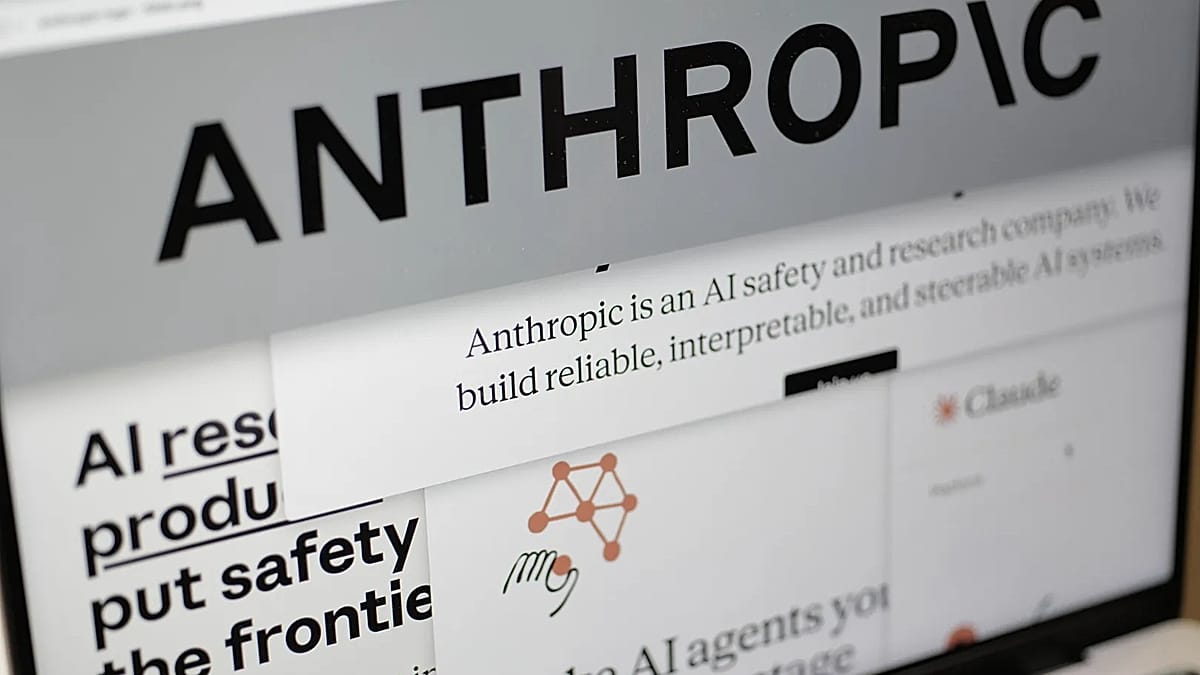
Artificial intelligence company Anthropic raised $65 billion in private funding, boosting its valuation to $965 billion and overtaking OpenAI's last reported valuation of $730 billion as the two firms compete for dominance in the AI sector.
Published on 29/05/2026 - 8:01 GMT+2•Updated 8:21
Artificial intelligence company Anthropic said on Thursday it had raised $65 billion (€55.8bn) in private funding, pushing its valuation to $965bn (€829bn). This made the five-year-old maker of the Claude chatbot one of the world's most valuable start-ups as it moves towards a likely Wall Street debut.
The announcement vaults Anthropic ahead of its chief rival, ChatGPT maker OpenAI, both in market value and in reported revenue. Anthropic said it's now making annualised revenue of $47bn (€40.4bn) from selling its technology to people and organisations using Claude to write code and do other work and personal tasks on their behalf.
Anthropic was formed in 2021 by former OpenAI executives, and now both AI firms, along with Elon Musk's rocket and AI company SpaceX, are expected to become publicly traded. All three are also still losing more money than they make, fuelling concerns of an AI bubble.
San Francisco-based Anthropic said the new round of funding was led by investment firms Altimeter Capital, Dragoneer Investment Group, Greenoaks Capital and Sequoia Capital.
“This funding will help us serve the historic demand we are experiencing, stay at the research frontier, and bring Claude to more of the places where work happens,” Anthropic chief financial officer Krishna Rao said in a statement.
Anthropic also on Thursday launched its newest AI model, called Claude Opus 4.8, saying it is even better at coding and other professional work than previous models.
Anthropic’s rapid growth and Claude’s growing popularity have left OpenAI playing catch-up despite its early lead in making ChatGPT a household name that sparked a commercial AI boom.
OpenAI last reported in March it was heading towards a $852bn (€732bn) valuation after a $122bn (€104.8bn) fundraising round. SpaceX was valued at $800 billion (€680 billion) last year, but its value grew to $1.25 trillion (€1.06 trillion) after the space exploration company merged with Musk's xAI in February.
Musk recently announced plans for one of the biggest stock sales ever and will be able to pitch the offering to investors as soon as next week.
OpenAI also cleared a major hurdle towards its initial public offering ambitions after a federal court last week dismissed a lawsuit from Musk, an OpenAI co-founder and early donor, after a weeks-long jury trial over whether the company had betrayed its original non-profit mission. Musk has said he plans to appeal.
Despite its newfound success, Anthropic has also faced obstacles this year — particularly a bruising legal fight with President Donald Trump's administration over how AI tools like Claude can be used in warfare.
Trump in February ordered all US agencies to stop using Claude, and Defence Secretary Pete Hegseth declared the company a supply chain risk after an unusually public clash between the Pentagon and CEO Dario Amodei. Anthropic sued in a dispute that is still working its way through two federal courts.
At the same time, Anthropic has been in talks with the White House over the cybersecurity capabilities and risks of its most powerful model, Mythos, which is not yet widely available to the public.
Anthropic also had an influential role at the Vatican ahead of Pope Leo XIV's call on Monday for robust regulation of AI and for its developers to work for the common good rather than profit.
The sweeping manifesto called “Magnifica Humanitas” (Magnificent Humanity), Leo’s first encyclical, repeatedly blasted the concentration of power and data in the hands of so few people in the private sector as a danger.