Fuel prices: study says there is no "profiteering by operators"
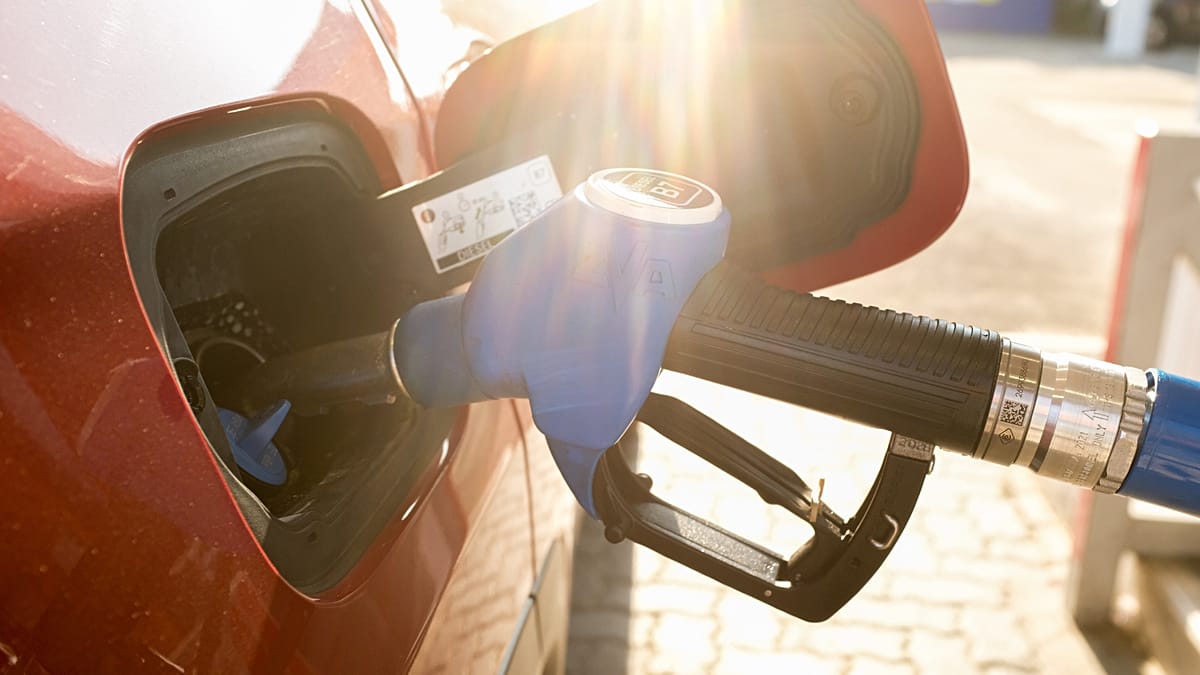
An ERSE study found that in the first seven months of 2026 domestic prices broadly followed international costs, with no "evidence of profiteering by operators". Fuel prices are set to soar again next week.
Fuel prices shoot up rapidly but take much longer to come down. At least, that is the perception of many Portuguese drivers when they fill up, even if this view is not backed up by the relevant authorities.
The volatility of fuel prices has been increasingly evident, as a result of the current conflict in the Middle East and restrictions on shipping in the Strait of Hormuz. Faced with this situation, the Minister for the Environment and Energy, Maria da Graça Carvalho, requested a detailed study from the Energy Services Regulatory Authority (ERSE) (source in Portuguese), which found no irregularities or "profiteering" by the operators.
Published this Friday, the study on the evolution of road fuel prices, covering the period from 1 January 2023 to 27 July 2026, concludes that pump prices are based on international quotations for refined petrol and diesel, rather than directly on the price of crude oil (Brent). As a result, "the evolution of fuel prices in Portugal was explained above all by the evolution of those quotations".
"Rockets and Feathers" effect
Beyond understanding price volatility, the main aim of the study was to test whether increases in international prices are passed through to domestic prices faster than falls of the same magnitude.
An asymmetry dubbed "Rockets and Feathers", describing how prices "rise like a rocket" when international costs increase but "fall like a feather" when costs decrease, which, according to ERSE's study (source in Portuguese), was not observed.
"The results therefore do not support the existence of a persistent 'Rockets and Feathers' effect: increases and decreases start to be passed through in the same period, although in the case of diesel the estimated drop is initially slightly less pronounced," the document explains.
"For diesel, a small difference was observed in the first few weeks, which ceased to be statistically significant after four weeks. The results therefore do not support the idea that decreases are passed through persistently more slowly or less fully than increases".
The same report further states that it "found no evidence of operators taking advantage of the situation".
"These results are aggregated and do not allow an assessment of the behaviour or profits of each company individually. They do not, therefore, rule out isolated situations, but they also do not support the conclusion that fuel companies have taken advantage of the situation to increase their margins across the board."
How are the price differences with Spain explained?
Given the proximity of the border, many Portuguese have opted to refuel on the Spanish side because of the price difference, which has also been questioned by Portuguese consumers. According to ERSE, the reason is simple: taxes.
"In the second quarter of 2026, the difference was essentially the result of taxation," the authority said. "Without taxes, prices in Spain were higher than in Portugal by 5.9 c/l for petrol and 10.6 c/l for diesel. After taxes, however, prices in Portugal were 41.8 c/l higher for petrol and 25.1 c/l higher for diesel than in Spain".
According to ERSE, price movements should always be viewed together with taxation, "which plays an important role in the evolution of the final price borne by consumers. In 2026, the temporary mechanism for adjusting ISP mitigated part of the rise in final prices during the period of greatest market tension".
In addition to the direct comparison with Spain, the study also compares prices with those of other member states, indicating that "in Portugal prices, with and without taxes, evolved in line with the European Union and euro area average".
"In Portugal, in line with most countries in the European Union and the euro area, the tax burden over the period under review remained constant in €/l, unlike what happened in Spain," the document explains.
Fuel prices set to rise again next week
Next week, fuel prices are set to rise again.
According to projections by the Automóvel Club de Portugal (ACP (source in Portuguese), diesel prices are expected to rise by 10 cents, while petrol will go up by 9 cents.
If these forecasts are confirmed, the average price of diesel will rise to 2.068 euros per litre from Monday, while petrol will climb to 1.977 euros per litre, cancelling out the drop recorded last week. Fuel prices may vary between operators and filling stations.
These changes are not definitive, depending on the closing of the markets and also on a possible change to ISP by the government, which is applying an extraordinary discount on ISP whenever the increase exceeds 10 cents per litre.