

EU foreign ministers meet to discuss Ukraine, Russia and the Middle East – Europe live
Key events7m agoMorning opening: EU foreign ministers to discuss Ukraine, Russia and the Middle EastShow key events onlyPlease turn on JavaScript to use this featureMorning opening: EU foreign ministers to...
Key events Show key events only Please turn on JavaScript to use this feature
Morning opening: EU foreign ministers to discuss Ukraine, Russia and the Middle East

Jakub Krupa
EU foreign ministers are meeting in Luxembourg this morning to discuss the latest on Ukraine, Russia and the Middle East.
The ministers are awaiting an update on the Druzbha pipeline carrying Russian oil to Hungary and Slovakia, which is understood to be close to being operational against after months of bitter disputes between Ukraine and the two countries.
Hungary’s outgoing prime minister Viktor Orbán suggested he would drop his country’s veto on the EU’s €90bn loan for Ukraine as soon as the oil starts flowing, which could happen this week. Slovakia is understood to be in the same position.
The issue is currently expected to be discussed by EU ambassadors on Wednesday, but could come up earlier. One to watch.
But the discussions will also focus on the situation in the Middle East, with the Lebanese prime minister, Nawaf Salam, joining the ministers to give an update on the regional security situation.
Spain, Ireland and Slovenia are among countries calling for closer scrutiny of Israel’s actions, including a more radical step of suspending the association agreement with the EU and imposing sanctions on violent Israeli settlers.
While substantial progress is unlikely to be made on this today as Orbán’s Hungary, a close Israel ally, continues to oppose any such move, the ministers will probably be looking at what could be possible at their next meeting once the government in Budapest changes.
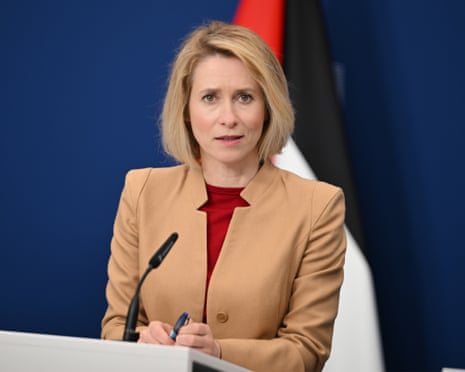
EU foreign policy chief, Kaja Kallas, hinted yesterday that the position of Magyar’s government could be different, saying – without naming Hungary specifically – that there could be “a new approach” to the issue:
“Now this country [has recently] had the elections and will [soon] have a new government. I will not speak for the new government, but definitely I think we can look into all these policies and see whether they have a new approach.”
Lots for us to cover this morning.
I will keep an eye on all of that and bring you the latest here.
It’s Tuesday, 21 April 2026, it’s Jakub Krupa here, and this is Europe Live.
Good morning.


