Iceland’s close ties with EU mean no vote is not a Brexit-style rejection

Iceland’s 52.8% to 47.2% vote against reopening EU accession talks is, undeniably, a blow for Brussels. But claiming it as a Brexit-style victory for “national sovereignty” or evidence of broad rejection of...
Iceland’s 52.8% to 47.2% vote against reopening EU accession talks is, undeniably, a blow for Brussels. But claiming it as a Brexit-style victory for “national sovereignty” or evidence of broad rejection of the EU misrepresents the reality of the island’s relationship with the bloc.
For the EU, Iceland was a dream candidate: small, stable, prosperous and strategically located in an increasingly contested Arctic. Eager as it is to wield more geopolitical clout and revive flagging momentum around enlargement, a vote in favour would have given Brussels a very welcome boost.
Instead, Iceland’s rejection handed Eurosceptics another stick with which to beat the bloc. France’s Marine Le Pen said the result showed the appeal of a Europe of “free, sovereign nations” rather than closer integration, while Reform UK’s Nigel Farage congratulated Icelanders on “voting to keep their independence”.
But Iceland is a very special case. Its situation bears precious little relation to Brexit or even to a broader EU-critical movement. Icelanders did not vote to isolate themselves from the EU, tear up any treaties or “take back control”, they voted to preserve a close, customised and largely successful relationship.
Unlike accession candidates in the western Balkans or eastern Europe, Iceland does not need EU structural funds to build infrastructure or boost living standards. High per capita wealth generally insulates its population from the economic pressures that can make EU membership an attractive financial proposition.
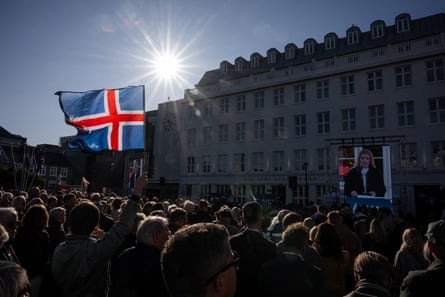
As part of the European Economic Area (EEA) and Schengen passport-free travel area, Iceland is already solidly within the European fold. It accepts free movement of goods, capital, services and people. Its markets – financial services, energy, transport – are EU-regulated and its social and environmental standards are those of the EU.
That means it adopts roughly 75% of EU law and directives into domestic law and there is no question of changing that. Icelandic citizens already enjoy full EU single-market rights without full EU membership, and that, a narrow majority decided, was, on balance, good enough.
Although the official reaction in Brussels was muted, some acknowledged EU dismay. “The EU doesn’t inspire people any more,” said the Belgian Green MEP Saskia Bricmont. The centrist MEP Sandro Gozi, who represents France, called it “a warning Europe should take seriously”, adding that the bloc’s “power of attraction” should not be taken for granted.
Opposition to full membership was focused heavily on the country’s fishing industry, which accounts for 15% of its GDP and 40% of export revenues and which the no campaign claimed would inevitably be threatened – as during the 1960s and 70s “cod wars” with the UK – were Iceland to join the EU’s common fisheries policy.
The vote also revealed a stark divide between people in the capital, Reykjavík, who largely saw membership as an additional form of security for a geographically isolated country in the age of Trump and Putin, and those on the rest of the island, many of whom are fishers and farmers, who overwhelmingly voted against.
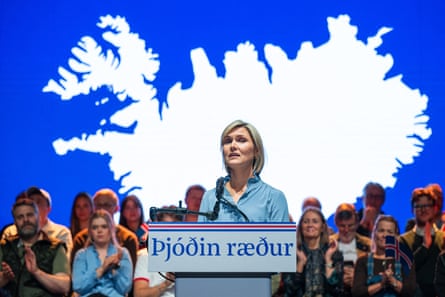
But if Iceland’s particular circumstances mean the “no” victory cannot be compared to Brexit, it nonetheless holds lessons for Brussels. The first is that existing EEA/EFTA states are probably harder to persuade to join the EU than countries outside the single market.
after newsletter promotion
For non-EEA nations, joining the EU offers transformative individual and economic benefits – unrestricted access to the world’s biggest trading bloc, freedom of movement, huge financial aid. For citizens of EEA states such as Iceland (and, for that matter, Norway), most of those already exist.
When the status quo provides 80% of the benefits of membership and poses no threat (real or imagined) to vital national industries, the incremental gains of full accession become a hard sell.
What should worry the EU more is that despite growing doubts about the US and Nato security umbrella, Icelanders were not won over by the bloc’s protection offer. For all the talk of the bloc “stepping up” as a defensive force, its mutual defence clause, which provides for solidarity if a member state is attacked, did not convince.
There is, clearly, work to be done there. But as the EU law professor Alberto Alemanno argues: “Iceland’s referendum result does not reject European integration … It shows that close integration [with the EU] short of membership can be stable, credible and politically attractive.”