Housing in Portugal: Why €400,000 may no longer be enough to buy a home
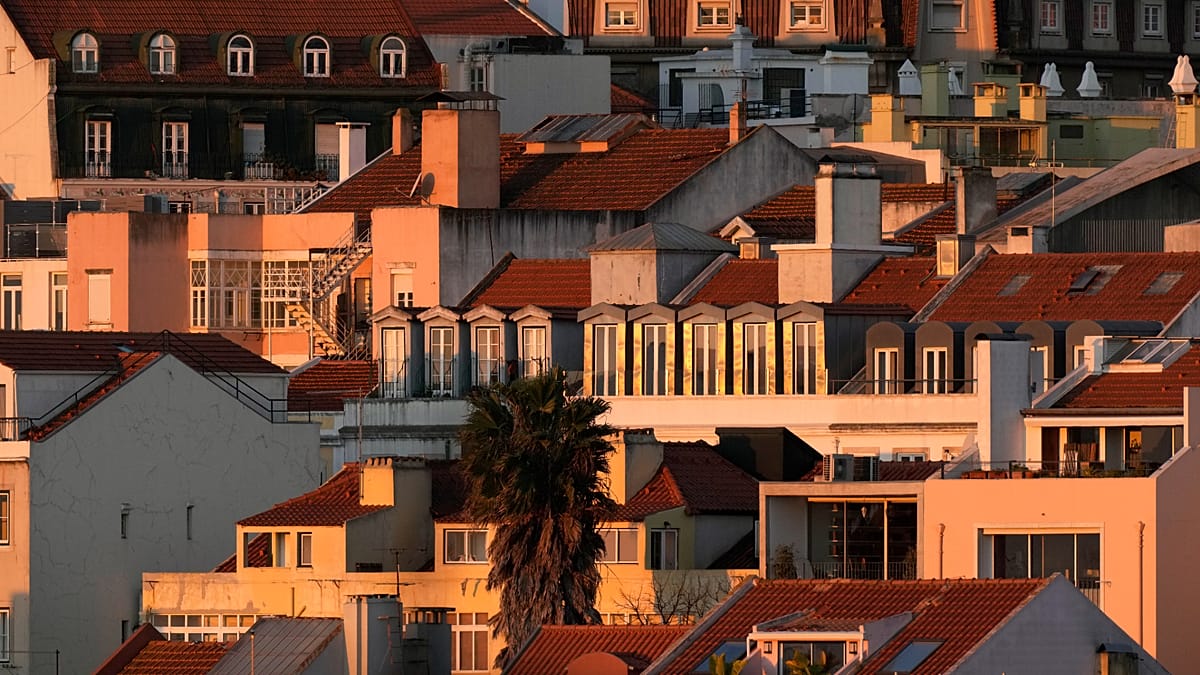
The latest Imovirtual Barometer, produced by the property portal specialising in the housing market and published in May 2026, put the average asking price of a home in Portugal at €430,500. This figure...
The latest Imovirtual Barometer, produced by the property portal specialising in the housing market and published in May 2026, put the average asking price of a home in Portugal at €430,500. This figure covers all types of property, both new and existing, and is beyond the reach of a large part of the population.
A quick search on a property portal or a walk past estate agents' windows is enough to see how far house prices in Portugal have risen. But is it no longer possible to buy cheaper homes? The answer depends on several factors, the first being the lack of properties available.
"Without new homes coming onto the market and with extremely dynamic demand, it is becoming very difficult for young people and for Portuguese families to manage to buy their own home," Patrícia Barão, president of the Professional Association Representing Portugal's Estate Agents (APEMIP), explained in an interview with Euronews.
On top of that, "we have the cost of land, the cost of construction, the cost of labour, project and specialist fees, taxes and planning charges," Barão said, all of which make a major contribution to high housing prices.
Ricardo Vagarinho, CEO of the construction company MomentVM, pointed to another factor that has helped drive up market prices. "It seems that a new threshold has now been set based on what the government has allowed young people, giving them the possibility of buying a property with a state-backed guarantee, with an upper limit of €450,000," which led the market to "push prices up across the board, for both resale and new homes, because people have that financing available," he told Euronews.
The support scheme can provide financing of between 85% and 100% of a property's value, backed by a state guarantee covering up to 15%. It is available to young people aged between 18 and 35 whose income does not exceed the eighth income tax band, for the purchase of a first permanent home costing no more than €450,000. Separate tax exemptions are also available to eligible young buyers.
In a recent report published in June, in the chapter analysing the Portuguese economy, the International Monetary Fund (IMF) recommended suspending some of the government's measures in the sector, including this public guarantee for young people, arguing that they had widened "market imbalances". In other words, more people are now looking to buy homes who previously were not in the market, but the number of homes available has stayed the same.
Barão argued that it is necessary to go further and take a "holistic view" of the market. "There is no silver bullet for housing. There is no such thing as a single measure that solves everything, so we have to act on several fronts," she said.
Labour shortages have pushed house prices up
The housing crisis is defined not only by the lack of homes, but also by the shortage of people to build them. And the story repeats itself: if supply is scarce and demand is high, prices go up.
There is a shortage of specialised workers such as "bricklayers, electricians, plumbers, formwork specialists or subcontractors", Ricardo Vagarinho listed.
With the arrival of the international bailout programme in Portugal, the state cut investment in infrastructure and major projects, and banks stopped granting credit for housing and business activity, forcing many construction companies into bankruptcy and triggering a "brain drain" in the sector.
"Those who were good and stayed here are not enough for the volume we want to build," he said.
"It is estimated that 80,000 people are missing from the construction sector and, if everyone needs workers, of course they will end up offering a little more. That is why the price of labour rises," he explained.
The entrepreneur also recalled that the housing construction market competes with large state and private projects. "Airports, railway lines, roads and all those bigger projects also absorb a lot of labour," Ricardo Vagarinho added.
This year in Portugal, the storms that devastated the centre of the country also fuelled demand for labour in the construction sector, leading to the fast-tracking of the so-called "green lane" for migrant workers in the industry.
The protocol signed between the state and the Portuguese Confederation of Construction and Property (CPCI) was designed to respond to the urgent need for labour on public works planned under the Recovery and Resilience Plan (PRR). However, after the tragedy in central Portugal, the government indicated that some ongoing public works might have to be temporarily suspended or delayed to prioritise interventions considered more urgent.
Construction materials have also become more expensive
Construction-material inflation has also been one of the variables driving up the final price of a home since 2021, with Russia's invasion of Ukraine in 2022 adding further pressure.
According to data from the National Statistics Institute (INE), the cost of construction materials rose by 3.7% year-on-year in March 2026.
Among the materials that contributed most to the increase were glass and mirrors, bare and insulated copper wire, and concrete slabs and ceramic blocks. "Everything depends on energy," Ricardo Vagarinho said.
"A large part of materials depends on energy and, therefore, if there is a war that pushes up fuel prices, energy costs rise, as do the costs of materials that depend on it, and inevitably this ends up affecting construction costs," he concluded.
Land prices also carry great weight in the final budget for a project. "Since demand for homes is high, land prices also inevitably rise," said the entrepreneur, who estimated that land accounts for 20% of a construction project's budget.
Put simply, Ricardo warned that "building costs the same anywhere"; what really weighs is the value of land and of the square metre in different regions. "Location is the big issue," he concluded.
In addition, the time it takes to obtain planning consent for a site "represents a risk for the property developer and is also a factor behind high house prices," explained Patrícia Barão.
Waiting times for urban planning consent are a very important variable in the property market and represent an indirect cost in the final price of a home.
"If we look at a local council process that takes a year, sometimes two years, that is a long time to have significant capital, namely the price of the land, sitting idle without generating any return," explained Ricardo Vagarinho. "During that time, the money invested there, which should be earning at least 6% a year, is not earning anything. So what happens is that investors factor that into the final price of the product," he said.
'New housing is needed in locations where young people and families can afford to buy'
According to a property-market observatory published in March 2026, the average asking price for homes in Portugal stood at €3,693 per square metre on 1 March.
"These are high prices that young people and Portuguese families cannot afford" and, therefore, it is necessary "to bring new housing onto the market in locations where young people and families can buy and can reach their jobs without it taking an eternity," argued Barão.
The Lisbon district is the region with the highest price per square metre, at €5,796. Faro is the second most expensive district, where a square metre costs €4,804. It is followed by Madeira, at €4,333 per square metre, and Setúbal, at around €4,000.
The difference is staggering at the other end of the scale, where the price per square metre is below €1,000 in the districts of Guarda (€739 per square metre), Bragança (€943 per square metre) and Castelo Branco (€981 per square metre).
"We need to think about regions that are not in the city centre and build large-scale projects, but with a transport network that allows people to travel to their workplaces in a fast and efficient way," Patrícia Barão said.
"We do not want to create dormitory towns; we have to create a network of services and infrastructure with schools, banks, restaurants and supermarkets," she explained.
However, although building is important, it would not have an immediate effect, and the APEMIP president argues that, as a first measure with "more immediate" results, the state should create "conditions to bring empty properties back onto the market", through public-private partnerships.
Patrícia Barão rejected the idea that estate agents are responsible for the price spiral. "It is not estate agents who set house prices," she said.
The APEMIP president believes that estate agencies can help make the process of buying and selling a home more transparent and democratic. She also noted that the association has contributed to a proposed law aimed at strengthening training and professionalism in the sector.
"A good estate agent, who knows the market, who knows what property prices are, who has information on transactions involving similar homes in recent times, who knows every detail of a purchase and sale operation, who knows exactly what documentation is needed, who knows the market trends, helps ensure that house prices are fair and appropriate," she explained.
For Ricardo Vagarinho, the construction sector also needs more specialised professionals. The entrepreneur also pointed to the urgent need for the state to speed up licensing processes as an important measure to facilitate construction and expand the housing stock.
Both sectors recognise that, as long as the supply of land, homes and qualified professionals remains insufficient, and construction costs stay high, buying a home will continue to be beyond the reach of a significant proportion of Portuguese people.