French wildfires threaten defence sites and hit regional economy
Wildfires in France’s south-western Gironde department have forced evacuations and protective measures at strategically important defence and aerospace sites around Bordeaux, disrupting one of the country’s...
Wildfires in France’s south-western Gironde department have forced evacuations and protective measures at strategically important defence and aerospace sites around Bordeaux, disrupting one of the country’s most important industrial clusters.
Among the affected companies are ArianeGroup, Dassault Aviation, Airbus Atlantic and missile-propulsion specialist Roxel.
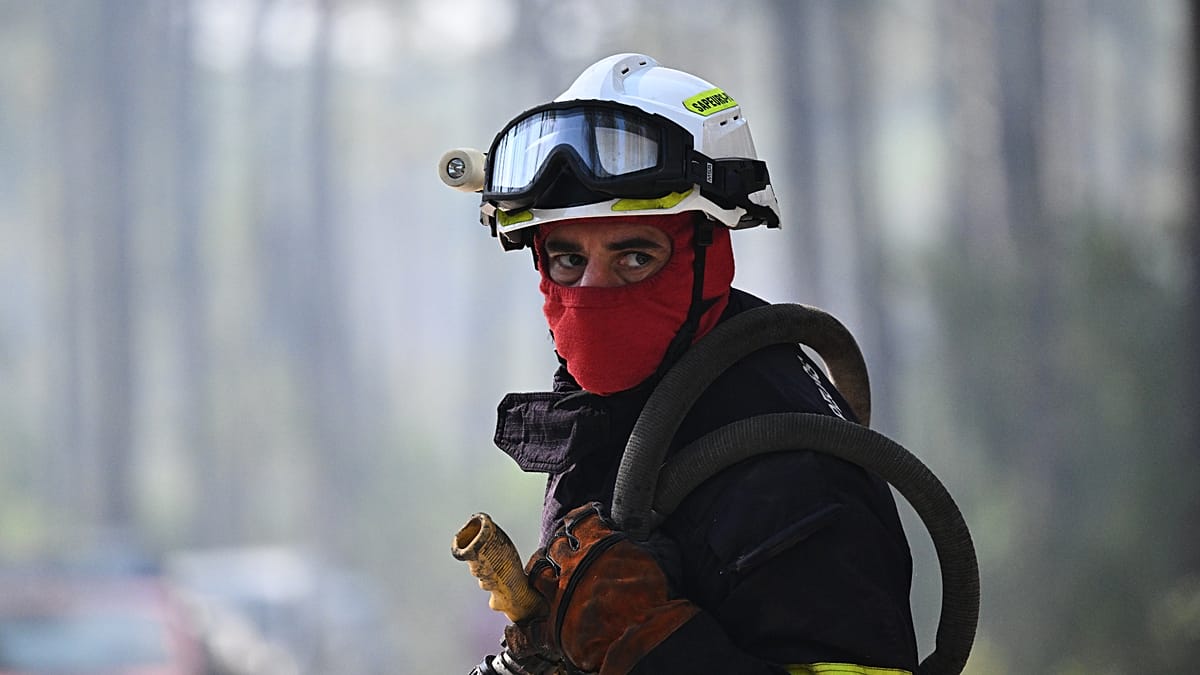
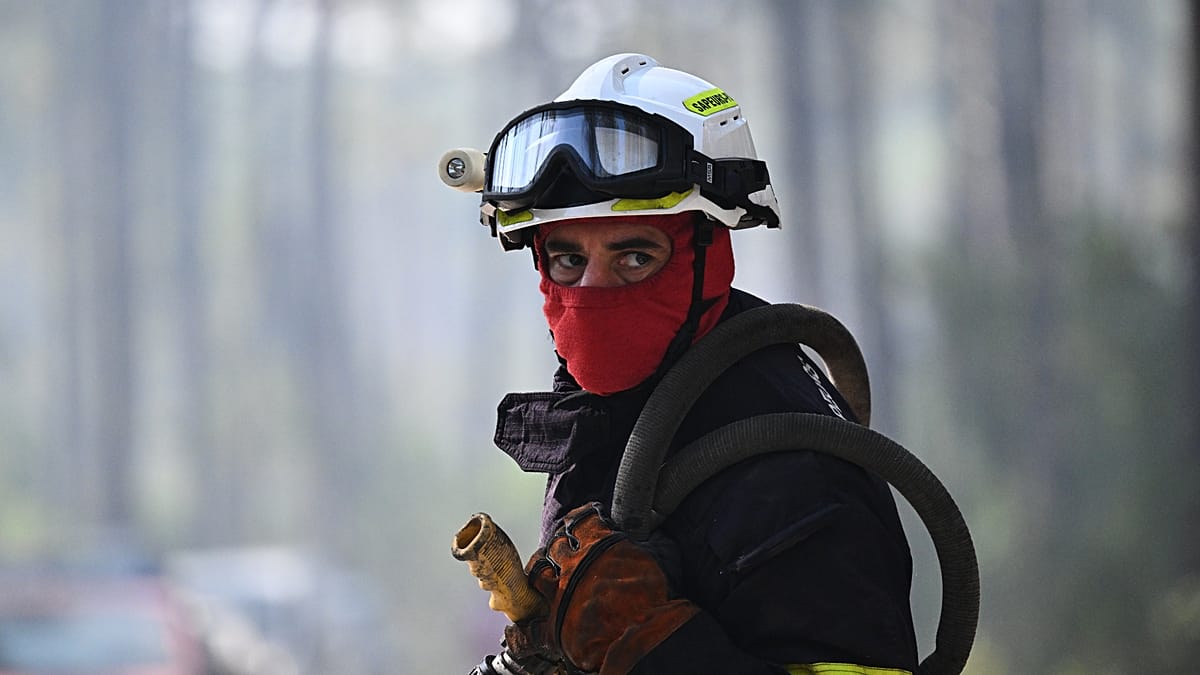
The French Defence Ministry said 1,500 military personnel had been deployed since Saturday to support the emergency response. It added that “experts and resources” had been sent to help secure industrial sites in coordination with other government departments.
ArianeGroup, whose facilities in the area produce propulsion systems for Europe’s Ariane rockets and France’s M51 ballistic missiles, told AFP on Monday that the firm is in constant contact with both local and national authorities. The issues related to the protection of ArianeGroup sites are being addressed," the company told AFP.
French media TF1 reported that Roxel, a subsidiary of European missile manufacturer MBDA, operates at the high-risk industrial complex in Saint-Médard-en-Jalles, where it produces solid-propellant systems for tactical missiles. A few kilometres away, complexes belonging to Dassault, Safran, and Thales also appear vulnerable. Roxel told Le Monde that the necessary measures had been taken to protect its operations and employees, with support from the authorities.
According to Defense News, Dassault Aviation was working with France’s Directorate General of Armaments and the prefectural authorities, as it had transferred sensitive equipment from its Martignas plant and Cestas logistics centre to its Mérignac site and nearby Air Base 106.
The company also told AFP that most employees at its Mérignac and Martignas facilities were remaining at home. Dassault’s Mérignac facility handles the final assembly and flight testing of Rafale fighter aircraft and Falcon business jets, while its Martignas plant specialises in aerostructures.
Airbus Atlantic also evacuated employees from its Salaunes facility at the authorities’ request. The site produces fuselage components for Airbus A220 and A350 aircraft.
An ‘economic thunderbolt’
The disruption to strategic industry is part of a much broader economic shock across Gironde.
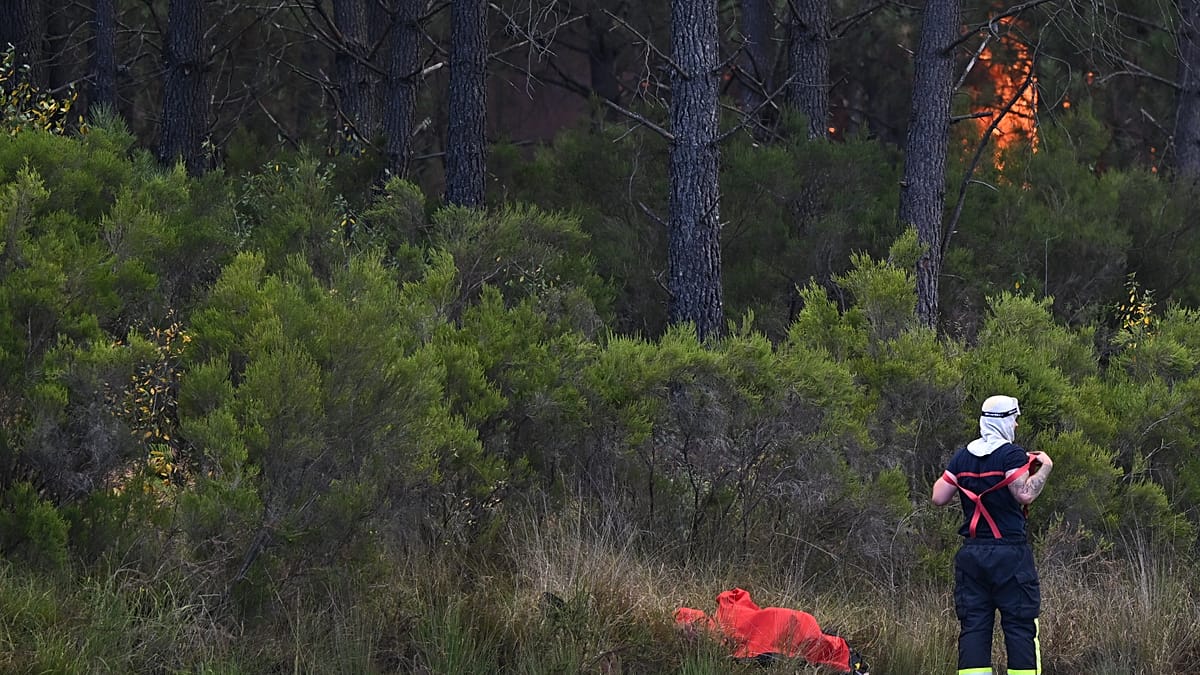
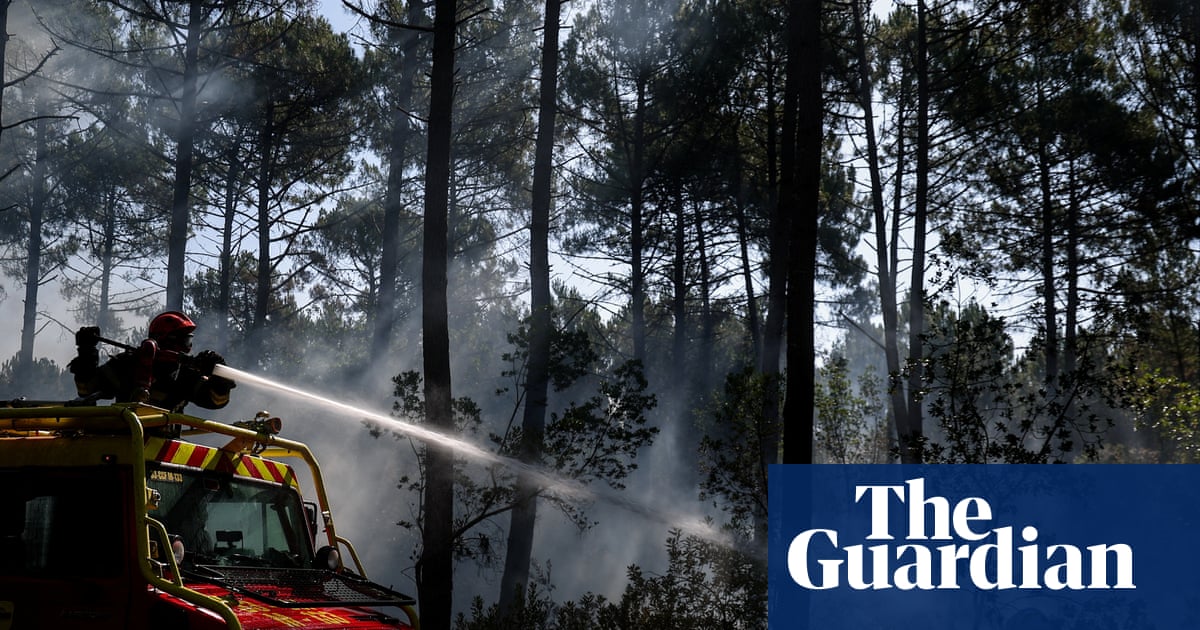
Since breaking out on 22 July, the fire has burned across approximately 42,000 hectares, prompted the evacuation of around 220,000 people and destroyed about 240 homes, according to the latest official figures.
The blaze remained “stabilised” on Tuesday morning after a relatively calm night, according to the Gironde prefecture. Officials nevertheless warned that rising temperatures and lower humidity could cause conditions to deteriorate again.
More than 13,000 businesses are located in Gironde’s evacuation zones, including approximately 7,000 craft businesses and 6,300 retailers, according to France’s Economy Ministry. They have been unable to operate normally because of evacuation orders.
The Bordeaux-Gironde Chamber of Commerce and Industry estimates that around 130,000 employees have been prevented from working normally.
Economy Minister Roland Lescure described the fires as an “economic thunderbolt affecting a region that did not need it”.
Carsten Brzeski, ING’s global head of macroeconomics, said the overall economic impact “should become measurable”, pointing to lost working hours, lower productivity and disruption to logistics.
The French government announced emergency support on Monday for businesses affected by fires in Gironde, the Landes and the Var. Companies in evacuation zones will be able to use the state-supported partial-unemployment scheme.
France Assureurs also extended the deadline for submitting claims until 31 August.
A meeting will be held at the Economy Ministry on Thursday to provide “more precise answers” to affected companies, Industry Minister Sébastien Martin told BFMTV-RMC.
Tourism, forestry and wine face losses
Tourism businesses face cancellations and closures during what should have been one of their busiest periods of the year. Companies across the affected area are also reporting spoiled stock, interrupted supply chains and employee absences.
The fire is also disrupting activity in the Landes de Gascogne forest, one of the main centres of France’s commercial timber industry.
The timber sector is the third-largest industrial sector in Nouvelle-Aquitaine. It supports approximately 56,000 jobs, including around 34,000 connected with the Landes de Gascogne forest, and generates an estimated €10 billion in annual revenue.
Bordeaux’s vineyards had escaped direct fire damage as of 27 July, according to Le Monde. Winemakers nevertheless warned that smoke could taint grapes and affect the quality of forthcoming vintages.
The cost extends beyond insured damage
The eventual economic cost is likely to extend far beyond visible destruction and the losses covered by insurers.
According to Allianz Research, only around 10% of European economic losses from heatwaves, droughts, wildfires and other climatological events were insured between 1980 and 2022. By comparison, more than one-third of losses caused by storms, hail and wind were insured.
These calculations cover only direct damage to assets. They exclude deaths, healthcare expenditure and lost productivity, which can represent a substantial part of the cost of heatwaves and wildfires.
A study published in Nature Sustainability estimated that California’s 2018 wildfires caused $148.5 billion in total damage. Direct capital destruction represented 19% of that figure, while health costs accounted for 22% and indirect economic disruption for 59%.
The study found that supply-chain effects spread far beyond the burned areas, with more than half of the indirect losses occurring outside California.
The European Central Bank separately estimates that only around one-quarter of climate-related catastrophe losses in the EU were insured between 1980 and 2023.
Insurance Europe puts the average protection gap — the proportion of losses left uninsured — at 53% in France and 60% in Spain between 2015 and 2024, based on Munich Re data.
“With the wildfires, the bittersweet consequence, as with other natural disasters, is that it will actually lead to positive economic activity once the rebuilding starts,” Brzeski said.
However, he added that households, insurers and the government would ultimately have to bear the cost of reconstruction.
With temperatures forecast to rise again this week, businesses and industrial operators face the prospect that evacuations and production interruptions could be extended.