
Diplomatic damage control in Oslo as Zelenskyy says US intelligence sharing restored
Good morning. It’s Mared Gwyn, penning this newsletter in the early hours from Brussels. In this edition: The diplomatic push to revive Ukraine peace talks, and how Hungary has surprised diplomats by stalling Kyiv’s accession talks.
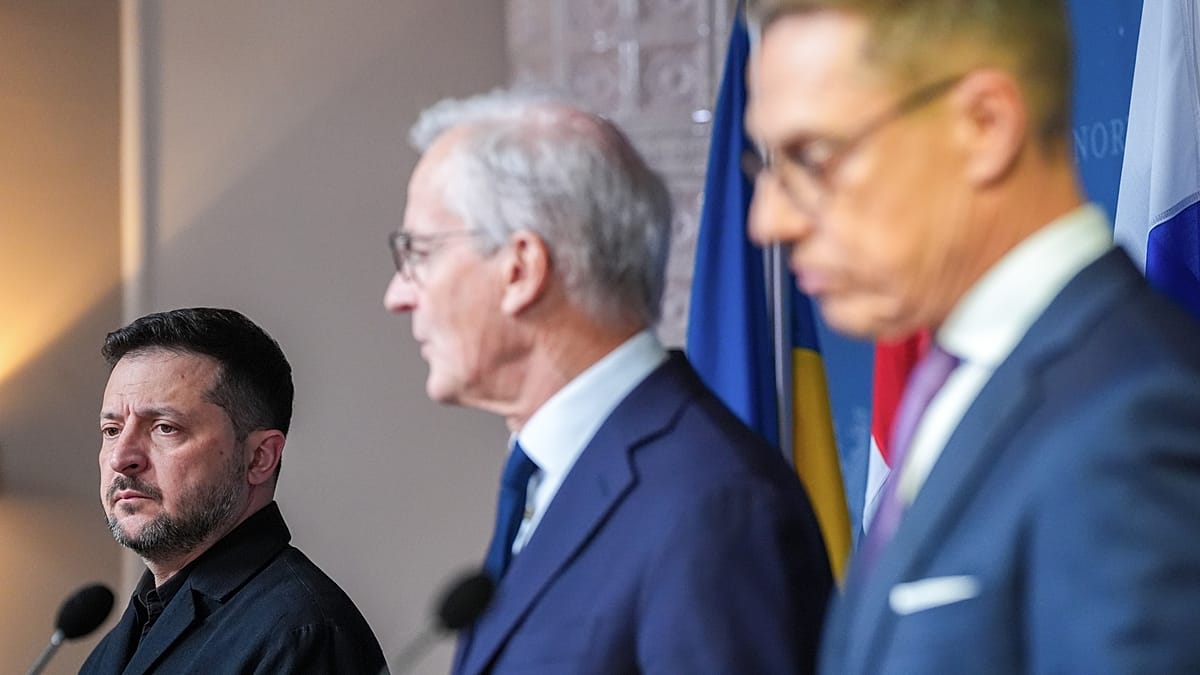
Diplomatic damage control: US envoy Steve Witkoff met Ukrainian President Volodymyr Zelenskyy and European leaders in Oslo on Tuesday, amid a deepening rift between Kyiv and Washington.
The meeting appeared to ease some of the tensions, my colleague Sasha Vakulina reports, with Zelenskyy confirming that crucial US early-warning intelligence on Russian ballistic missiles had been restored and that Washington had reaffirmed its commitment to strong security guarantees for Ukraine after the war.
Notably, Witkoff did not stay for the press conference, leaving Zelenskyy and European leaders to speak publicly about the outcome of the talks.
Behind-the-scenes progress: Finland's President Alexander Stubb said substantial progress had been made "under the radar" and that the peace process was now "back on track". Whether Moscow shares that assessment remains to be seen.
Witkoff travels on to St. Petersburg for talks today, where he is set to share the proposals tabled by Ukrainian and European negotiators with Russian leaders. He is also expected to push for the release of Stephen Hubbard, a US citizen accused of fighting as a mercenary for Ukraine.
Parting shot: Just as the peace talks were unfolding in Oslo, the EU’s High Representative Kaja Kallas sharply accused the US of pressuring Ukraine to capitulate on terms exclusively favourable to Vladimir Putin, exposing the anger that Trump’s pro-Russian turn has fuelled across the continent.
“American negotiators have been trying to push Ukraine into surrender for already almost two years, one and a half years now,” Kallas told the European Parliament.
“Ukraine hasn’t surrendered on Putin's terms because Europe has been supporting Ukraine.”
This morning, the parliament will hear from Ursula von der Leyen, who has also expressed displeasure, though in less stark terms than Kallas, over Trump’s unilateral decision to ease sanctions on Russia.
The European Commission president will reflect on last week’s EU summit and explain next steps to support Ukraine’s fight. Keep an eye on any hints about next sanctions against Moscow.
Conscious coupling: For all their clamour and all their outrage, Europeans are not yet willing, and perhaps not yet ready, to break away from the US and go their separate ways to pursue an independent peace strategy. The thinking remains that the seat at the negotiating table, as shown in Oslo, must be preserved at all costs.
However, a realisation has settled in that the European and American approaches to Russia have become fundamentally different. The gap has not been wider since the start of the war, raising questions on what will happen when the peace process reaches its endgame and allies are called to take joint decisions of exceptional significance.
Jorge Liboreiro explains why Europe refuses to break away from Trump.
Kyiv accession setback: Meanwhile, Hungary on Tuesday blocked the opening of the two remaining negotiating “clusters” in Ukraine’s EU accession bid, catching other EU member states off guard, my colleague Luca Bertuzzi writes.
The Hungarian representative did not provide an explanation, which left the other 26 member states, all of which were ready to move forward, bewildered, according to an EU diplomat who was present during the meeting.
The clusters cover connectivity, agriculture and cohesion policy. Ukraine has been paired in its accession bid with Moldova, meaning both countries’ progress are being held back.
Budapest agreed to open the two clusters earlier this month after the Ukrainian Parliament passed a law on minority language education.
A Hungarian official declined to comment on the matter. It remains to be seen if Hungary will try to impose additional conditions on Ukraine for the opening of the clusters.
France vows 'massive' security operation involving military forces for expected weekend protests
French Prime Minister Sébastien Lecornu said on Tuesday that a "massive" security operation would be in place during further expected protests on Saturday after cost-of-living demonstrations turned violent across France over the weekend.
Speaking to parliament on Tuesday, Interior Minister Laurent Nuñez also announced plans to deploy military forces from Operation Sentinelle to free up police and gendarmes for the expected demonstrations.
Nuñez said their mission would be "to replace internal security forces mainly on static guarding duties" in order to "free up police officers and gendarmes to carry out public-order missions."
Operation Sentinelle, launched in January 2015, has 10,000 soldiers deployed across France to defend against potential terrorist attacks.
Troops are usually stationed outside sites deemed sensitive, such as places of worship, schools, tourist locations, railway stations and airports. Sentinelle soldiers have previously deployed at events such as the Paris 2024 Olympics and the Paralympic Games.
Nuñez added that the aim on Saturday would be for security forces to operate with increased "responsiveness and mobility" in order to deal with "scattered" and "extremely mobile" groups.
Etienne Paponaud has more.
More from our newsrooms
Why is the European Union turning up the heat on the Arctic? The EU’s revamped Arctic strategy, unveiled Tuesday, puts security at its core, citing growing Russian and Chinese activity in the region. It focuses on ramping up European security capabilities, military mobility with NATO, icebreakers, satellite surveillance, and a maritime security hub. Luca Bertuzzi and Marta Pacheco have the details.
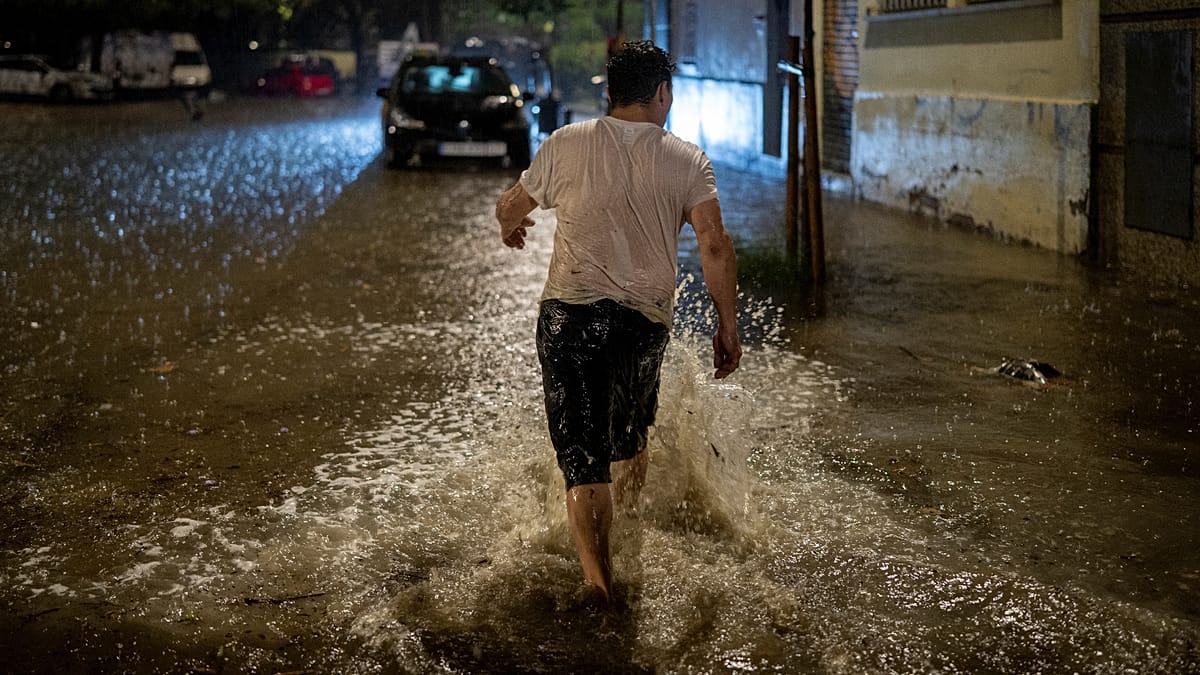
What is Spain’s Dana weather phenomenon and is climate change making it worse? A storm in eastern Spain has killed five people and left cars and streets submerged in water, and the Dana weather system is behind it. The same system caused the deadly flooding in Valencia in 2024 which killed 200 people. Ruth Wright asks whether climate change is driving the phenomenon.
New Romanian prime minister Luca Niculescu and cabinet members sworn in. Romania on Tuesday swore in a new cabinet following a vote that ended a months-long political impasse, but analysts warn that the political stability may not last. Jeremiah Fisayo-Bambi has the details.
We’re also keeping an eye on
- The European Parliament’s plenary session continues in Strasbourg. The leader of the far-right Alternative for Germany, Alice Weidel, will be present to unveil a plan to radically reform the EU, which my colleague Vincenzo Genovese has seen. Weidel will hold a press conference at 16.30, before unveiling the plan at 17.45 with AfD MEPs René Aust and Alexander Sell.
- The European Commissioner for Enlargement, Marta Kos, is in Montenegro.
- The European Commissioner for Defence, Andrius Kubilius, is in Prague, the Czech Republic, where he will deliver a speech at the Future Forces Forum at 13.00 CET.
That’s it for today. Sasha Vakulina, Jorge Liboreiro, Luca Bertuzzi and Vincenzo Genovese contributed to this newsletter.