Cruise ship at centre of suspected hantavirus outbreak blocked from docking in Cape Verde
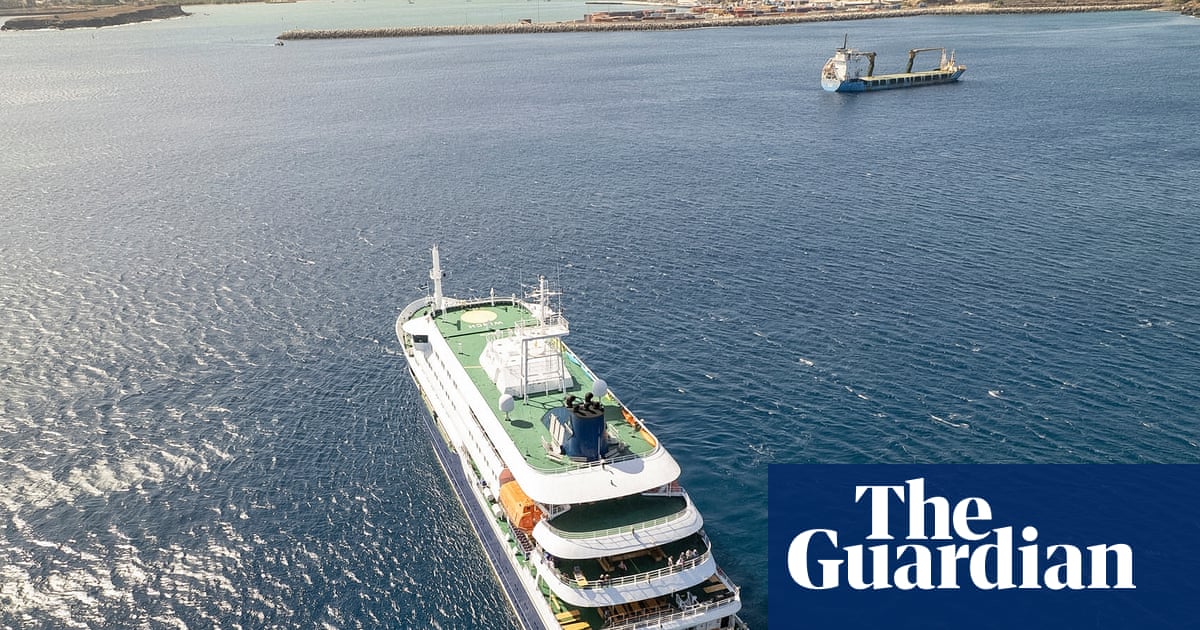
Officials in Cape Verde have said they will not allow a cruise ship believed to be harbouring an outbreak of a rare respiratory virus to dock in its ports, after three passengers died.The statement on Monday...
Officials in Cape Verde have said they will not allow a cruise ship believed to be harbouring an outbreak of a rare respiratory virus to dock in its ports, after three passengers died.
The statement on Monday came hours after global health officials said they were scrambling to investigate the suspected outbreak of hantavirus, a disease primarily found in rodents, on the cruise ship in the Atlantic.
The hantavirus is suspected of killing three people, including a married couple from the Netherlands, sickening at least two others on the ship and sending a 69-year-old British tourist to intensive care in South Africa.
The cruise ship operator, Oceanwide Expeditions, said the first passenger, a Dutch national, had died on 11 April and that the cause of death could not be determined onboard. “On 24 April, this passenger was disembarked on St Helena, with his wife accompanying the repatriation,” it said in a statement.
Days later, the company said, it was informed that the woman, also a Dutch national, had become unwell and later died. “At this time, it has not been confirmed that these two deaths are connected to the current medical situation onboard,” the company said on Monday.
On 27 April, another person on the MV Hondius, a British national, became seriously ill and had to be medically evacuated to South Africa. He is in intensive care in Johannesburg, where he remains in critical but stable condition. “A variant of hantavirus has been identified in this patient,” it said.
A third passenger, a German national, died on 2 May, of a cause “not yet … established”.
Two crew members, of British and Dutch nationality, had acute respiratory symptoms, one mild and one severe, and both required urgent medical care, the company said.
It noted that hantavirus had not been confirmed in the two crew members. “Nor has it been established that the virus is connected to the three deaths associated with this voyage,” it said. “The exact cause and any possible connection are being investigated.”
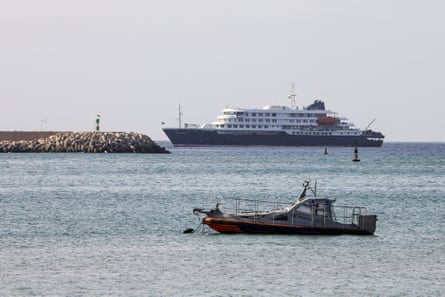
The company said 149 people of 23 nationalities had been onboard the ship. While it did not specify which cruise the passengers were on, the company’s website advertises 33-night or 43-night “Atlantic Odyssey” cruises on the 107-metre-long (351ft) Hondius that allow passengers to leave Argentina and visit some of the world’s most remote islands along the way.
Cape Verde health authorities said they had been monitoring the situation of the ship anchored off its coast and would not authorise its docking “with the aim of protecting national public health”.
Cape Verde said it was in contact with authorities in the Netherlands and the UK about the Dutch-flagged ship. “This coordination has enabled a swift, safe and technically appropriate response, ensuring the clinical monitoring of patients and the preparation of all necessary precautionary measures, including a possible medical evacuation by air via air ambulance for patients under observation,” it added.
Oceanwide Expeditions said it was considering sailing to Spain’s Canary Islands, potentially Las Palmas or Tenerife, where further medical screening and handling could take place.
It said all passengers had been informed of what had taken place: “Strict precautionary measures are in process onboard, including isolation measures, hygiene protocols and medical monitoring.”
Hantavirus infections, which are usually spread by infected rodents’ urine or faeces, can lead to severe respiratory illness and death.
The MV Hondius, which left Argentina about three weeks ago, made headlines on Sunday after the World Health Organization (WHO) said it was involved in a “public health event” onboard.
The risk to the wider public remained low, a Europe-based official later said, adding that there was no need for panic or travel restrictions. “To date, one case of hantavirus infection has been laboratory confirmed, and there are five additional suspected cases,” the WHO said in a statement on Sunday. “Of the six affected individuals, three have died and one is currently in intensive care in South Africa.”
South African officials said the British national had been sent to a private health facility in Johannesburg after falling ill near Ascension Island.
South Africa’s health department confirmed that two of the victims were a Dutch couple. The man, 70, had suffered from fever, headaches and stomach pains before he died on the ship. His wife, 69, collapsed at an airport as she was trying to return to the Netherlands and died at a nearby hospital.
South Africa’s National Institute for Communicable Diseases was carrying out contact tracing in and around Johannesburg in order to assess whether people had been exposed to the infected passengers.
Oceanwide Expeditions said it was working with Dutch authorities to organise the repatriation of the two crew members. “The body of the deceased individual is also planned to be included in this repatriation, along with a guest closely associated with the deceased,” it said, noting that the accompanying guest was “not symptomatic”.
It said the repatriation relied on several authorities working together. “This repatriation depends on many factors, including the authorisation and support of local Cape Verdean health authorities for the transfer of individuals requiring medical attention from MV Hondius.”
The UK’s Foreign Office said it was closely monitoring reports of the suspected outbreak. “We are in touch with the cruise company and local authorities,” it said.
While it is rare, hantavirus infections can spread between people, according to the WHO. The family of viruses made headlines last year after the actor Gene Hackman’s wife, Betsy Arakawa, died following a hantavirus infection in New Mexico.
In 2019, a hantavirus outbreak in southern Argentina killed at least nine people. As officials raced to halt the spread of the disease, a judge ordered dozens of residents of a remote town to stay in their homes for 30 days, according to the Associated Press.