Good vs bad mosquito: What is Google's plan to fight pest-borne deadly diseases?
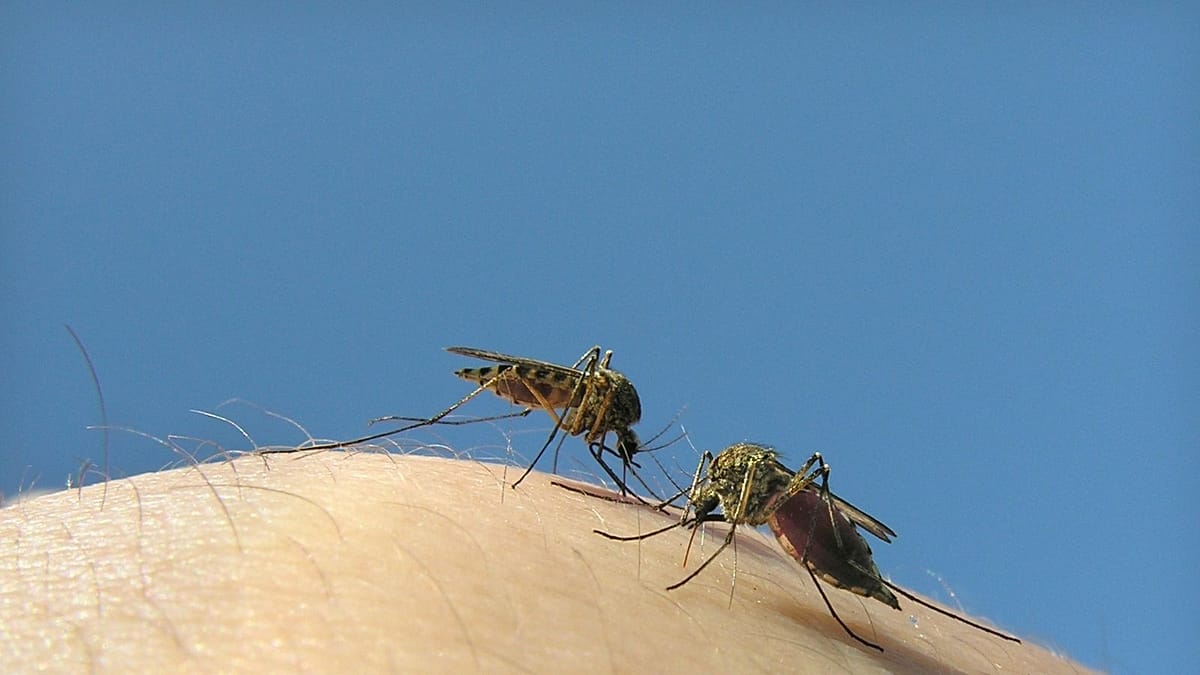
Google plans to release millions of mosquitoes in the United States in a new project aimed at curbing mosquito-borne diseases by releasing more “good bugs” instead of fighting them.
Mosquitoes are responsible for around 700,000 to 1 million human deaths worldwide every year, making the flying pests the deadliest insect on the planet.
Their numbers are expected to rise as climate change and migration increase their transmission and expand mosquito habitats.
Is there a way of stopping them?
To address this problem, Google is working on project Debug, which aims to release more “good bugs” than “bad bugs” into the environment.
Now, the American tech company has asked for the United States’ approval to release up to 64 million mosquitoes over two years in California and Florida.
“We're trying to stop bad mosquitoes by raising and releasing good ones,” reads Google’s Debug website.
“Our good bugs are male mosquitoes that have a naturally-occurring bacteria called Wolbachia, which makes them unable to have offspring with wild female mosquitoes.”
When a wild female mates with a sterile male, her eggs will not hatch, reducing the population with each generation and thus stopping transmission. Female mosquitoes transmit diseases such as dengue, malaria and yellow fever when they feed on human or animal blood — which they use as protein to develop their eggs — and pass on pathogens in the process.
Male mosquitoes to the rescue
A team of scientists and engineers at Google is working on multiple methods to sterilise male mosquitoes.
One of the approaches — the one used for the possible California and Florida release — is infecting mosquitoes with Wolbachia.
Unlike chemical pesticides or insecticides, which can harm ecosystems, the Wolbachia method uses no toxins and involves no genetic modification — making it safe for humans and the environment.
Mosquitoes do not naturally carry viruses; they only get them from infected people, and since only female mosquitoes bite humans, they are the only ones that can transmit diseases. Therefore, only male mosquitoes are part of the program.
The project plans to raise millions of sterile bugs, separate males from females, and release them into the wild.
“Releasing the right number of good bugs in the right places is critical, so we’re building software and monitoring tools to guide each release,” the project page notes.
What mosquitoes are they targeting?
There are over 3,000 mosquito species, which transmit hundreds of diseases and viruses, but not all of them are equally deadly.
Around 40% of the world is at risk of contracting a disease from one specific mosquito, the Aedes aegypti.
This bug is responsible for most cases of dengue, Zika, yellow fever and chikungunya, which together account for tens of thousands of deaths a year worldwide.
European pilot program in Cyprus
Other countries have already applied similar methods, such as the Sterile Insect Technique (SIT). In 2023, Cyprus released weekly batches of 100,000 sterile males for over 20 weeks.
The country confirmed the presence of the Aedes aegypti mosquito on the island in 2022, suggesting the incursion of this bug into Europe.
“The presence of the two species of invasive mosquitoes introduced significant challenges to Cyprus and, if Aedes aegypti is not eradicated, could have serious consequences for all of Europe,” said Rafael Mariano Grossi, director general of the International Atomic Energy Agency at the start of the project.
In this program, mosquitoes were sterilised using irradiation, a method used to manage agricultural pests such as the Mediterranean fruit fly, the false codling moth, the New World screwworm and tsetse flies.
Other pilot trials using SIT have also been carried out in Cuba in 2020 and in China in 2017.
2025, a record year for mosquitoes in Europe
Europe is experiencing longer and more intense transmission seasons for mosquito-borne diseases.
The European Centre for Disease Prevention and Control (ECDC) attributes this shift to climatic and environmental factors such as rising temperatures, longer summer seasons, milder winters, and changes in rainfall patterns.
According to the health agency, the main vectors of concern for Europe include Aedes albopictus, which can transmit dengue, chikungunya, and Zika viruses; Aedes aegypti, which also spreads the yellow fever virus; and Culex pipiens, the primary vector for West Nile virus.
The mosquito that can spread chikungunya virus (Aedes albopictus) is now established in 16 European countries and 369 regions, up from just 114 regions a decade ago, the ECDC noted.
Cases of the West Nile virus are also increasingly detected in new areas in Europe, including the Italian provinces of Latina and Frosinone, and Sălaj County in Romania.
“As the mosquito-borne disease landscape evolves, more people in Europe will be at risk in the future. This makes prevention more important than ever, both through coordinated public health action and personal protection measures,” Céline Gossner, senior expert in emerging and vector-borne disease at the ECDC, said on World Mosquito Day in 2025.
Other prevention methods include removing standing water from containers such as flowerpots, buckets and clogged gutters to limit breeding grounds.
Larvicides can be used in larger water bodies, and adulticides can be applied during active outbreaks, always considering the ecological impact, the ECDC recommends.