‘Migration has been weaponised’: Italy’s security law criticised after death of Moroccan man in police restraint
If, before 19 July, few people in Italy beyond his family and friends knew who Abderrahim Fakir was, by the late afternoon of that day the final moments of his life were being watched across the country.Video...
If, before 19 July, few people in Italy beyond his family and friends knew who Abderrahim Fakir was, by the late afternoon of that day the final moments of his life were being watched across the country.
Video footage widely shared online showed him being handcuffed and forcibly restrained by police on a street in Pilastro, a neighbourhood in the north-east of Bologna.
Fakir, a 42-year-old small business owner born in Morocco but who had lived in Italy since he was a child, was pinned to the ground by two police officers as emergency health workers looked on. He repeatedly begged for help before his body stopped moving.
Fakir was pronounced dead at the scene. The cause of death is still being established, although an initial post-mortem indicated lung compression.
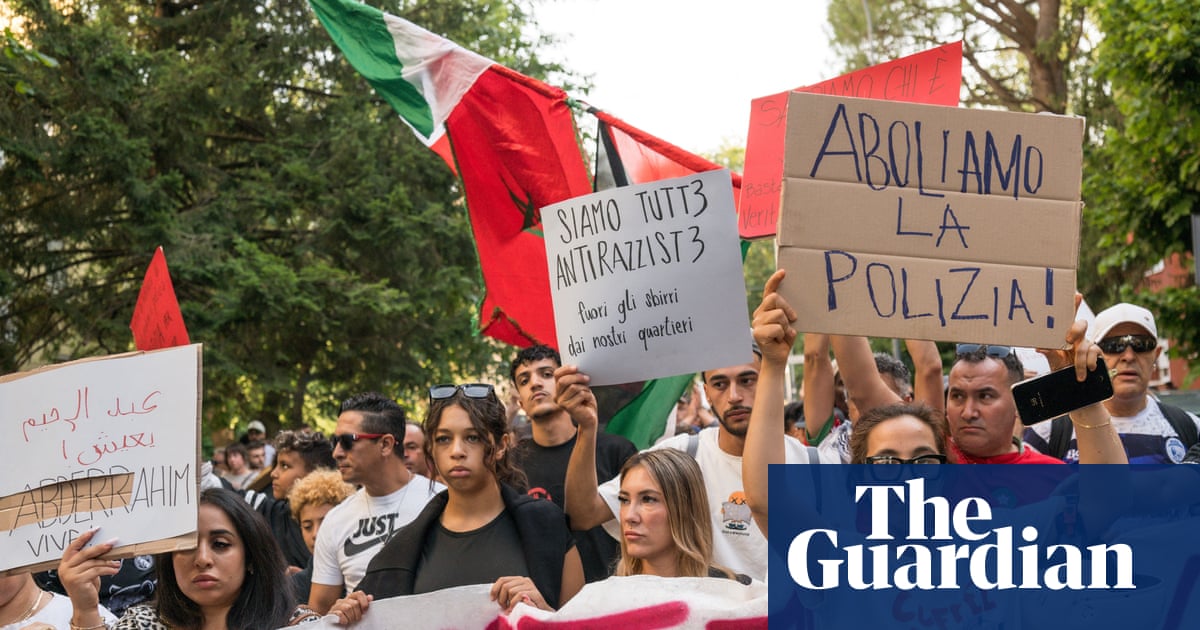
Outrage over Fakir’s death spilled well beyond Pilastro, prompting protests in Bologna and Rome and fuelling a tense national debate over the far-right government’s approach to policing and immigration. It also put a wide-ranging security bill enacted by Giorgia Meloni’s ruling coalition under renewed scrutiny.
Fakir’s is the first case in which a new legal shield giving public officials greater protection from prosecution, if it can be demonstrated they acted in self-defence or within the line of duty, has been invoked.
As a result, although prosecutors in Bologna are investigating the two officers and four healthcare workers in connection to an inquiry into involuntary manslaughter, they will not be formally registered as criminal suspects unless authorities determine the use of restraint was unjustified.
The legal team for the two officers – who returned to work on Monday – strongly deny excessive force was used, maintaining they fully complied with official protocol. Lawyers for the healthcare workers, meanwhile, said they acted in strict accordance with emergency medical guidelines.
Critics of the legal shield have condemned the measure as giving too much power to the police, making it harder to hold them accountable.
Fabio Anselmo, the Fakir family lawyer, claimed it potentially risked “sabotaging” the investigation. “In this case, this is a rule that could effectively create impunity,” he said.
In Pilastro, a working-class neighbourhood with a population of about 7,000, of whom 25% are immigrants, family and friends of Fakir are also worried that politics will tamper with justice.
A banner tied to railings on the corner of Via Italo Svevo, the street where he died, reads “Truth and justice for Fakir – the state kills.” Similar messages are scrawled on bus stops.
Fakir lived in another area of Bologna but often returned to Pilastro to see his brother, Mohamed, and friends from his childhood, including fellow Moroccan national Mike El Canas.
El Canas said Fakir was with a group of friends, who described him as being in good spirits, on the night before his death and stayed in Pilastro overnight.
“He was a good person, so kind and full of life,” said El Canas. “He had plenty of friends among the Moroccan community, but also Italians.”
It is unclear what happened in the hours before he died.
Police said they responded to concerns from residents about a man behaving erratically and aggressively. They called the health services, telling staff he was “having a psychiatric episode”. Other videos filmed by residents before police intervened showed Fakir in a state of extreme agitation and confusion. It later emerged he had been referred for mental health treatment in June.
In a letter published by La Repubblica, Barbara Spinelli, a lawyer who was assisting Fakir in renewing his residence permit, wrote that he feared being deported owing to the EU’s “return hubs” migration pact, despite her reassurances, and felt sorry about having to lay people off due to a slowdown in business.
Speaking to the Guardian from Casablanca, where family members in Italy had travelled to be with relatives as they await the repatriation of his body for burial alongside his late mother, Fakir’s sister Khadija said he had confided in her about relationship difficulties, but was otherwise always thinking of others.
after newsletter promotion
Exacerbating the family’s grief is the way in which some far-right politicians and factions of Italy’s rightwing press dehumanised Fakir, seizing on drugs convictions in his youth and portraying him as just another immigrant causing trouble.
“Abderrahim helped those in need and was friendly and joked with everyone. This was Abderrahim,” said Khadija.
Khadija said she couldn’t bring herself to watch the videos but an eyewitness told her Fakir was agitated and asking for help. “They could have calmed him down with something. Why did he have to end up in the hands of the police like that?”
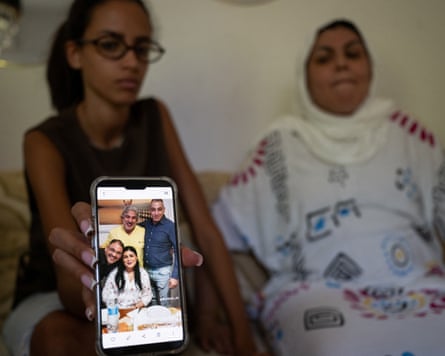
After setting up a crowdfunding page to help cover legal costs, she said her family was hit with a deluge of online comments accusing them of trying to make money. “I would pay €3m to have my brother back,” she said. “All we want is truth and justice from the Italian state. Whoever acted wrongfully must pay.”
People living in Pilastro are familiar with being disparaged. The neighbourhood came under the political spotlight during a regional election campaign in early 2020 when Matteo Salvini, the leader of the far-right League and the current deputy prime minister, rang the bell of a Tunisian family’s home to ask them over the intercom if they were drug dealers. Salvini, who in the past has posed in police uniform, has defended the police over Fakir’s death.
Pilastro has also felt the brunt of a measure in the security bill cracking down on peaceful dissent after 33 people racked up thousands of euros in fines between them during a protest earlier this year against the construction of a museum that would swallow up a significant portion of the area’s only park. One person was detained for a couple of days for climbing a tree.
However, many are too afraid to speak out, even more so after Fakir’s death. “The police have the power, a uniform that protects them, and we are nobodies,” said El Canas. “But we must speak up, as otherwise, where will us ordinary citizens end up?”
Anselmo said that while the majority of Italy’s police officers are good, there are those who “inevitably absorb the political climate in which they operate”.
With Meloni striving to secure a second mandate in next year’s general election, while fending off a new far-right rival, Roberto Vannacci, the climate is only expected to become more divisive as she promotes her main political offerings – security and immigration, with the latter evident in her response to the mass migrant crossing from Morocco into the Spanish enclave of Ceuta.
“The Fakir story illustrates how words and these kinds of bills actually play out on the ground,” said Cecilia Sottilotta, an associate politics professor at the Università per Stranieri in Perugia. “But these security measures have long been in the plans of Italy’s far right, who have always insisted that the police should have a free rein. Now, the big picture is very important. Migration has been weaponised. Again, this is not new, but we will see more of it with elections coming up.”