Air conditioning is overheating our energy systems. Are there alternatives for staying cool?
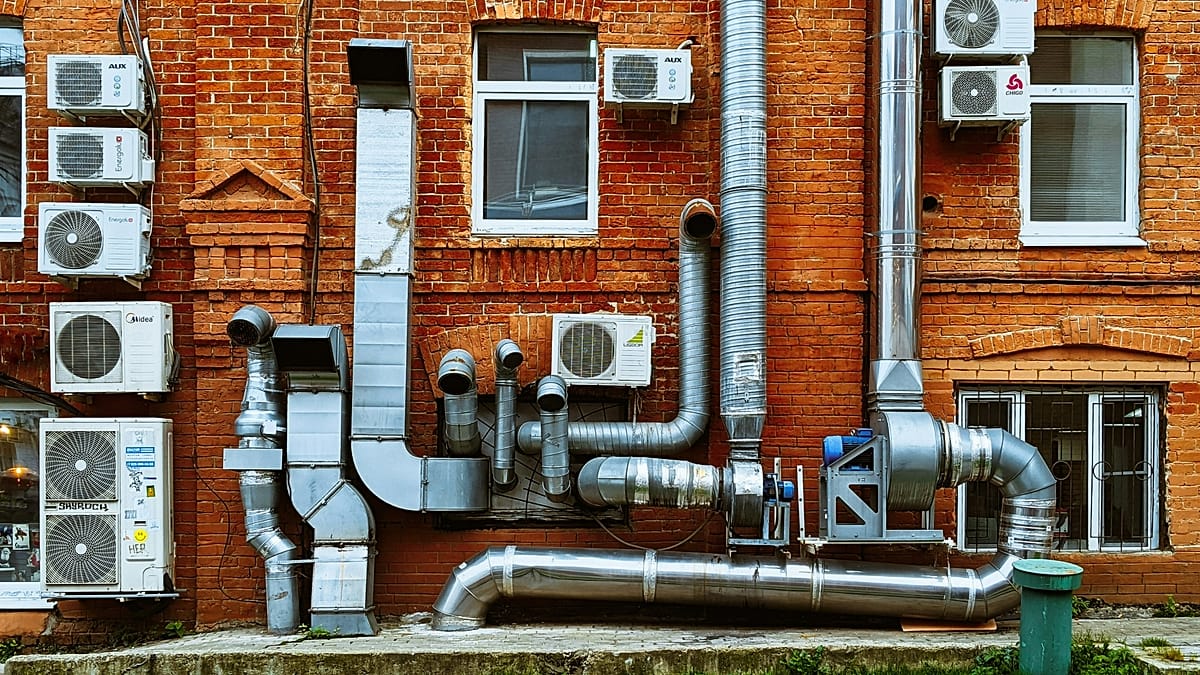
Europe is sweltering amid an early heatwave, with the UK experiencing the hottest May temperature since records began and France activating its national warning system for the first time for the month since...
Europe is sweltering amid an early heatwave, with the UK experiencing the hottest May temperature since records began and France activating its national warning system for the first time for the month since it was introduced in 2004.
As these conditions increasingly become the ‘new normal’, demand for cooling is ramping up.
In emerging and developing economies, this means a heavy reliance on air conditioning. In these countries, more than 80 per cent of the projected electricity demand for cooling by 2050 is expected to occur, according to the International Energy Agency (IEA).
But peaks in air conditioning use lead to higher energy consumption, greenhouse gas emissions and warmer air, particularly in cities, due to the urban heat island effect.
Experts are urging alternative ways of cooling, including opting for lower-emission air conditioning units and more strategic house designs.
Air conditioning use set to soar around the world
The use of electricity-powered cooling systems in homes is on the rise, with the number of air conditioning (AC) units in Europe more than doubling since 1990.
The IEA forecast that 130 million units would be installed in the EU by 2023 and estimated that the number of units could quadruple on the continent by 2050.
Across Southeast Asia, the stock of air conditioners is set to increase ninefold between 2020 and 2040 based on today’s policy settings, according to a 2025 IEA report.
In Indonesia specifically, the share of the population that owns an air conditioning unit is expected to rise from 14 per cent in 2023 to 85 per cent by 2050, driven in large part by an improvement in living standards.
Air con puts ‘immense pressure’ on electricity grids
While increased access to cooling systems means improving the quality of life for millions of people and preventing heat-related deaths, it also brings with it a series of challenges for the energy system, the IEA warns.
During the early summer heat waves of 2025, France – where air conditioning ownership is low – recorded an evening electricity peak that was 25 per cent above the off-season average, the agency reports. In New York, where air conditioning ownership is high, it was 90 per cent higher.
“These cooling-driven peaks can put electricity affordability and reliability at risk, especially if efficient technologies are not in place to dampen the effects on energy systems,” the IEA says in its report.
According to the agency, air conditioning is currently responsible for emitting around one billion tonnes of CO2 per year, out of a total of 37 billion tonnes emitted worldwide.
Hydrofluorocarbon (HFC) and hydrochlorofluorocarbon (HCFC) refrigerants used in air conditioning also trap thousands of times more heat in the atmosphere than CO2, driving global warming.
Clara Camarasa, an expert at the IEA, explains that air conditioning "can put immense pressure on electricity grids and accelerate greenhouse gas emissions, exacerbating the climate crisis."
"Rapid growth in [air conditioning] requirements can lead to the use of inefficient, energy-intensive equipment," she adds.
"Air conditioners also often need large volumes of water, and some of them, with certain refrigerants, have a particularly warming potential, which is also harmful to the ozone layer."
In cities, the use of air conditioning accentuates the heat island effect. Air conditioning systems cool buildings by releasing heat into urban areas, which store heat and release it again, particularly at night.
Changing air con habits can significantly reduce energy consumption
To mitigate the damaging effects of increasing cooling use, the IEA says improving the efficiency of AC units can serve as a key short-term approach.
Globally, the average new air conditioner sold is only about half as efficient as the best models available. But more efficient equipment does not have to cost more.
IEA analysis across Southeast Asia and Latin America shows that for the same amount of money, consumers can purchase air conditioners with efficiency levels ranging from 3 watts per watt (W/W) to more than 6 W/W. That is twice the level of efficiency for the same upfront cost.
Even so, the efficiency of the equipment is only part of the solution. Users can also significantly reduce energy consumption by making the temperature setpoints on their air conditioners slightly higher, or by using fans in conjunction with air conditioning.
In a study on thermal comfort in Singapore, participants reported feeling equally or more comfortable when air conditioners were set to a higher temperature and used in combination with a fan.
This approach uses much less energy: an air conditioner of average efficiency set to 26°C in a well-insulated building in Singapore consumes about 30 per cent less energy than one set to 24°C.
Homeowners can also look to air-to-air heat pumps for cooling. These can remove heat from inside your home to outside, in a very similar process to standard AC units. This means they still add heat into the outdoors, raising the outside temperature and thus increasing the demand for more indoor cooling.
However, when used for heating functions, they are more energy efficient and release fewer emissions.
Integrating cooling into building and urban design
On a bigger scale, building design and city planning can significantly impact the magnitude of cooling demand, the IEA says.
At the building level, measures like proper insulation and exterior shading can cut a building’s cooling demand by up to 80 per cent, while passive cooling techniques like natural ventilation can offer quick relief, lowering indoor temperatures by up to 9°C.
As extreme heat becomes more common, rethinking the design of cities is just as important. During a 2025 heatwave in Paris, for example, nighttime temperatures in an inner-city park were up to 7°C cooler than in nearby built-up areas, the IEA reports.
Paris has undergone a radical transformation over the last two decades, as the city strives to become greener. According to the International Union for Conservation of Nature (IUCN), more than 100,000 trees have been planted in Paris since 2020, including 40,000 over winter 2023.
“Policy makers must now account for higher cooling demand by adopting a broad, long-term approach that includes both addressing equipment efficiency and integrating cooling considerations into building and urban design,” the agency says.
Residents can also make use of air conditioning in their city’s public buildings, a more efficient cooling system as multiple people benefit simultaneously.
Some cities are installing climate shelters. In Spain, a nationwide network is being constructed, which builds upon schemes already established by regional governments, including in Catalonia, the Basque Country and Murcia.
In Barcelona, there are already 400 climate shelters available in public buildings such as libraries, museums, sports centres and shopping malls.
These spaces, which tend to be air-conditioned and equipped with seating and free water, are designed to protect people who lack the resources at home to cope with high temperatures – such as the elderly, babies and those with existing health issues.