From rolling clothes to shoe hacks: The packing tips travel experts swear by
Whether you’re a serial overpacker or the kind of traveller who forgets their passport until the taxi arrives, getting holiday packing right can feel like an art form. Personally, I can’t count the number of...
Whether you’re a serial overpacker or the kind of traveller who forgets their passport until the taxi arrives, getting holiday packing right can feel like an art form.
Personally, I can’t count the number of times I’ve got into trouble at an airport gate for having bulging or overweight bags. As a frequent traveller, I should be better – but it’s a skill some of us just don’t have.
To help you travel smarter this summer, our team has rounded up their tried-and-tested packing hacks alongside expert advice from seasoned travel pros, from the space-saving essentials worth buying to the surprisingly common mistakes that can derail a trip before it’s even begun.
Use shoe space wisely
Michael Starling, managing editor at Euronews Travel, is a great advocate for making the most of what he calls shoe space.
“My top tip for packing, especially for check-in luggage, is to take advantage of ‘shoe space’. I use single socks to wrap around toiletries, then stuff them into the shoes,” he says.
“It saves carrying a bulky toiletries bag while also protecting bottles of shampoo, shower gel and the like. It's amazing how much you can fit into a shoe or boot.”
Use vacuum packing bags to save space
If you simply can’t pack light, vacuum packing bags could be a lifesaver.
Elena Galli is the founder of Jaspacks, a travel brand focused on helping people pack smarter with these bags.
“One of the best ways to pack for a holiday is to reduce luggage volume,” she says. “They compress clothing significantly, allowing travellers to fit much more into smaller luggage and travel carry-on only.
“That not only saves money on baggage fees, but also removes two of the most stressful parts of flying: waiting to check in luggage and waiting again at baggage claim after landing.”
Consider how useful your clothing really is
We all love to have multiple clothing options, but on a longer trip, and with stringent airline baggage restrictions, it’s not always easy.
The answer is really considering what you’re packing before even starting the process.
Izzy Nicholls, the founder of The Gap Decaders, has been travelling full-time overland since 2018 across Europe, Africa and Asia.
“Pack for repeatability rather than for every possible scenario. A simple way to do this is to build a small capsule that works across daytime and evening with minimal swaps. For many trips, a 3-2-1 base covers most needs,” Nicholls says.
“That means three tops you can layer, two bottoms that suit the same shoes, and one outer layer that handles cooler moments. Add one smarter piece for evenings, such as a dressier top or a compact outfit that still pairs with your daytime shoes. The key is to choose items that all mix, so every top works with both bottoms, and the outer layer works over everything. If a piece only matches one outfit, it is usually dead weight.”
Nicholls also recommends being “deliberate about your fabric choices when packing, as quick-dry materials let you wash something in the evening and have it wearable again by morning, which replaces the temptation to pack duplicates,” and suggests packing a tiny laundry kit to “allow a smaller wardrobe to stretch over a longer holiday without feeling repetitive”.
Hack maxi dresses for better packing
Fakhriya M. Suleiman is a journalist for Euronews Travel and tends to pack a lot of maxi dresses, something she uses to her advantage.
“My go-to travel hack is for maxi dresses. What I do is place half the garment in the suitcase first, then fold the remaining half over my packed items. I find it helps avoid heavy creasing and keeps everything looking much neater on arrival,” Suleiman says.
Reconsider your toiletries
“I think everyone can say they have had a disaster with travel toiletries,” Sarah-Jane Outten, a lifestyle and shopping expert at MyVoucherCodes, says – but there are ways to avoid catastrophe.
“Bottle caps are not your friend! Never trust them. Open the bottle and add some plastic wrap before screwing the cap back on. This really helps to prevent cabin leaks as it provides an extra seal,” she advises.
She also recommends solid shampoo bars, bar soaps, and toothpaste tablets rather than their liquid equivalents, as they can't leak and don't count toward any liquid limits.
If you do need liquids, decant your existing toiletries rather than buying miniature sizes, which are bad value.
Keep necessary in-flight items within reach
Nick Gaskin, the sales and marketing director at IT Luggage, suggests always carrying a pouch on a flight.
We all know to carry as little as possible on a plane, especially with low baggage allowances, but there are no rules about taking a pouch filled with the essentials, which can be easily removed from your bag.
“Store essentials like lip balm, headphones and snacks in a small pouch within your bag that can easily be taken out and kept with you under the seat,” Gaskin says, “This avoids needing overhead access during the flight.”
Make sure your post-aeroplane outfit is at the top of your suitcase
Dianne Apen-Sadler, senior journalist at Euronews Travel, is a self-proclaimed packing expert – no matter the kind of trip – having frequently travelled with just a carry on, and having boxed up her entire life to move countries three times.
“With check-in not until 3 pm, there’s a good chance you might reach your accommodation well before you can get into your room,” Apen-Sadler says.
“While changing in a bathroom isn’t ideal, you can at least make your life a little easier by keeping your bikini or post-airplane outfit at the top of your suitcase so you can grab it before putting the rest of your luggage behind the hotel reception.”
She also advises the terrible packers among us to think about oddly-shaped items first – and roll (almost) everything.
“If you’re a roller (and you should absolutely be a roller, with exceptions for things like denim, coats and jumpers), maximising the space within your suitcase is a breeze,” she adds.
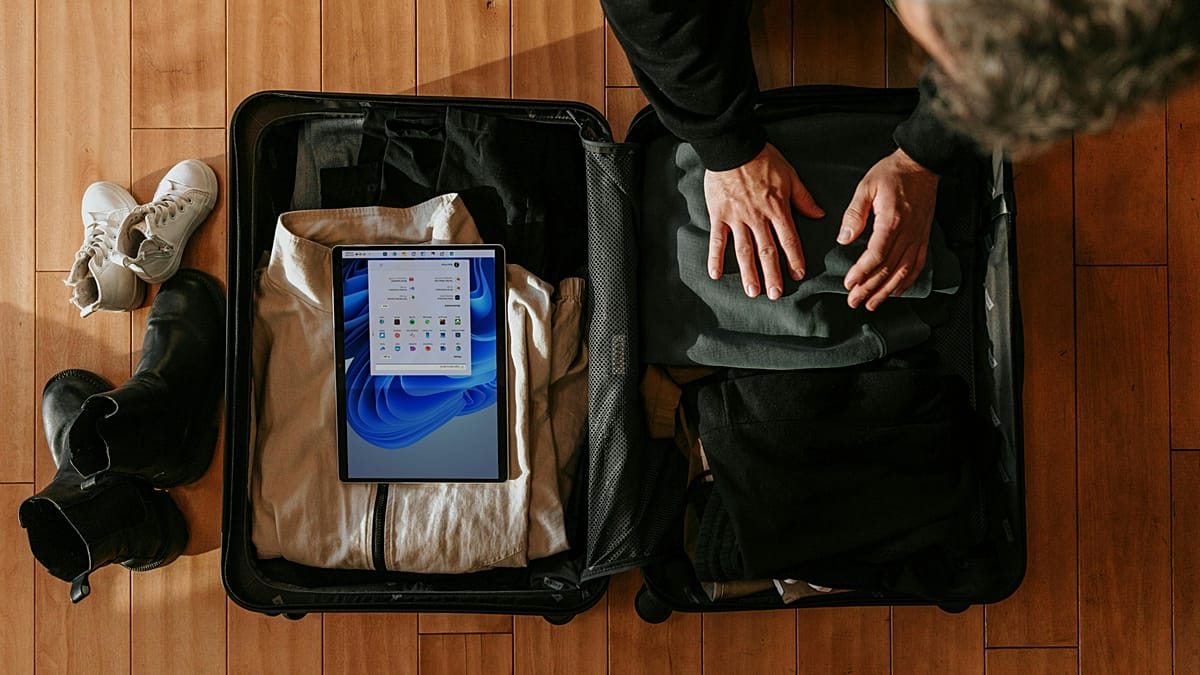
“Start by filling the odd gaps in the base of your suitcase created by the handle with a layer of clothes, then place anything oddly shaped, like a hat. You can curve rolled items around it, and any gaps can be filled with your unmentionables.”
Take a photograph of your luggage
Gaskin also suggests taking a photograph of your packed suitcase before you head off.
“It can help with insurance claims if luggage is lost and acts as a useful reminder of what you packed,” Gaskin says.
Outten also suggests "laying everything out on your bed before you pack," while Apen-Sadler suggests photographing each individual outfit to make your life easier when you can't decide what to wear.
If you can’t pack it, wear it
Like many of us, consumer expert Jane Hawkes wants to bring as much as possible when travelling, but is often stymied by small bag sizes. Her advice? Wear what you can’t pack.
“Try a dress over trousers, long sleeve tops tied around the waist or throw on a scarf instead of a jacket.”
She also recommends always taking extra canvas or plastic bags, which take up the tiniest amount of space in a suitcase.
“This can be particularly useful on the return journey for clothes destined for the wash. Alternatively, a duty-free bag can serve the same purpose if you make a purchase during your trip,” Hawkes says.
Pack practical items you wouldn’t immediately think of
We all think we know what necessities to pack, but there are other items we don’t often consider.
“The most underrated things to pack are usually not clothes, but small items that solve real travel problems,” Mateusz Dul, an expert at eSky Group online travel agency, says.
“More and more smart travellers bring a compact power strip or a USB splitter, especially in hotels where there are fewer outlets than devices. One adapter can then charge a phone, headphones, smartwatch and power bank at the same time.”
Dul also recommends bringing reusable filtered water bottles, which can be refilled after airport security, in order to avoid overpaying for bottled water, and bringing facial mist sprays or eye drops “since aeroplane cabins and hotel air conditioning tend to dry people out much more than they expect”.
Remember, cruises are a different beast
Staying in one place demands an entirely different kind of packing - and that specifically applies to cruises, with often tiny rooms and very limited space.
Parul Jadav, head of ground product at Brightsun Travel, has some solid tips for inexperienced cruisers.
“Something people never think of is a hanging shoe holder. They pack almost totally flat in your suitcase but then expand to hold upwards of eight pairs of shoes in the wardrobe, without taking up valuable floor space,” he says.
Jadav also recommends a toiletry bag that hangs, as it “provides extra storage with no concerns for limited space on the vanity unit”.
He also urges cruise passengers to “remember to put your essentials – medication, charger, book, swimwear – in your carry-on. Some people forget that, even if you're taking a no-fly cruise from the UK, it can take a while for your suitcase to actually get to your cabin”.