Portuguese prime minister outlines plan to tackle rising living costs without changing VAT
By Lina Ferreira Published on 18/09/2026 - 10:12 GMT+2•Updated ...
By Lina Ferreira
Published on 18/09/2026 - 10:12 GMT+2•Updated 11:31
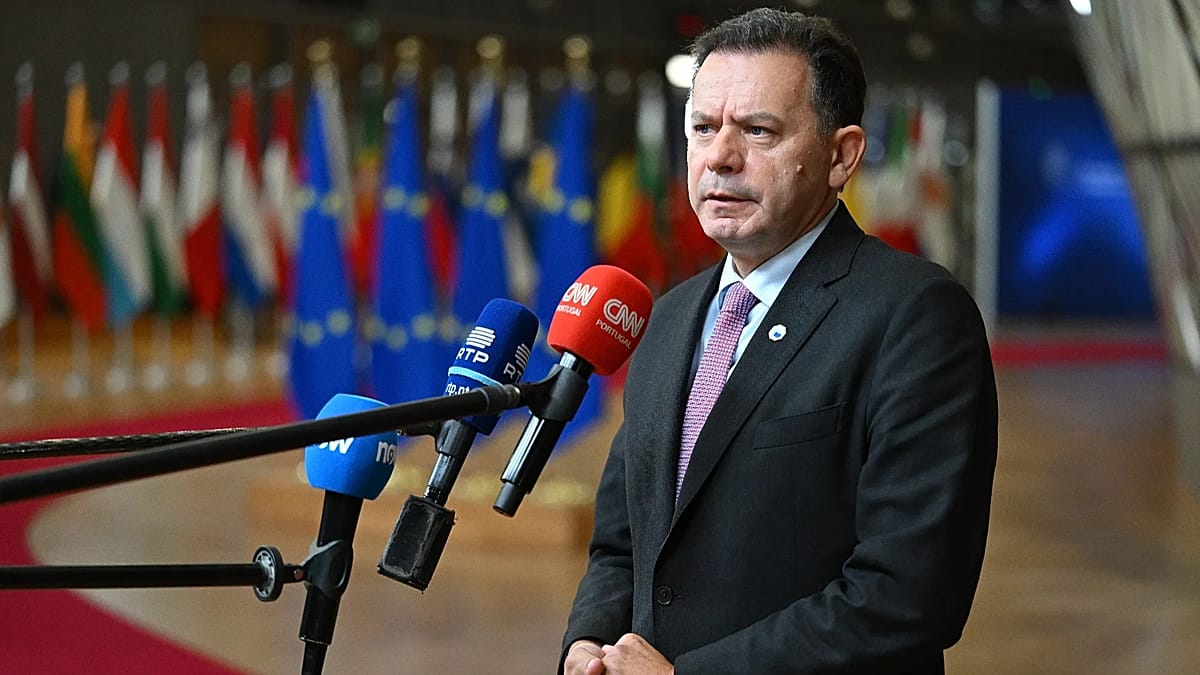
"Here I am, putting myself on the line," said the Portuguese prime minister, Luís Montenegro, in a televised address to the nation on Thursday night. Timed for the main evening news bulletins, the speech was used to set out the measures against the cost of living, in particular those triggered by rising fuel prices.
Some elements of the plan were already known. This is the case of the pension bonus and the cut to personal income tax (IRS) bands, announced last week in Parliament when the government survived a no-confidence motion. But they have now been formally approved by the Council of Ministers.
Montenegro explained how the pension bonus will be applied: 200 euros for pensions up to 537 euros; 150 euros for pensions up to 1,704 euros and 100 euros for pensions up to 1,611 euros. The amount will be paid in December.
The Council of Ministers also approved a reduction in six IRS bands, with the remaining bands also affected because of the tax’s progressive nature. According to Montenegro, this measure is aimed above all at "middle-class households".
At the same time, the government’s portal published the table of IRS withholdings, with simulations, (source in Portuguese) but this is still a draft law that must be approved by the Assembly of the Republic.
On fuel price increases, the main strategy will continue to be the discount on the tax on petroleum products (ISP). Montenegro says this discount will remain in place until the end of the year, amounting to a total reduction of around 1.3 billion euros.
The prime minister also said that this discount "will probably rise to 25 cents as early as next week", from the current 23 cents, in anticipation of further increases in fuel prices.
The government will also once again support the sectors most exposed to rising fuel costs, with a total package of 38 million euros. This support covers taxis, freight transport, social solidarity institutions, firefighters’ associations and farmers. The solidarity bottled gas scheme will also remain in place.
The package also includes extending the green rail pass to the urban areas of Lisbon and Porto. The pass, costing 20 euros a month, allows travel on all rail lines except the Alfa Pendular high-speed service.
Government steers clear of VAT
The speech also served for Luís Montenegro to spell out what he will not do: tamper with the consumption tax, VAT.
"I will not swap cutting VAT on some foodstuffs from 6% to zero for the 800 million euros we are returning to families through IRS and the pension supplement," said the Portuguese prime minister.
The measure has long been demanded by the Socialist Party (PS, centre-left) and by Chega (far right). This has also been the strategy in several European countries to tackle the rising cost of living.
"I have every respect for the choices of the opposition parties and for the choices of my fellow heads of government in the European Union," Montenegro said. "I will not trade our fiscal and financial policy for that of other countries, even those closest to us, such as Spain, France or Italy."
The Spanish case is particularly relevant for Portugal. Fuel is cheaper in Spain, prompting consumers in Portugal to cross the border to fill up.
To defend these choices, Montenegro repeatedly invoked the past during his address to the nation, referring to the international bailout programme the country was subjected to.
"Do not count on me, or on the government, for illusions today that come with a heavy price to pay tomorrow," he said.
Luís Montenegro also made it clear that "the situation may drag on". In the morning, at a conference, he had criticised what he called the "stupid" course of the conflict in the Middle East.