
Brussels to host talks on Ukraine's reconstruction with key allies
Good morning. I’m Mared Gwyn, holding the newsletter pen this Wednesday morning. Today: Brussels becomes the stage for intensified diplomacy on Ukraine, and I break down the key takeaways from Euronews’ Enlargement Summit.
But first: Across the Atlantic this morning, the Democrats have clinched control of the Senate and are projected to control Congress, after a midterm election which saw the party win races in key Republican strongholds such as Texas. President Donald Trump has just conceded that the Iran war could have influenced voters. More on that in our top story below.
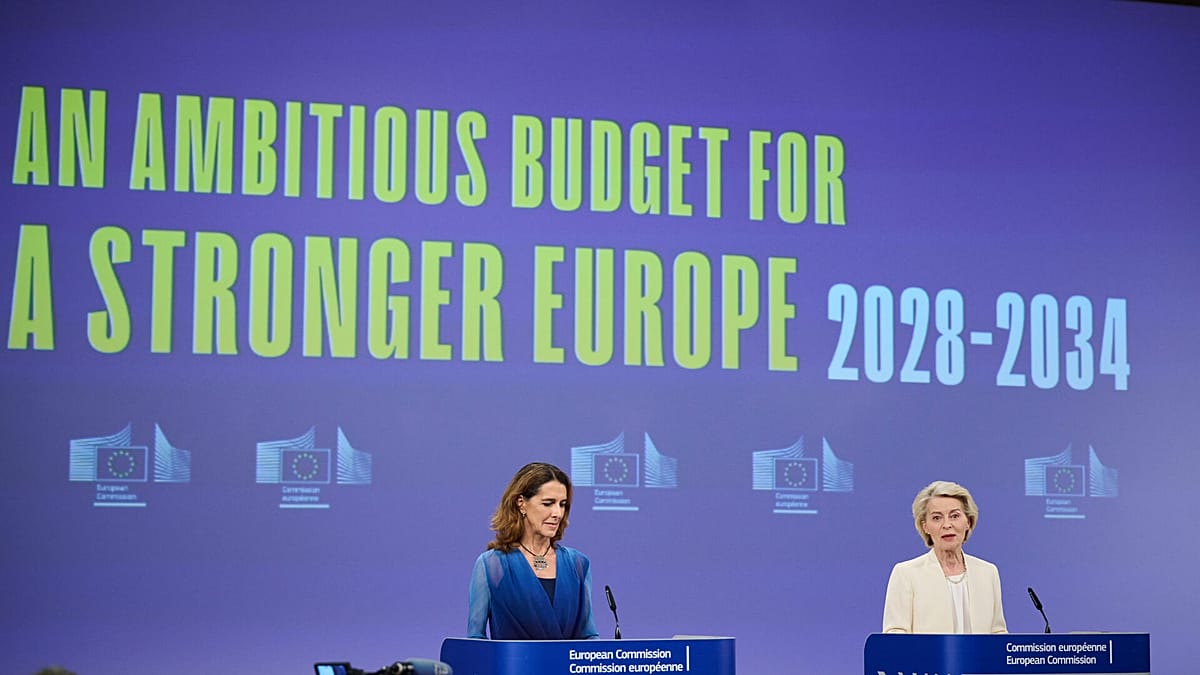
Ukraine diplomacy steps up: Meanwhile, the European Commission will bring together representatives from Ukraine, the US, France, Germany, the UK, NATO and the World Bank here in Brussels today, in an attempt to kick-start negotiations to end the war in Ukraine.
My colleagues Shona Murray and Sasha Vakulina report that the meeting comes after several weeks of shuttle diplomacy involving the US, Ukraine, Russia and European partners, and is expected to focus on Ukraine's post-war reconstruction and economic recovery. However, it remains unclear who will represent Kyiv and Washington in Brussels.
Then on Thursday, US First Lady Melania Trump will host Ukrainian and Russian representatives at the White House following the humanitarian ceasefire in Russian-occupied Oleshky. Attention will then turn to Abu Dhabi, where Washington plans to mediate talks between Kyiv and Moscow on 10–11 November, covering security arrangements, de-escalation and efforts to end Moscow’s war.
Europe at the table: Norwegian Prime Minister Jonas Gahr Støre and Finnish President Alexander Stubb have been among the key European figures involved in the recent intensified diplomacy, including with a 90-minute phone call with Russian President Vladimir Putin.
Shona, writing this morning from Helsinki, says the call was deemed “very constructive” as it came off the back of a very tense few days which saw US President Trump waive sanctions due to be imposed on Moscow and Ukraine lose access to SpaceX’s Starlink satellite internet network.
Finland, which shares NATO's longest land border with Russia — around 1,340 kilometres — has a particular interest in keeping diplomatic channels open. The thinking, sources tell Shona, is that if Europe waits until all member states agree on who should represent them in negotiations, the process could take years.
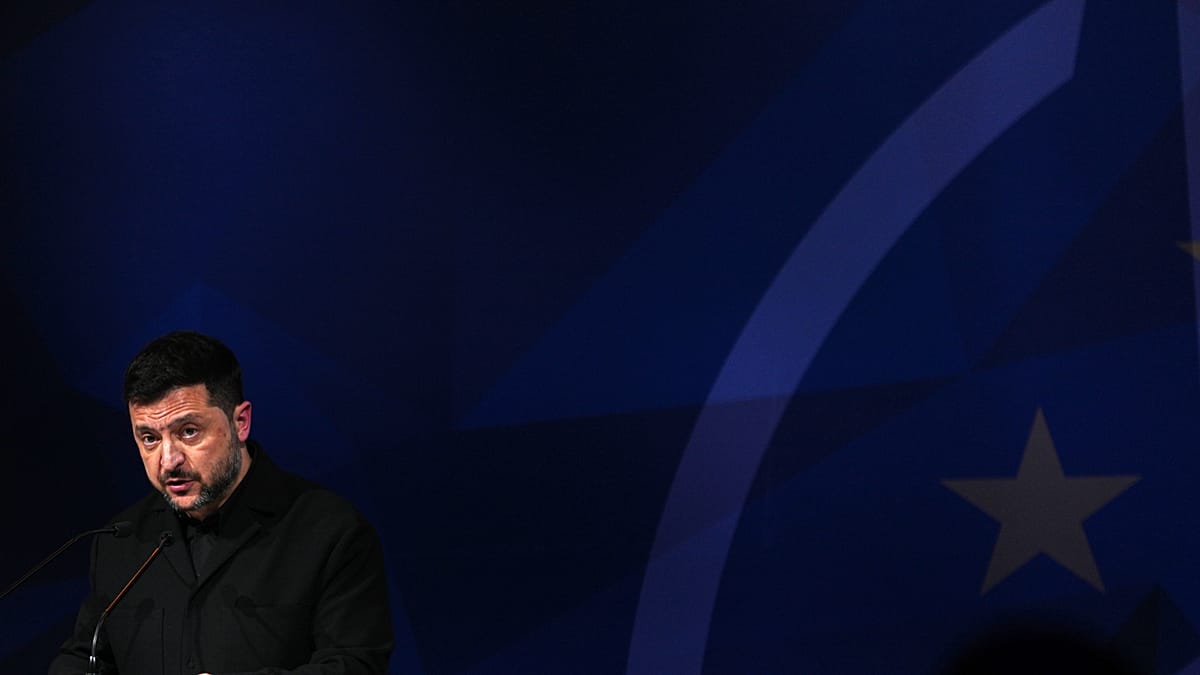
Today’s talks in Brussels come after Ukraine’s President Volodymyr Zelenskyy spent Tuesday in Berlin seeking more support to bolster Kyiv’s air defences and protect its energy infrastructure.
German dispatch: And Zelenskyy wasn’t the only one making a stop in the German capital. Our reporter Jorge Liboreiro is spending these days in the city meeting the federal government (and eating currywurst, I’m told). His coveted briefing with Chancellor Merz, however, was cancelled due to Zelenskyy’s visit. But he still got a chance to take the country’s pulse.
“There’s a grim mood here in Berlin. You can feel it all around,” Jorge tells me. “The country is grappling with multiple open fronts that, in a way, tell a broader story of European malaise: economic stagnation, industrial turmoil, budget constraints, migration backlash, foreign competition and popular discontent. The steady rise in support for the far right has strained the ruling coalition and sent chills across the political class. After all, we’re talking about a country whose constitution was intentionally written to prevent a repeat of Nazism.”
“The bleak atmosphere is spilling into foreign policy. An increasing number of Germans questions the country’s multi-billion support for Ukraine and want it to be either capped or decreased. Kyiv, though, is facing a massive €70 billion shortfall next year that will compel allies – particularly wealthy ones – to put up additional money. Merz told Zelenskyy that Ukraine can ‘fully’ rely on Germany. For now, he stays the course.”
Eyeing a larger EU: In other news, heads of state and government from some of the countries vying to become EU members gathered at Euronews’ Enlargement Summit in Brussels on Tuesday, just ahead of the release of the EU executive’s annual reports on candidate countries’ progress towards accession, expected later today.
Georgian PM offers no way out of deadlock: In a rare interview with an international media outlet, Georgian Prime Minister Irakli Kobakhidze insisted his government remains “very committed” to joining the EU but offered no convincing explanation of how he intends to revive the country's stalled accession bid, instead accusing Brussels of political “blackmail”.
Speaking to our EU Editor Maria Tadeo, Kobakhidze repeatedly blamed the European Commission for the breakdown in relations, while refusing to reconsider the controversial laws that helped bring Georgia's EU ambitions to a standstill. More in this must-read write-up of the interview.
Armenia teases EU application: Meanwhile, Armenia’s Prime Minister Nikol Pashinyan told my colleague Sasha Vakulina that his country could formally apply to join the EU in 2027 or 2028, framing the move as a strategic choice to protect Armenia’s democracy after the 2018 revolution that ousted pro-Russian politicians from power. More.
The summit came just ahead of the European Commission’s presentation of its annual “package” of progress reports for the candidate countries, together with roadmaps for the four “frontrunners”: Montenegro, Albania, Moldova and Ukraine. My colleague Luca Bertuzzi has compiled his key takeaways from yesterday’s summit here.
Democrats set to seize control of Congress after long night for Republican party
The Democrats look set to take control of Congress after sweeping gains in the US' midterm elections overnight into Wednesday, including in parts of the country traditionally most loyal to the Republican Party, Nathan Rennolds writes this morning.
Democrats have already taken the Senate and are also projected to win a majority in the House of Representatives, which would give them a significant check on US President Donald Trump.
Key Senate races in South Carolina and Texas went in favour of the Democrats - who also flipped House seats across the country. In the Texas Senate race, James Talarico defeated Republican Ken Paxton in a major blow for the GOP, while South Carolina also swung to Democrat Annie Andrews.
US President Donald Trump wasted no time in sharing his opinion of the night, firing off a series of posts on his Truth Social account in which he appeared to distance himself from his party.
"I wasn’t on the ballot and if I was, we would have won in a landslide!" he wrote in one post.
He later added that he was planning to become a "political pundit, both good and bad, on the reasons these candidates won and lost."
Catch up with the latest results in our live blog.
More from our newsrooms
Hoax bomb threats target four European flights as scares spread across the continent. Four passenger flights heading to Poland, Spain and Bulgaria were the target of bomb threats on Tuesday. All of them landed safely and no explosives were found, authorities said, on the third straight day that threats have disrupted passenger planes in Europe. Simon Ormiston has more.
La bola negra becomes Spain's third highest-grossing film ever. 'La bola negra', directed by Javier Calvo and Javier Ambrossi, has become the third most successful Spanish film of all time, with 36.7 million euros taken and 5.4 million cinema-goers up to 1 November. Marina Neila has the details.
Spain’s transport minister resigns over Urda train crash that killed 69. Óscar Puente resigned on Tuesday over last week’s train crash near Urda, in the central province of Toledo, which killed 69 people. Puente had revealed that one of the high-speed trains was allowed to keep running at over 160 km/h after its safety system failed. More.
We’re also keeping an eye on
- European Commission VP Raffaele Fitto and Transport and Tourism Commissioner Apostolos Tzitzikostas will present a European strategy on sustainable tourism
- Commissioners Maroš Šefčovič and Valdis Dombrovskis will present the Commission’s 2027 work programme and an annual report on the Commission’s simplification drive
- The EU’s foreign policy chief, Kaja Kallas, and enlargement boss, Marta Kos, will present the annual enlargement report. Kos will first present the reports to the European Parliament’s foreign affairs committee.
- European Commissioner for Migration Magnus Brunner to appear before the European Parliament’s committee on civil liberties to present the European Commission's proposal to revise the European Border and Coast Guard Regulation. The same committee is also due to vote on a deal on updating EU criminal law rules to fight against child sexual abuse, which will give victims more time to report a crime.
That’s it for today. Sasha Vakulina, Shona Murray, Jorge Liboreiro and Vincenzo Genovese contributed to this newsletter.