'Ceuta is Spain': Hundreds protest government over migration crisis
Hundreds of Ceuta residents gathered on Sunday to demand an “immediate, decisive and proportionate” response to the migration crisis. The protest, organised by the city’s four religious communities, was marked by criticism of the central government and calls for unity.
The four religious communities in Ceuta — Christian, Muslim, Jewish and Hindu — brought together hundreds of people in Constitution Square on Sunday afternoon to demand solutions to the migration crisis and defend coexistence in the city.
The protest, held under the slogan "Enough is enough. Ceuta will not surrender", was also marked by criticism of the government, which some protesters accused of "abandonment".
"Ceuta is not for sale. Ceuta is Spain" and "Sánchez, resign" were among the chants heard from the crowd. Some protesters later continued the demonstration with a march towards the Government Delegation.
Meanwhile, tensions flared in Plaza de los Reyes when Spanish far-right political activist Vito Quiles arrived, with some people in the crowd accusing him of coming to “divide” Ceuta’s residents.
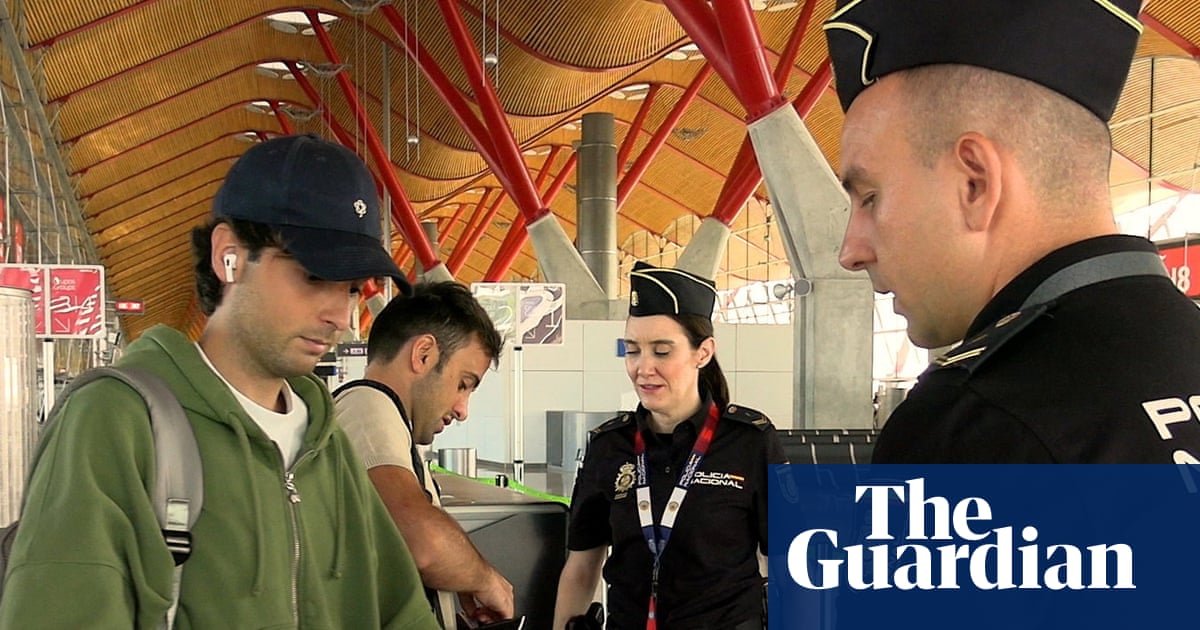
The crisis has also fuelled political tensions over Spain’s decision to temporarily reinstate controls at ports and airports for travellers arriving from Italy, after Rome refused to lift controls it had imposed on passengers arriving from Spain following the events in Ceuta.
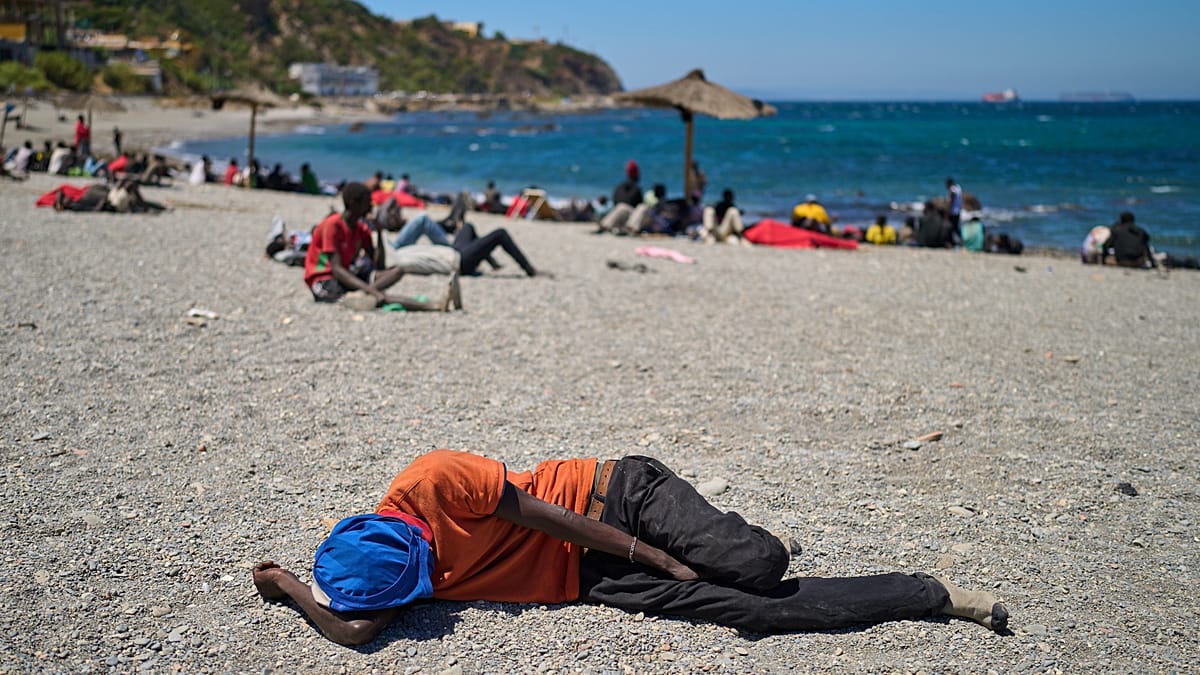
So Ceuta faces another day marked by the consequences of the mass arrival of migrants from Morocco on 30 July. The situation of unaccompanied minors, the pressure on the city’s resources and the stand-off between Spain and Italy over border controls are keeping open a crisis that has also triggered growing political confrontation.
Ceuta’s president, Juan Jesús Vivas, met on Saturday with the Minister for Youth and Children, Sira Rego, who travelled to the autonomous city to focus in particular on the situation of unaccompanied migrant minors. The government has identified 1,342 minors, although others have yet to be registered.
Following the meeting, Vivas insisted (source in Spanish) that his government’s position is that they should be returned to Morocco. "The only way out is Morocco via the Tarajal border crossing," he said. The Ceuta leader also described the situation as "absolutely unsustainable" and called on the central government for more resources and security personnel.
The Ministry for Youth and Children, for its part, has put the emphasis on the protection of minors and maintains that each case must be examined individually. Rego defended family reunification "whenever possible", but recalled that "many of the unaccompanied migrant boys and girls do not have families, so in these cases the autonomous communities must act as their guardians and guarantee their rights".
The minister also said that the government will deploy "all the necessary resources" for the reception process and will guarantee "full support, financial, technical and human, for Ceuta". A technical team from the ministry has also travelled to the city to support the management of reception and coordination with the autonomous communities.
The next point of friction will be the Sectoral Commission on Children and Adolescents, called for 13 August, which will address the transfer of minors from Ceuta. Vox has announced that its vice-presidents with responsibilities in this area in Castile and Leon, Extremadura and Aragon will not attend the meeting. The party has reiterated its opposition to the distribution with the slogan "children with their families".
Ceuta’s four religious communities take to the streets
The four main religious communities in Ceuta called Sunday's gathering in Plaza de la Constitución under the slogan "Enough. Ceuta will not give in". The aim was to send a joint message of unity and coexistence and to demand solutions to the situation the city is going through.
Vivas himself has called on the people of Ceuta to take part and stressed that the rally is intended to remain above party-political differences. "This is not anyone’s gathering. It is not a gathering by any political party. It is not a gathering to benefit anyone in particular," he said on Saturday. "It is a call to make clear that Ceuta will not give in, that Ceuta will move forward."
The Ceuta president has reiterated the need to preserve unity among the population and, despite his criticism of the central government, has said he will maintain "institutional loyalty" and a "sense of state". Vivas believes, however, that after the 2021 border crisis and the current one the government "has stumbled twice on the same stone".
Ayuso, Vox and the PP ratchet up pressure on the government
The crisis has also fuelled political confrontation over Spain’s decision to temporarily restore controls at ports and airports for travellers arriving from Italy, after Rome refused to lift the checks it had imposed on passengers coming from Spain following what happened in Ceuta.
The president of the Madrid region, Isabel Díaz Ayuso, criticised the decision on X: "We let more than 70,000 people enter illegally through Ceuta alone and we ban Italians from entering, a brother country that invests in and contributes to Spain." Ayuso added: "It’s spectacular, this turning our backs on the West."
From the PP, its deputy secretary for Economy and Sustainable Development, Alberto Nadal, accused Pedro Sánchez’s government of having "isolated Spain in the European Union" with its migration policy and called for explanations in Parliament.
The president of Extremadura, María Guardiola, also criticised the government’s response and said that "Extremadura rejects this drift". "This is not about setting territories against each other, or seeking fractures to mask problems. This is about facing the situation with humanity, seriousness and a firm voice," she said.
Vox, meanwhile, has focused its messages in recent hours on rejecting the transfer of minors from Ceuta. In addition to announcing that its regional vice-presidents responsible for this area will not attend the meeting on the 13th, the party has repeatedly stated its position with the slogan "children with their families".
Italy brands Spain’s response "unacceptable"
Tensions between Madrid and Rome have continued this Sunday. Italy’s foreign minister and deputy prime minister, Antonio Tajani, has described Spain’s decision to respond to the Italian controls with equivalent measures as "incomprehensible and totally unacceptable".
"We suspended the Schengen area, as required by the Treaties, because something extraordinary happened in Ceuta," Tajani said in an interview published by 'La Stampa'. (source in Spanish) The head of Italian diplomacy argued that Rome intends to lift the measures once the risk has disappeared and accused Pedro Sánchez of having "dramatised" the situation.
"We are not against Spain, but we have the duty to protect our borders," Tajani said. The Italian opposition, by contrast, has criticised Giorgia Meloni’s government for creating what it sees as an "unfounded" diplomatic crisis.
Spain and Italy have informed the European Commission that their respective controls are temporary. The European Commissioner for Home Affairs and Migration, Magnus Brunner, said on Saturday that both countries had confirmed this provisional nature to him and pointed to signs that Italy may soon lift its measures.